
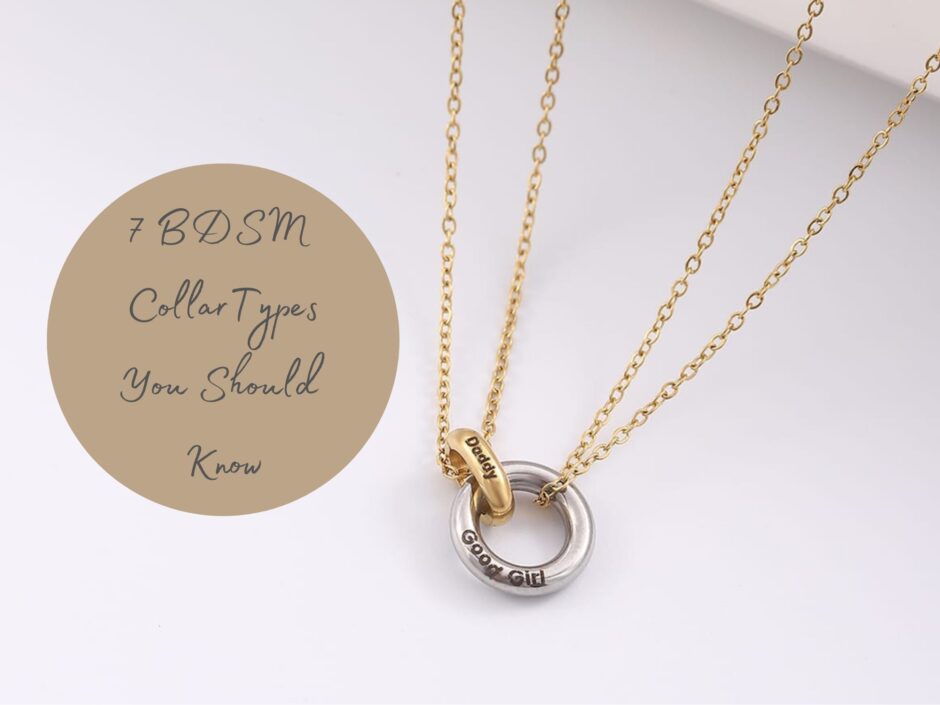
Collars can play a major role in some kinky relationships. They carry a lot of symbolism in the BDSM community and can evoke strong emotions, and there are a lot of different types of collars to choose from. They can look lots of different ways and be made from a range of materials including leather, faux leather, suede, metal, rubber, silicone, and more.
Whether you’re just starting your explorations, entering into a new BDSM relationship, or considering making a more permanent commitment to your Dominant or submissive, let’s look at some of the types of collars you should know about.
At the end of this post, there’s also a special reader giveaway for you to enter.
Day Collars: The Best Collar Types for Discreet Kink/BDSM Expression
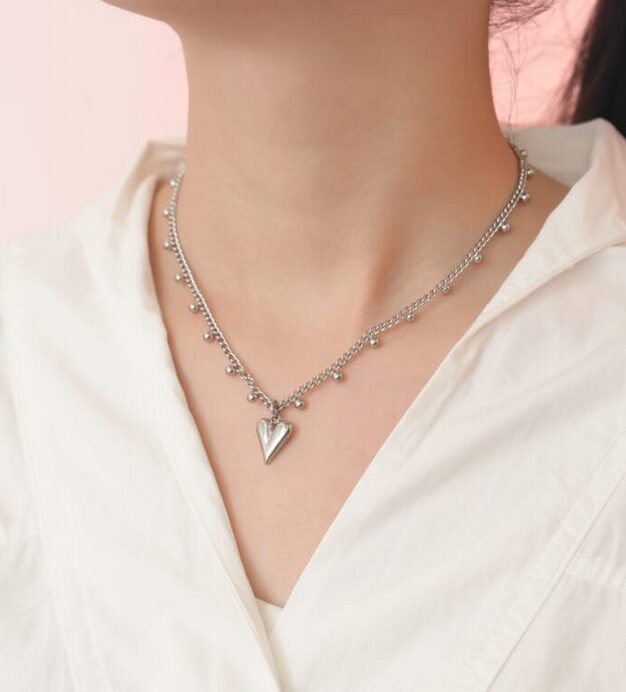
A day collar is a collar that you can wear during day to day life without inviting awkward questions or involving people in your kink without their consent. This might include the workplace, with family, or just out in public.
A day collar may be indistinguishable from an ordinary necklace, carrying meaning to the person who wears it and the person who gave it to them but resembling standard jewellery to anyone else. If someone notices you’re wearing it all the time, you can just say it was a gift from your partner or has sentimental value and no-one will be any the wiser.
Some day collars may not even go around the neck at all! We’ll discuss this type in more detail below.
Eternity Collars & Other Types of Locking BDSM Collar
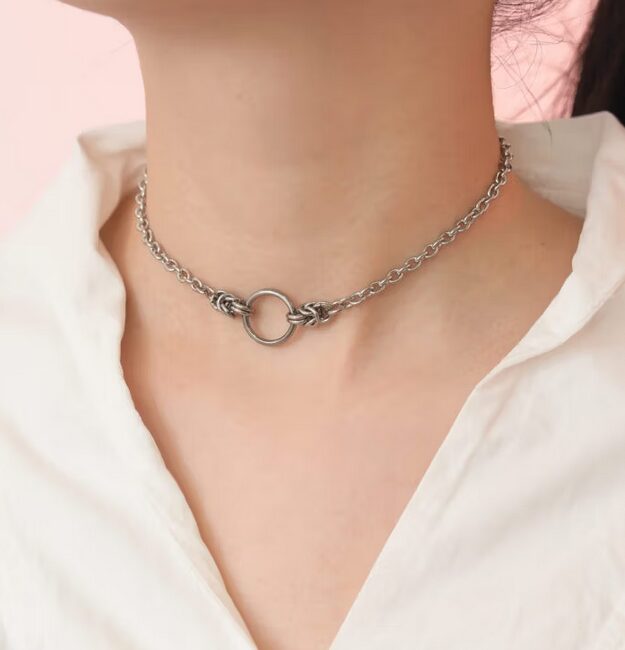
If you want to wear a collar on an ongoing basis and don’t need to take it off regularly, an eternity collar or other locking collar is a great option. These collars are designed for safe, comfortable wear over a long period of time and often symbolise a permanent, ongoing, or 24/7 D/s relationship. They tend to be made of robust, hardwearing materials, usually metals. They may need a key, Allen wrench, or other tool to open.
These types of collars are generally, though not exclusively, used in the context of serious and long-term BDSM relationships. Some couples use eternity or locking collars in place of, or alongside, a more traditional commitment symbol like a wedding or engagement ring.
While one of the appeals of an eternity or locking collar is often that the submissive is unable to remove it by themselves, always have a back-up plan such as a spare key where they can get to it or a way to safely cut the lock if necessary. You can always make it a rule that these are only to be used in the case of emergency.
Play Collars
Play collars are those used for kinky sessions or scenes, without carrying any special meaning outside of that context. They can symbolise the boundaries of a scene—for example, when the collar goes on a scene begins, and when it comes off you transition back into your regular selves.
Play collars can also be practical. For example, a Dominant may use a collar and leash to lead their submissive around, cuff their partner’s hands to their collar for restraint, or use a posture collar to make them stand in a certain position.
Some Dominants have general play collars they use with multiple submissives in play scenes. A Dominant may also give a special play collar to a submissive, or the submissive may prefer to buy and keep their own.
Training & Consideration Collars
Training and consideration collars are two types you might see earlier in a BDSM relationship. The meanings are exactly what they sound like: the submissive is in training or under consideration to become permanently collared in a D/s dynamic.
These types of collars tend to be popular in more formalised corners of the BDSM community, amongst those who value high levels of structure and protocol in their D/s relationships. For some people, training or consideration collar types are the kinky equivalent of an engagement ring—a display of commitment and intention before the permanent collar is given.
Training and consideration collars may be any style or design, and can be locking or non-locking. It’s completely up to the people involved.
Permanent Collars
If a training or consideration collar is like a kinky engagement ring, a permanent collar is the equivalent of a wedding ring. This type of collar signals a committed, ongoing, and hopefully-lifelong BDSM relationship.
Permanent collars may or may not be “permanent” in the sense of being worn 24/7. For some couples, this will be practical and desirable, while for others it won’t. Locking collars are a popular choice here, but far from the only option.
Non-Collar Collars

When you think of the various types of BDSM collars, you’re most likely imagining something the submissive wears around their neck. And while this is the traditional meaning of a “collar” and still the most common type, there are also other options to explore.
Non-collar collars are popular alternatives to (or additions to) traditional collars for couples who need something discreet, for people who can’t or don’t like to wear things around their neck, or simply for people with different tastes.
Bracelets, rings, anklets, and wrist cuffs, are common alternatives to collars. Others I’ve seen include watches, items of clothing or underwear, items that people carry rather than wear, and even tattoos.
Fashion Collars
Some kinksters enjoy wearing collars as a statement of their identity without them being attached to any specific relationship. Others (like me!) prefer to own a variety of different collars and match them to aesthetic choices, mood, or event.
By the way: if you’re a submissive attending events alone and don’t want lots of attention from Dominants, wearing a collar is a good way of significantly cutting down on unwanted advances.
While many people in the BDSM community take collars seriously, everyone gets to make the rules for themselves. If you want to wear them just because you like how they look or they help you to project an image of your kinky self to the world, have at it.
Defining What Collar Types Are Best for You and What They Mean in Your BDSM Relationship
With so many types of BDSM collars to choose from, how can you decide which is right for you? If you’re in a D/s relationship or considering getting into one, you’ll need to have an open and honest conversation (or several) with your partner. Make sure you’re on the same page about what collars mean to you both and don’t. The last thing you want is to find out later that one of you views a collar as a fun kinky accessory while the other sees it as a symbol of a lifelong commitment.
Beyond that, you get to decide! Consider the types of collars that feel meaningful and right to you, the materials that will be the most comfortable, the colours and styles you find attractive, and any practical considerations.
WIN a Collar Bracelet
I’ve partnered with Think & Kink, designers of beautiful collars and kinky jewellery, to give one lucky reader this gorgeous sterling silver infinity chain bracelet.
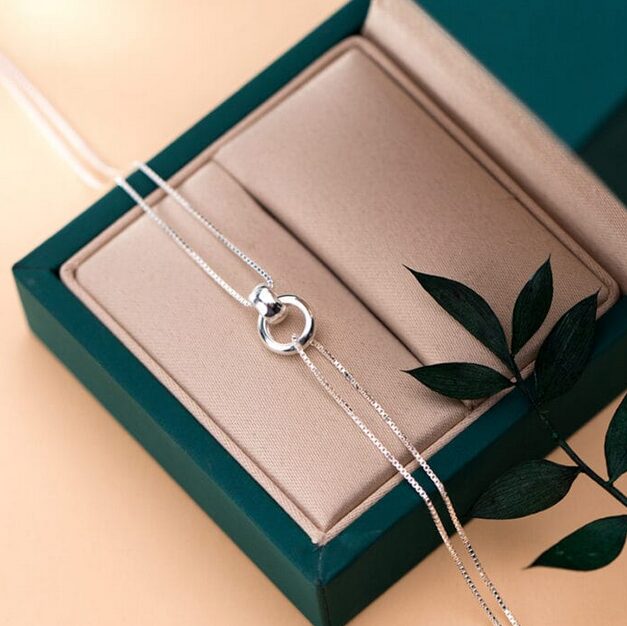
All you have to do to enter is sign up for my newsletter during May 2026. On 31 May, I’ll put all current newsletter subscribers into a draw for the prize. By signing up, you consent to receive my newsletters (currently on hiaitus but returning in 2026) unless you unsubscribe. You also consent to me processing your data to administer the giveaway and send you your prize if you win. The giveaway is open to readers anywhere in the world.