7 Things That Helped Me to Get Over a Broken Heart

Heads up: this is not a generic “how to get over a broken heart” listicle. This is tremendously personal and I hope I can trust my readers to be kind.

Yup. It’s been an entire year, and we’re finally talking about this! I have tried to write something cohesive about this experience so many times over the last year, but it didn’t feel like the right time until now. I had to wait until I was sure I was really okay, really truly over it and out the other side, before I could write about it with the benefit of knowing for sure that the pain really does end.

One year ago today, I experienced the most brutal, absolute and devastating heartbreak of my life from someone I thought I would be with forever.

“Blindsided” is not even the word.

It physically hurt. I felt like I was dying.

I still don’t think I have the words to explain the depths of the grief I sunk into, the anger and the confusion, that time I screamed in my car down a deserted road just to let out some of the pressure that felt like it was crushing me from the inside. The nights I spent alternately crying until I felt numb and drinking myself into oblivion just so that, for a few blissful minutes, I wouldn’t have to feel anything.

But this post isn’t actually about that pain, or about the person who broke my heart. It’s about how I got through it. Because that’s the reality of even the worst heartbreak of your life: you do get through it.

One day, you wake up and find you don’t actively want to fucking die. One day, you wake up and you’re not crying before you’re even fully awake, they’re not the first thing on your mind, you don’t see their eyes every time you close yours. Eventually, you smile again. Laugh again. Dance in your kitchen while you make dinner again. Have sex again. Eventually, you even love again.

So this post is for everyone whose heart has ever been broken. It’s for everyone who’s going through it right now, who needs a reminder that there is joy out there and that this too shall pass. But most of all it’s for the Amy of a year ago who felt like she had lost a piece of her soul and thought she might never be happy again. Hold on, sweetheart. Joy is coming back. More joy than you can imagine right now.

This is just my little love letter to seven of the things that pulled me through.

Mr C&K

I have to start with this one because fucking hell, this man showed up for me when I needed him. Supporting your partner through a breakup with someone else is a uniquely polyamorous experience, and my nesting partner could teach the masterclass. He picked me up off the floor (literally, once or twice.) He fed me and took care of the house and the cat and our life in the immediate aftermath, when I could barely get off the sofa. When I woke up in the early hours of the morning already crying, he pulled me close and reminded me I was still worthy of love.

Pretty words and promises are nice, but they mean nothing if they’re not backed up with actions. Real love? Sometimes it looks like someone who’s been by your side for a decade sitting with you while you cry and rage and work through the confusion, and then filling the fridge with all your favourite foods in the hope that you’ll eat something even though your body is so full with the sheer weight and volume of your grief that you can’t imagine having room for anything as trivial as food.

Sapphic music

A couple of months after my breakup, I started making a giant playlist of all the sapphic, lesbian and queer girl music I could find.

It was partly an attempt to reconnect with my own queerness, to remind myself that no longer having a girlfriend didn’t invalidate my identity. I found the angsty breakup songs cathartic. The love songs gave me hope that I might find something like that again someday.

Most of all, it was a feeling of being held by these women. Women I’ll never meet but with whom I feel a kinship because of our shared experience as sapphics in a world that simultaneously invisibilises and hyper-sexualises us.

Fletcher, MUNA, Hayley Kiyoko, Girli, Chappell Roan, Xana, Girl in Red, Renee Rapp and more wrapped their words around my heart and, on the nights I felt most profoundly alone, their songs reached out a hand and said “we got you.”

Crafting

You know the cool thing about having yarn, fabric, a set of knitting needles or a crochet hook in your hands? You can’t text the person who broke your heart (or pound that ill-advised fourth shot of gin of the night) while you’re doing it.

Sometimes, making things – counting stitches and rows, figuring out pattern instructions, occasionally ripping it all out and starting again – was the only thing that could stop me from thinking about her, calm my racing mind from ruminating on how stupidly happy I had been and how it had all gone to hell so quickly.

I crafted so much in the few months following my breakup that I ended up taking a stall of my yarn-based creations to sell at a Pride event. Every time I saw someone smile and pick out a piece I’d made in their pride flag’s colours, a little bit of my heart healed. I’d turned my pain into beautiful things, and those things brought other people joy.

Slow, careful and mindful attempts at dating

I got back on the dating apps around August. If I’m entirely honest it was probably a little too soon but I decided, fuck it, it’s been six months, maybe I’m allowed to have a little fun now? (Or maybe I just needed the emotional masochism of confirming, once again, my utter certainty that I would never meet anyone who was right for me ever again.)

Only… I did.

I had a nice date with a woman. Things didn’t go anywhere, but going on a date – laughing and eating sushi and getting to know someone new – felt like gently flexing a muscle I hadn’t used in far too long, like taking the cast off a broken bone. Then I dated someone lovely for about three months. We had fun. Then we realised we weren’t romantically compatible and parted on good terms as friends.

And then…

Well. The next bit of the story comes later in this post.

Queer community

There’s an invisibility that often comes with sapphic love. This is doubled (tripled, really) if you’re polyamorous and your relationship isn’t a socially-sanctioned, legally-sanctioned, highly visible, hetero-read one.

So many people in my life didn’t understand that the relationship might have ultimately been short-lived and non-escalator, but that didn’t make it any less real. It fucking mattered. My love mattered. My heart mattered.

It was my queer community, particularly my queer polyamorous community, that understood. Those people witnessed and held the reality of just how much this fucking sucked. They allowed me to be sad then angry then hopeful then hopeless and then sad all over again. They let me go from laughter to sobbing and back to laughter, sometimes in the space of minutes.

And they never told me it didn’t matter because it didn’t last. That I should have known better, or that polyamory is always a recipe for disaster. They didn’t say at least you still have a partner as if that makes a broken heart hurt any less, or any of the other shit that clueless straight people hit me with.

Friends who understand

Sometime around May, three months after my breakup, I went for coffee with a well-meaning friend. When I got home, I said to Mr C&K, “I feel like an alien in my own life.” I felt completely detatched and cut off from just about everyone else on the planet.

There were a very small number of people who made me feel understood and seen. One of them was someone I didn’t even know all that well at the time, who had gone through a breakup around the same time. Over the course of a few months, our two person #BrokenHeartClub (or #BoozyBrokenHeartClub on the more difficult days) evolved into a friendship I’m profoundly grateful for.

My best friend and his boyfriend let me crash with them for a few days in the immediate aftermath while I got my head back on straight. My bestie alternately took me out and got me drunk in healing queer spaces (Eastenders-themed drag? Surprisingly good medicine for a broken heart!) and let me rage-sob on his sofa.

Finding love again

I had to save this one for last. It’s ultimately one of the most significant pieces of this story and the most difficult to find adequate words for.

There’s something a little paradoxical here. After a breakup, we’re not supposed to start looking for a new relationship until we’re fully healed. We’re supposed to get over a broken heart before we try to find love again. Yet, at a certain point, there is a form of healing that happens within a new relationship. If you want to learn to trust again, at some point you need to practice trusting someone. If you want to fall in love again, at some point you need to let yourself fall.

I met my now-girlfriend Em on a dating app in late October. Our connection was fast. We both read the other’s profile and had a moment of “were you made for me!?”. But it was also slow, in that it was over two months before we could spend time together in person. In those two months, we clocked up over 40 hours of phone and video calls.

On January 7th at 8pm, she walked into the bar and she smiled at me and I knew. On January 7th at 10pm, she asked me to be her girlfriend. Then, on January 26th, I told her I love her. Was I terrified to try again? Of course. But at some point, you have to feel the fear and try again anyway.

She was the final and most crucial piece. She profoundly sees me, understands me, holds me in the messiness and vulnerability of all that I am and have been and all that I might be in the future. With her, I felt able to take that risk. To trust someone. To stare down the fear of opening myself up to that kind of pain again and decide she was worth the risk.

She was – is – everything I needed in a new love. And she found me at the perfect moment.

If you’re trying to get over a broken heart, I hope this gave you a little comfort. I know you’ll get through it. Listen I love you joy is coming.

Sluttier in Theory: Swinging, Casual Sex and Me

I have recently been dipping a cautious toe back into some swinging spaces, albeit almost exclusively very queer ones. These adventures have brought up some thoughts and realisations about the ways that I operate in sexual spaces that I’ve been thinking about a lot. So, because blogging is cheaper than therapy, let’s talk about them shall we?

I’m not sure I was ever really a swinger, to be entirely honest. Years ago, I wrote about things I disliked about the mainstream (read: hetero) swing community, from the weird prevalence of sexual racism to the casual kink-shaming. And I don’t think I’m really a swinger now, either. Or at least, claiming that label feels disingenuous when the last time I did anything more than hand sex with a stranger was literally years ago.

I’m a polyamorous and consensually non-monogamous person who also enjoys some casual sex with lovely people every now and then. (Exactly where the dividing line between “swinger” and “whatever the fuck I am” lies, I am truly not sure.)

Thing is, I’d really like to be sluttier than I am. In theory, at least, I’m a huge Ethical Slut. I love flirting, giving and receiving sexual attention and interest. I love making connections, making plans, making out, that slow but certain escalation when it becomes apparent that yes, this thing is ON. And I love sex. I’m a high sexual desire person (it’s not a drive!), and in an ideal world I’d be having sex several times a week at least. Yes, I’m a horny fucker.

So why do I find it so fucking hard to actually make that leap and do the things in a more casual context?

I’m envious of people who can just dive in. People who can pull a stranger or leap into the centre of an orgy without thinking too hard about it. I wish that could be me. So why don’t I and why isn’t it? Well, that’s what I’ve been trying to untangle.

My Sexuality is Complicated

Being very sapphic certainly complicates things. The overwhelming majority of people in swing and casual sex spaces are cis man/cis woman couples, most of whom – as is typical in that community – do things exclusively together. This is tricky when I don’t fancy very many men, though.

I’m not going to fuck a guy I don’t fancy just so I can play with his partner, and I’m not going to tolerate hands wandering after I’ve set boundaries about who can and cannot touch me and where. Realistically, I’m also not going to fuck a woman for a man’s enjoyment. Performative queerness does nothing for me. Less than nothing – it’s an active turn-off.

So where does this leave me? Probably limited to playing one-on-one with other women, playing with very trusted friends, playing with couples where the guy will happily accept “I’ll fuck your wife with you but I’m not going to fuck you”, or waiting for the cases where I am attracted enough to both/all parties to also fuck the guy(s.) The last two scenarios on this list? Well, they’re rare. In practice, my sexuality limits who will be interested in me and how I can play simply because I don’t typically offer much for the guys.

Hitting on women is hard, too, for a simple reason: I don’t want to make other women feel the way that creepy men make me feel. (Yes, there’s a whole other post in this, too.) More than once I’ve noticed an attractive woman at a party and then totally failed to even talk to her. I always kick myself afterwards, of course, but I haven’t figured out a way to overcome this one yet.

Sexual Health Fears

There’s also the sexual health angle. I got an STI about a year ago (ironically, during a particularly non-slutty phase) and it really rattled me. Though it was dealt with, I have no desire to ever repeat that experience. I feel like I’d be absolutely furious with myself if I inadvertently contracted something and then passed it on to one or both of my partners.

I preach open communication about sexual health constantly, but in reality it can be really hard to be the person saying “hey when were you last tested?” when no-one else in the room has raised it.

The reality is that, if we are going to be sexually active, there is a risk of STIs. This is even true in monogamy, because people can cheat and people can have symptomless infections for years without knowing it if they’re not testing regularly. There is no way to be a sexually active human and totally eliminate this risk. But that doesn’t mean we shouldn’t care. If anything, it gives us a greater responsibility to take the reasonable steps we can to mitigate the risk to ourselves and our sexual partners.

In some ways, this is probably the easiest issue on this list to solve. This one can probably be solved with practice and giving fewer fucks about seeming like a buzzkill for being the person to open the conversation.

“I Shouldn’t Be Doing This”: Internalised Shame

On a less practical and more cerebral level, I think I’m probably still dealing with some internalised shame around casual sex. Like so many of us, I grew up in an intensely sex-negative society and “slut” was one of the worst things someone could call you. (I got called it for having sex with my one boyfriend of well over a year when I was sixteen, but that’s another topic for another day.)

“But Amy, you’ve been polyamorous your entire adult life!” I can hear some long-time readers saying. And yes, I have. However – and this is also going to be the topic of another post soon – the polyamorous community has a massive slut-shaming problem.

Hang out in polyamorous spaces long enough and you’ll often hear phrases like “it’s polyAMORY, not polyFUCKERY” to deride casual sex. You’ll also hear derisive language used towards swingers (and anyone sluttier than the name-caller approves of), as well as assertions that casual sex “ISN’T REALLY POLY.” Mainely Mandy did a fantastic video on this subject. It’s over an hour long but I really urge you to watch it all if you can. Mandy is insightful, engaging, hilarious, and just so right about this topic.

I suspect there’s still some internal work – and probably work with my therapist – to be done on unpacking this shame. I find it so easy to celebrate others getting all the hot sex they want with all the partners they want, as long as it’s ethical and consensual. I’m not sure why I am finding it so hard to extend that to myself. But I do know that once in a while, I get hit with this overwhelming feeling of “I shouldn’t be doing this”. And that’s a mood-killer if ever there was one.

Vulnerability is Fucking Hard

Finally, there’s also the fear of making myself vulnerable. I know not everyone will agree with me here but to me at least, there’s an inherent level of vulnerability to sex (or at least to good sex.) If I stay completely detached, there’s just no point. I’m not going to enjoy it and will probably end up feeling used rather than fulfilled.

But as the title of this section says: vulnerability is fucking hard. Vulnerability, in my experience, often leads to pain.

Of course, on the flip side, vulnerability can also lead to some trancendently wonderful experiences. Vulnerability has brought me beautiful relationships, deeper communication and intimacy with my partners, hot sex, leg-shaking orgasms, the kind of memories that still get me wet when I recall them years later.

But it’s really, really hard to be truly vulnerable and it does not come easily to abuse survivors in particular.

So… What Now?

I don’t really know, to be honest. Maybe I need to just be brave and take bigger leaps into the things I want before overthinking gets in the way and stops me. Or maybe some things do need to remain “in theory.”

I sent a draft of this post up to this point to my girlfriend, having no idea how to finish it. Because she’s brilliant, she made this suggestion: “Imagine someone has written that post and sent it to you asking for your advice.” A lightbulb went on instantly. So that’s exactly what I’m going to do. The conclusion of this piece will take the form of an open advice letter from me to me.

Open Advice from Me to Me

Hey Amy. This sounds legitimately complicated and like there are numerous different factors at play.

First I want to validate something for you: this stuff is complex. I’ll also let you into a secret: it’s complex for almost everyone! Those people you see at parties, who seem to be having all the casual sex all the time without a care in the world? That’s probably not their reality. Behind the scenes they are likely thinking things over, considering their boundaries and desires, perhaps discussing things with their partners. They probably have many of the same insecurities as you, and plenty of their own unique struggles too. So first, please don’t think you’re alone or weird for feeling conflicted about this. You’re not. What you see at parties is, in all likelihood, the smallest tip of the iceberg.

Next I want to tell you that your sexuality is perfect as it is. We live in a deeply, aggressively heteronormative world and it can be hard when you fall outside of that. You never, ever have to have sex that you don’t want to have. If you want to have sex but only with a certain gender or genders? Awesome! If you’re open to other genders but only occasionally, sporadically, or circumstantially? Great! If some types of sex appeal to you but not others? Excellent self-knowledge, well done.

I would advise simply being very upfront with potential playmates about who you are, what you want, and what you can offer.

Will this mean some people aren’t right for you? Yes, absolutely. And that’s okay! No-one is everybody’s cup of tea, and having incompatible needs with some people doesn’t mean that your needs are wrong (or that theirs are.) If someone isn’t into what you’re offering, you can wish each other well and move on to more fitting connections. If someone deliberately breaches boundaries you’ve set or oversteps your consent? Get up and leave. You deserve better.

I hear your frustration that suitable connections seem to be relatively few and far between, possibly due to your low interest in men. But a small number of great connections is vastly preferable to a lot of bad ones. You seem to be doing this already, but continuing to prioritise explicitly queer and queer-positive spaces is much more likely to get you the kinds of experiences you want.

Your sexual health concerns are also valid and understandable. They particularly make sense with the context that you’ve had an STI in the past and do not want to repeat the experience. Sexual health is a sensible thing to be concerned with. Most STIs are not a big deal – they are treatable, curable, or manageable. However, some can have a significant or even life-changing impact, and antibiotic-resistant strains of certain infections are a growing concern in the medical community. Even easily curable STIs are, unfortunately, still heavily stigmatised.

I know you know this, but you are not being a buzzkill for raising this topic. If someone rejects you or gets annoyed with you for discussing it, they’re not right for you. By having this conversation before hooking up, you’re being a responsible partner and caring for both your own and your partners’ sexual health.

One possible way to become more comfortable with this conversation might be to have it in advance where possible. Are you chatting to people online prior to meeting them? If so, raise the topic during your pre-party flirtations. Are there online spaces, such as forums or Discord servers, where party or event attendees hang out? If so, why not get a sexual health discussion thread going in those spaces? This takes the “in the moment” pressure off. It also normalises the conversation and allows you to get a feel for people whose risk tolerance aligns with yours.

As a general rule, sexual health practices should default to the boundaries of the most cautious person. If you want to use a barrier, for example, then your prospective partners can either use that barrier or decide not to hook up with you under those conditions. What they cannot – or should not – do is try to talk you out of your boundaries. Trying to change your mind about sexual health protocols is a major red flag, and one you should not ignore.

Internalised shame and fears around vulnerability are, unfortunately, harder to overcome. You’re right that we live in an intensely sex-negative society. It also sounds like you have some personal experience of people weaponising sexual shame against you. Shame is complex, multi-faceted, and unpacking it can be an ongoing (even lifelong) process.

Next time they arise, I invite you to sit with those feelings of shame and ask yourself what they are telling you. Then hold those ideas up to your values and beliefs about the world. Do they align? And if not, where did they come from?

For example, perhaps you realise that your feeling of shame is telling you “people who respect themselves only have sex in committed relationships.” Do you really believe that is true? Presumably not, since you accept and embrace the fact that casual sex can be a positive and joyful thing (and that sexual behaviour is not correlated with self-respect.) Okay, so where did that belief come from? Perhaps it was your parents, your peers, school, the media, or the religion you were raised in. By unpacking the things shame is telling you, you can take more control over which of those beliefs you internalise and which you choose to consciously reject.

On your fear of vulnerability, I want you to know that it makes perfect sense. Existing as a woman or femme in this patriarchal society is hard, and doubly so for survivors of abuse. When vulnerability has been used against you or resulted in pain in the past, it can be incredibly difficult to let yourself go there again.

This fear is your body and brain’s way of keeping you safe. Try to remember that when you’re feeling frustrated with yourself. All those positive things you identified that allowing yourself to be vulnerable has brought to you? What do they all have in common? They all had to happen from a place of safety. This likely meant coming to vulnerability in your own time, not forcing it from yourself. If getting to that baseline of safety takes you longer than it takes other people, or takes you longer in some circumstances than others, then that’s okay.

One vital thing I want to invite you to do is just to listen to yourself. Your body is deeply wise and intuitive. Try to tune into what it’s telling you in any given situation. Try to learn what your personal “yes, more, this” feels like, as well as your personal “no” or “ick” or “I’m not sure about this.” What does safety feel like? What does it feel like when you truly, deeply want something?

Learning to follow those intuitive clues will teach you to trust yourself. It will also help you to come into a deeper understanding of what you really want and don’t want, both in the big-picture sense and in any given moment. In time, you’ll learn how to move towards your “yes” and away from your “no” more authentically.

Finally: remember that there’s no right or wrong here, and you’re not in competition with anyone. You are not less of a non-monogamous or sex-positive person if you’re slower to warm up and get comfortable with being sexual. It’s okay to be a “yes” on one occasion and a “no” on another. It’s okay to be choosy, to be selective, to make sure any given situation is right for you.

It is okay to explore, try things out, surprise yourself. To like things you weren’t sure you would, and do dislike things you were sure would do it for you. And it’s okay if some things need to remain “in theory,” for now or forever.

Breathe. You’re doing fine.

Amy x

My lovely supporters over on Patreon chose the topic of today’s post. Sign up today to get a vote on future blog content as well as some other fun perks. I even have merch now!

On Faking Orgasms

[TW: this post makes brief reference to sexual intimate partner abuse]

Sometimes it’s hard for me to cum.

And sometimes I can get there, but it takes a long time. Or what feels like a long time to me, though I think I’m actually fairly average. According to the International Society for Sexual Medicine, one study showed that the average person with a vulva (they said “woman” but let’s use inclusive language here) takes around 14 minutes to climax during partnered sex. It is a little unclear whether the researchers were using “partnered sex” synonymously with “intercourse”. However, I’m assuming they are referring to any kind of partnered sexual activity since anything from 50% to 80% (depending on which study you believe) of people with vulvas don’t orgasm solely from penetration at all.

After the first time we slept together, my now-girlfriend and I discussed the orgasm difficulty thing because I was feeling a little self-conscious over how long it sometimes takes me to get off. During that conversation, she asked me to please not feel any pressure to fake it. And I hadn’t realised how much I needed to hear that explicitly until she said it.

Why Fake Orgasms?

I’ve definitely faked orgasms in the past, and for a few different reasons. At the absolute worst, when I was in an abusive relationship, faking it was sometimes the best way to get things I didn’t like and didn’t feel comfortable with to be over. In those relationships, even if the sex itself was consensual, it wasn’t necessarily safe to ask for what actually felt good and would help me to get off. Abusive men don’t take well to any threats to their egos.

On a less sinister note, I’ve had a lot of consensual-but-bad sex in my life. Whether it was partners who couldn’t be bothered to learn how to please me, or just my own insecurities and unwillingness to speak up, lots of factors played into this. Half way through I might realise that I wasn’t going to get there no matter how hard we tried. At those times, faking it sometimes felt easier than saying “can we stop?”

I’ve also faked orgasms in group sex situations before. Those spaces are typically less about the actual orgasm for me. I often won’t cum in a group situation, though there are of course exceptions to this generalisation. They’re more about the overall sensuality, shared sexual energy, and just the feeling of being in that erotic space. Even so, it can feel like the goal in those situations is “everyone has an orgasm” and like I’m letting the group down if I don’t. In those circumstances, it has sometimes felt easier to fake it than to draw attention to it.

Why I Decided to Stop

Quite a few years ago now, I swore off faking orgasms. So what changed? A few things.

First, I realised that I deserve pleasure as much as my partners. I was primarily sleeping with men and masc-of-centre people at the time, and the orgasm gap is a real phenomenon to which I have no desire to contribute with my sex life.

Ironically, discovering that I have an orgasm denial/orgasm control kink helped, too. This means that if I’m having fun but not getting off, I can eroticise the build-up and the unreleased sexual tension in and of itself. Enjoying the process freed me up to enjoy sex more fully without needing to chase a destination that can be highly variable in its reachability. (And yes, I also appreciate the irony that someone growling “don’t you dare fucking cum” in my ear will often get me close faster than almost anything else.)

I also realised that faking it just begets more frustration and unsatisfying sex. If a partner believes that what they’re doing is making me cum, they will (reasonably) continue doing those things when we have sex again in the future. By faking orgasms, I was literally teaching partners to continue touching me in ways that didn’t work for me. What’s the point of that?

I recently saw this article about why faking orgasms “may not be as bad for your relationship as we thought,” and… it made me kinda ragey. This part, in particular:

If your partner feels insecure about their sexual ability and you don’t have an orgasm during sex, sometimes telling them you did is an easy out from having to console them. As much as you love your partner, having to reassure them their sex skills are top-notch can be taxing. That’s why, in these situations, it’s fine to spare their feelings to avoid having to comfort them for hours on end.

– Amanda Chatel

What? WHAT!? No! I’m sorry but if someone’s ego is so fragile that they’re going to make my body’s quirks about them, or that they’d rather I lie to them rather than learn about what actually gets me off (and accept that sometimes it might not happen through no fault of theirs or mine), we shouldn’t be having sex.

Another change was discovering the wonderful world of sex toys. Over a decade ago, I went through a period where I was unable to orgasm due to starting new antidepressants. It was a mains-powered “back massager” vibrator that helped me eventually power through that block. I didn’t really start exploring the full joys of the sex toy world, though, until I launched this blog. (And then it all got slightly out of hand… *glances around at vibrators spilling out of drawers, baskets, boxes, and door-hanging shoe holders in my office.*)

Discovering toys gave me new options and avenues for pleasure and orgasm. New ways to experience intense sensations when my body needs more powerful stimulation to break through an orgasm block. New ways to cum and new possibilities to reach for if hands or mouths or cocks aren’t quite getting me over the edge.

The absolute number one change, though? The single biggest thing that turned all of this around? Safe relationships.

When you’re with safe partners, faking orgasms becomes unnecessary. With both Mr C&K and my girlfriend, I feel able to say either “please could we do this different thing that might help me get there?” or “I don’t think it’s going to happen tonight but I’m still having tonnes of fun” and I know that that will be heard and accepted with love. Feeling safe and loved totally removes the need or desire to fake anything with them, including my orgasms.

So sometimes I still struggle to cum. That might always be true. And sometimes I might worry that I’m taking too long. That my partner(s) will feel bad if I don’t get off. That they’ll get bored with the process. In those situations, faking orgasms does still occasionally seem like a tempting solution. But I promised myself and my partners that I’ll never do that again, and I intend to stick to it.

I deserve more than fake pleasure and so do my partners. Because if we can’t be authentic with each other, what’s the point?

Content like this is made possible thanks to my relationships with my affiliates. You can find their logos and links in the right hand sidebar, or below if you’re reading on mobile! Shopping with them helps to keep the blog going at no extra cost to you.

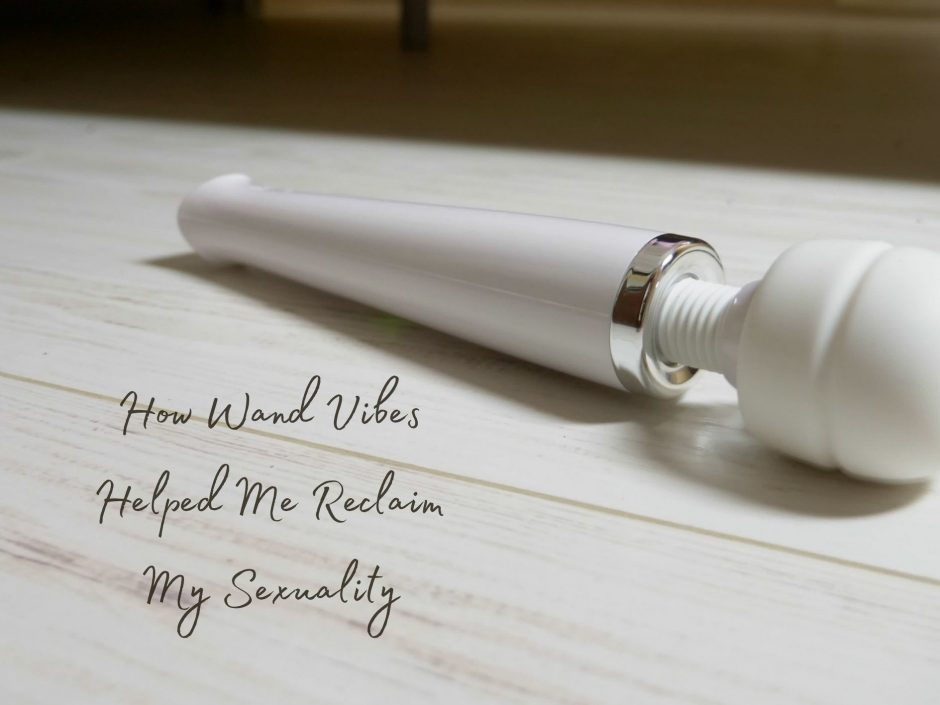
How Wand Vibrators Helped Me Reclaim My Sexuality When Antidepressants Killed It

I’ve been on antidepressants for the majority of my adult life, in three separate stints. I’m very pro medication for those who need it which, at the times I was taking it, I absolutely did. I’m not exaggerating when I say that those meds saved my life on more than one occasion.

Wand vibrators - Honey Wand from Honey Play Box
Honey Wand by Honey Play Box

But like any medications, antidepressants often have side effects, which can range in severity from mildly annoying to seriously debilitating. One of the worst side effects I experienced on two out of the three antidepressants I tried was a significant change to my sexuality. This manifested in different ways on each drug.

On Fluoxetine (Prozac), I pretty much lost my sexual desire entirely for months. Anything that had been pleasurable just felt like… nothing. This wasn’t limited to sex, either – I also lost my appetite and all ability to derive pleasure from food. On Citalopram, I lost my ability to orgasm while my body adjusted to the meds. While this did have some pleasant results (particularly discovering that I have an orgasm denial kink), it was also upsetting and frustrating. Feeling like I had no control over my body and like I’d lost one of my greatest sources of pleasure was so damaging that I seriously considered coming off the meds that were otherwise helping with my depression.

Trying Sex Toys

The first time antidepressants killed my sex life, I was so thoroughly miserable (both from the depression and from the side effects of the meds) that I wasn’t even interested in reclaiming it. I’m pretty sure I didn’t have sex or masturbate for about nine months at one stage. In hindsight, this probably made things even worse, because my sexuality has always been one of the key ways that I access pleasure and joy. At that time, I didn’t own any sex toys, and any touch from either myself or my partner left me cold.

The second time was a different matter, though. This time, the antidepressants actually took the edge off the worst of the sadness and hopelessness, and I still wanted sex. I just couldn’t orgasm, either with my partner or by myself. Though orgasm is not necessarily the goal of sex, this quickly became frustrating and then enraging. I felt like my body was betraying me. Like I had to choose between having a properly functioning brain and a satisfying sex life.

The turning point came when my then-partner pulled out a wand vibrator after about a month of this issue. That thing finally broke through the orgasm block. And, once that dam broke, it became easier and easier to get there again. I invested in a wand for myself pretty quickly after that, and it became my go-to toy.

Breaking Through the Depression-Haze

Even now, when I’m not currently on any psychiatric medication (though I accept I might be again in the future), I’m most likely to reach for my wand vibes when I’m in the middle of a bad depression funk. Contrary to popular belief, it’s still possible to feel horny at the same time as being depressed. Sad people need pleasure and orgasms, too! There have also been times when I haven’t felt horny, but I knew intellectually that an orgasm would make me feel better.

Sometimes, when I’m very very depressed, I feel as though there’s a kind of fog around me. The fog keeps me at least partly disconnected from everything and everyone around me. At its worst, it creates a sense of being somewhat outside and detached from my own body. In this state, many types of touch that would normally be pleasurable struggle to penetrate the fog. When that happens, I need intense stimulation and lots of it. It’s times like this that I might crave certain BDSM activities even more than usual. It’s also times like this when knock-your-socks-off powerful wand vibes are a Godsend. It might be possible to power through to orgasm with a lacklustre, buzzy vibrator but ultimately why bother?

The thing with my favourite wand vibes is that ultimately, they can wrench an orgasm from my body with very little active input from me. This has a lot of fun potential (forced orgasm scenes anyone?) It’s also extremely useful during periods of significant depression. If I want to orgasm at my own or a partner’s hand, or with a lower powered toy, it can be fun but often requires significant effort, mentally if not physically. With a powerful enough wand, I basically just put it in the right spot and wait for the orgasm to happen. In this way, I can access pleasure and the positive physical and mental health benefits of orgasm even when I feel so low I don’t want to leave my bed.

Sexual Pleasure Matters

When someone is dealing with severe health issues, either physical or mental, it’s often tempting to see sexual pleasure as trivial. Certainly when I spoke to my doctor about the side effects of my various medications, they dismissed my concerns. Did I want to be able to orgasm or did I want to not be sad? Because I couldn’t have both.

Except I actually could, and I needed and deserved to have both.

If you’re struggling with pleasure or orgasm due to health issues and medication, I want you to hear this: sexual pleasure matters! It’s not trivial and it’s not unimportant. If it’s important to you, then it matters. And you deserve to have what you need to feel sexually satisfied – whether that’s a change of medication, a super powerful vibrator, or just to change up what you’re doing.

Thanks to Honey Play Box for sponsoring this post. All views and experiences are my own!

Five Lessons I’ve Learned About Reclaiming Pleasure After Sexual Assault

Pleasure can be far from simple for all kinds of reasons. After sexual assault, finding joy in your sexuality again and reclaiming pleasure can feel almost impossible.

This post comes with a trigger warning for abuse, trauma, and sexual violence. It mostly focuses on healing rather than assault itself, though I have included some brief details of my own experiences. It also comes with a disclaimer that, although I am both a survivor and a trauma-informed sexuality writer and educator, I am not a psychotherapist, psychologist, or any form of medical or mental health professional.

The first, last, and most important thing I want you to take away from this post is this: your journey is your own and wherever you are now is okay.

There is no correct way to recover from sexual trauma and there is no set path. Everyone’s experience is different and numerous factors impact healing. To that end, this is not a how-to guide. It’s just a set of lessons I’ve learned that have helped me in my ongoing journey towards healing. Maybe they’ll help you too. Or maybe you’ll find something completely different that works for you! Either way is wonderful.

Reclaiming Pleasure is Not a Linear Journey

It’s not a straight line. You won’t just get better and better each day until suddenly you wake up and find that you’re fully healed. At least, I don’t know any survivors whose experience has been this way.

You’ll have good days and bad days. Sometimes you might feel like you take two steps forward and one back. All of this is normal. Pleasure after sexual assault is complicated, multi-faceted, and messy. You don’t need to berate yourself because it’s harder today than it was yesterday.

Be where you are today. Wherever that is, it’s okay.

A Healthy Sexual Relationship With Yourself Can Be Immensely Healing

Sex doesn’t have to involve another person unless you want it to. In fact, masturbation and other forms of self-touch – both sexual and non-sexual – can be a really important part of healing from sexual violence and reclaiming pleasure as a radical act of self-love after trauma.

Masturbation and solo sex is something you do entirely for yourself. You don’t have to perform or worry about pleasing someone else. You don’t even need to involve your genitals at all, if you don’t want to. The only agenda is to touch yourself in the ways that feel good, and stop when you want to stop.

Self-touch is a wonderful way to get to know ourselves, to be kind and loving and gentle with ourselves. Pay attention to your body and what feels good. Do you just want to run your hands over your skin for now? Perfect, do that. Does using a wand vibrator through your clothes help you access pleasure in a way that feels safe? Amazing.

Your Healing is For You and You Don’t Owe It to Anyone Else

Many survivors feel anxious to recover from or “get over” their experiences because they want to be able to give their partner sex (or certain kind of sex.) Sometimes this pressure comes from the partner. Other times, the partner is completely supportive and this pressure is internal.

Either way: your healing is for you.

Yes, it’s wonderful to be able to share awesome sex with your partner(s) if you want to. But ultimately, your sexuality is your own. Reclaiming pleasure after sexual assault has to be for yourself first. No-one has the right to access to your body. Not even if you’ve been married for fifty years.

You can heal with other people. In fact, love and support are virtually essential for recovering from trauma. But you can’t heal for somebody else, and you don’t owe your partner(s) a certain kind of recovery.

There is No “Correct” Version of Healthy Sexuality

Pleasure is personal and it can look countless different ways. A healthy relationship with your sexuality means something different to everyone.

Sadly a lot of people still believe that the only correct way to have sex is for that sex to be penetrative, heterosexual, monogamous, vanilla, and within the context of a serious relationship. Survivors of trauma who identify as queer, non-monogamous, kinky, asexual, demisexual, or highly sexual may find themselves pathologised, with professionals and loved ones alike attributing their identities and experiences to their trauma. This is tremendously damaging to survivors and is another form of taking away our agency.

Reclaiming pleasure after trauma means that you get to decide how your sexuality looks. If it’s happy, risk-aware, and consensual, you’re doing it right.

The Hardest Lesson About Reclaiming Pleasure After Sexual Assault: Some Things Might Never Go Back to the Way They Were

I still grieve for the Amy who never met her abusers. I still grieve for the version of me who didn’t get pressured into sex in her teens, who didn’t lose half her twenties to psychological abuse, who didn’t get raped at a party in her thirties. Honestly? I probably always will.

When it comes to reclaiming pleasure, the hardest thing for me to learn was that some things will never be the way they might have been in that alternate timeline.

Because abuse, assault, violence? It changes us. It has a deep, profound, and lasting impact. I know that the things I’ve experienced will, in some ways, be with me forever. I’ll never go back to the way I was before. Not completely.

But I am starting, in some small ways, to be okay with that. Nothing stays the same forever, and every experience we have shapes and molds us. So no, I’ll never be the person I might have been without those experiences. But I can grow into someone else. She might even be someone great.

If you need crisis support after sexual violence, please contact RAINN in the USA and Rape Crisis in the UK.