BDSM Negotiation: 4 Valuable Tools to Help You

One of the coolest things about kink is that it’s almost infinitely varied. Everyone’s interests, experience, and reality are completely different and there is more to explore than any of us will get to in a lifetime. This variety is also why BDSM negotiation is important.

Just because two people are kinky, you can’t assume that they’ll have many (or any) kinks in common. Kink negotiation is the process of figuring out what you want to do together, what’s off the table, and how you want to feel during your scene. Negotiation is a vital component of BDSM safety.

If you’re new to BDSM negotiation, it can feel forced or awkward at first. You might not be sure what to say or how to communicate your needs. If so, these tools should help you.

BDSM Negotiation Tool #1: A Comprehensive Yes/No/Maybe List

A Yes/No/Maybe list is a worksheet listing various kinky activities on which you can indicate whether you’re a yes, a no, or a maybe for engaging in each activity.There are hundreds of variations of the Yes/No/Maybe list available online. I like this one, which is pretty thorough and includes spaces to indicate your experience and level of interest.

You can either go through the together with your partner or prospective partner, or complete them separately and then swap lists to compare. Either way it’s a brilliant tool to get discussion flowing, figure out what kinks you have in common, and maybe discover some activities you didn’t know existed. (Ask me how I learned what “figging” and “rimming” are back in the day.)

BDSM Negotiation Tool #2: Pervocracy’s Concise Kink Worksheet

Yes/No/Maybe lists are great, but the good ones are also long. That’s why Cliff Pervocracy (one of the OG sex bloggers!) put together this “Concise Kink Worksheet“.

When you’ve established you have some compatible kinks and are wanting to get down to playtime, this sheet suggests some essential talking points to help you establish desires, limits, health and safety precautions, and what you want to get out of a scene.

BDSM Negotiation Tool #3: A BDSM Test

A BDSM test is an online quiz that asks you a series of questions to determine what kinky archetypes or roles you might be drawn to. I like this one from Fetish.com. If you’re not sure where to start, why not complete a quiz like this one and ask your partner to do the same, then compare your results and talk about what they mean for your kinky connection?

Remember not to take your results too seriously. It’s a guide, not a command. If the quiz tells you you’re a Mommy Domme but you identify more as a Mistress with a nurturing streak, that’s fine! If the quiz says you’re a masochist but you prefer the term “bottom”, you get to choose the terminology that works for you.

BDSM Negotiation Tool #4: Erotic Content

If you like to consume kinky content such as ethical porn, audio porn, or written erotica, it can be a great starting point for your real-life kink negotiations. Consume content together with your partner if you’re comfortable with that, talking about what appeals to you and what doesn’t. If you can’t or don’t want to do this together, consider sending each other clips or links that do it for you and use them as a jumping-off point.

Remember, of course, that porn is not reality. Real-life BDSM is unlikely to look exactly like a beautifully-shot professional scene or play out exactly like your favourite erotic story. Erotic content is entertainment, not education. But it can still inspire you, give you ideas, and spark conversations that can help with your BDSM negotiation process.

If you enjoyed this post and would like to support me, please consider sharing it on Bluesky or Fetlife, buying me a virtual coffee, or shopping with my affiliates in the right hand sidebar.

Am I Dominant Enough? 4 Things That Don’t Make You Less of a Dominant

Something I hear a lot from new or would-be Dominants (Doms) in the BDSM world is, “Am I really a Dom if I like…?” The underlying questions are clear: Am I dominant enough? Am I doing it right? What makes a good Dom, anyway?

There are a lot of stereotypes of Dominants out there. Most of them are, frankly, bullshit. One only has to browse Fetlife for a few minutes to see people making all sorts of proclamations about the right, best, true, or only way to be a Dominant (or a submissive, for that matter.) All of this is nonsense.

Your dominance is your own and it doesn’t need to be fragile. If you’re secure in your identity as a Dominant or sometimes-Dominant kinkster, no-one can take that away from you.

Let’s look at four things that tend to cause new and inexperienced Dominants anxiety about their Dom credentials, and break down these harmful myths once and for all.

Am I Still a Dom if I Go Down on My Submissive?

It makes me really sad when I think about how many submissives are missing out on oral sex because their Dominant mistakenly believes that only submissives give head or that going down is degrading. And, for that matter, how many Dominants love sucking cock or eating pussy but won’t do it because they believe it undermines their authority.

The longer I’m kinky, the more I believe that virtually no sexual act is inherently dominant or submissive. Everything we do in sex and kink is ultimately imbued with the meaning we give it.

Most of us do this kinky stuff because it’s fun. As it turns out, a lot of people enjoy getting their cunt eaten or their cock sucked. Giving this pleasure to your partner doesn’t make you any less Dominant. There are even ways to explicitly frame it in a dominant manner, if that’s something you want to do.

Don’t believe me? Try having someone’s tongue on your clit or their mouth around your cock and being told you have to (for example) keep quiet or not come without permission. Then tell me that going down can’t be a dominant act.

Is it Okay for a Dom to Be Deeply in Love with Their Submissive?

Where did we get this idea that Dominants are cold, unfeeling creatures who are incapable of love? (And can we burn the Fifty Shades trilogy to the ground for, amongst many other sins, perpetuating this stereotype?)

BDSM and D/s is often a relationship build on profound vulnerability, trust, affection, and – yes – love. Not all BDSM needs to be based on a love match, of course, and casual play connections are valid if everyone involved is enthusiastically consenting to them.

Ultimately, though, Dominants are human beings with the full range of human emotions. So if you’re a Dom and you’re worried that catching feelings for your submissive will undermine your dominance: don’t be. If anything, intense feelings will just improve and deepen the connection you have and the ways you play.

If you’re a submissive and your Dom is incapable of love, care, or affection? Or if they can only do kink with people they hate, dislike, disrespect, or feel nothing towards? They’re probably an emotionally-stunted billionaire psychopath.

Am I Dominant Enough if I’m a Switch?

Lots of kinksters enjoy being dominant sometimes and submissive at other times. These people are called switches, and they’re not only valid but likely in the majority of kinky people.

Switching can manifest in different ways. You might be primarily a Dominant who likes to submit occasionally, or vice-versa. You might enjoy each role more or less evenly. Some people switch with the same partner, others prefer to let their different facets out to play with different partners. Some like to do the same activities in both roles, while others have very different preferences as a Top than they do as a bottom. However it looks, it’s all good.

One myth about switches is that they’re capable of being neither truly dominant or truly submissive, and are instead a watered-down approximation of both. This couldn’t be further from the truth. Switches are just as capable of being great Doms (or great subs) as anyone else.

In fact, some submissives even prefer to submit to people who switch. Having experienced both sides can lead to greater empathy for your sub’s experience, as well as giving you an extra avenue through which to get new ideas for things to try.

Am I Dominant if I Enjoy Being Penetrated?

I’m going to return to what I said above: there’s virtually no such thing as an inherently dominant or submissive sex act. The idea that being penetrated is inherently submissive is deeply rooted in patriarchy and misogyny. (The logic goes something like this: “women get penetrated, therefore being penetrated is feminine. Femininity is lesser than masculinity, therefore being penetrated is not only feminine but degrading and therefore submissive.”) I hope I don’t need to tell you what absolute bullshit this is.

When I hear of Dominants who’d really like to get fucked but feel they can’t take something in their vagina or ass for fear that it’ll make them submissive… well, it makes me really sad.

If you enjoy receiving penetrative sex as a Dominant, there’s nothing submissive about it. You can enjoy it and it doesn’t undermine your dominance in any way. And, just like giving oral sex, there are absolutely ways to get penetrated in a specifically dominant way. Ordering your submissive to fuck you exactly as you want to be fucked, in the position and at the speed and depth you prefer and not to stop until you’re satisfied? Sounds pretty dominant to me.

“Am I Dominant If…?” YES!

If you identify as Dominant – whether you identify that way always or sometimes or occasionally or only on Fridays during the full moon or just in this specific relationship – then congratulations, you’re a fucking Dominant. That’s literally all that’s required.

Please take this post as enormous permission to stop worrying about whether you’re somehow undermining your Dom credentials. There are no credentials. There’s no set list of required or prohibited activities to be a Dom. We do this shit because it’s fun. If you and your partner(s) are having a good time, that’s literally all that matters.

If you enjoy my content, giving it a share on Bluesky or Fetlife or buying me a coffee is a great way to say thanks! <3

BDSM Red Flags: What to Watch For in a New Kinky Relationship

A reader messaged me this week with this question: “What are some BDSM red flags to look out for when starting a new kinky relationship with a Dom or a sub?”

I had a lot of thoughts about this question and all the possible ways to answer it. On the surface, it’s simple. In many ways, BDSM red flags are exactly the same as those in any other kind of relationship. But there are also nuances specific to kinky relationships.

As I often do when I’m mulling over a topic, I took it to Mr C&K for his perspective. His response, I think, was utterly brilliant in its simplicity: “Don’t get into a relationship with a Dom or a sub. Get into a relationship with a person.”

What I love about this answer is that it cuts through all the possible responses I was thinking of giving to our lovely question-asker, and gets straight to the heart of the issue. It’s vital to get to know somebody as a real, three-dimensional human being before you seriously consider them as your Dominant or submissive.

Spend time – LOTS of time – talking, communicating, and seeing how they interact with you and the world. A good D/s relationship is a place of profound trust and vulnerability on both sides, and these things cannot be rushed. A real-life D/s relationship is nothing like an endless kinky fantasy or a porn movie. First and foremost, it is a relationship.

7 BDSM Red Flags to Look Out For

With all that said, I do still have some thoughts on specific red flags to watch out for in a kinky relationship. I’ve tried to keep these broad so that they’re applicable to Dominants, submissives, and switches alike, and relevant whether you’re meeting online or in person.

Your mileage may vary, of course, and I’m sure there are plenty I’ve missed. But I would view any of the following with some serious side-eye and a healthy level of skepticism.

Demanding too much, too soon

You wouldn’t give someone the keys to your house or ask them to marry you on a first date, would you? Just as you shouldn’t jump the proverbial gun on these vanilla relationship milestones, it’s also important to take your time in a BDSM relationship. Play together and have some kinky fun, if you both want to, but don’t even think about entering into any kind of ongoing dynamic for quite some time.

If a Dominant expects you to kneel and address them by an honorofic before they’ve earned your trust, run. If a submissive expects you to start trying to control every aspect of their life when you’ve barely got past coffee… you know what I’m going to say.

Referring to themselves as a “real” or “true” anything

There is no such thing as a True Dominant, a Real Submissive, or any other variation. Those of us who have been in the community for a long time call this One True Wayism, and it’s frowned upon for good reason. People who think their way is the only way tend to be snobbish, elitist and derisive of others at best and actively dangerous at worst.

Tthinking you know everything, refusing to learn, and refusing to be questioned is a recipe for disaster. It’s also one of the biggest red flags out there for kinky relationships.

Related to this is its equally problematic and insidious twin: “you’re a fake [Dom/sub/kinkster!]” Calling someone a fake is such a classic BDSM red flag that it’s pretty much a cliche at this point. There’s no such thing as a fake kinkster. There are good and bad players, safe and dangerous kinksters, and those with more or less knowledge and experience. But no-one is “real” or “fake.”

If you identify as a Dom, you’re a Dom. If you identify as a sub, you’re a sub. That’s literally all that’s required.

Using language like “if you were really [X] you’d [Y]”

“If you were really a sub, you’d give me all your passwords and your bank account login!” “If you were really a Dom, you’d take care of everything for me so I didn’t have to take any responsibility for my choices!”

This is the BDSM red flag equivalent of that old manipulative classic: “If you really loved me, you’d…”

If someone questions your identity or tries to use it against you to get their way, run. See above: there’s no such thing as a “Real” or “True” anything. You don’t have to prove yourself to anyone and you certainly don’t have to do things you don’t want to do for your identity to be valid.

Claiming to have no or very few limits

Everyone has limits (that is, things they absolutely won’t do under any circumstances.) Absolutely everyone. Someone who claims not to have any limits (or to have “very few” limits) is, at best, woefully ill-informed about all the things BDSM can encompass.

And by the way: limits aren’t just for submissives! Dominants also can and should have limits.

I’ll say it again: literally everyone has limits. They can, and probably will, change over time. You don’t need to think up absolutely every single one right now. But you should start learning about what yours might be and learning how to communicate them.

Not understanding their own experience and skill level

Anyone can pick up a BDSM starter kit and call themselves a Dominant without having ever used that flogger on anyone, just like anyone can watch a thousand hours of spanking porn and call themselves a submissive without having ever actually played. There’s absolutely nothing wrong with being inexperienced and curious, with being at the beginning of your kink journey, or with not knowing much.

What is wrong, though, is to significantly overestimate or misrepresent your experience and skill level. And if you find out someone has done this, it’s a pretty huge red flag. Trying to do certain BDSM activities without proper knowledge and tuition is irresponsible at worst, incredibly dangerous – both physically and psychologically – at best.

Responsible kinksters know their own limitations and put the safety, consent, and wellbeing of their partners above any self-aggrandising notion about being infallible.

Lying, including lies of omission

The absolute, foundational basis for any healthy relationship – kinky or vanilla, monogamous or polyamorous – is trust. Without trust, there is nothing. Lying to you is, therefore, probably the biggest, reddest, and flaggiest big BDSM red flag of all.

This includes those big barefaced lies, of course, but it also includes lies of omission. If you find a Dom who seems great but they “forgot” to tell you they’ve got seven other submissives at home… you have not found a good Dom or indeed a good human.

The person who lies to you in the beginning will lie to you all the way along. Whatever your role, you’re a human being first and you deserve to be told the truth about things that impact you.

The ultimate BDSM red flag: breaking boundaries, including small ones

Abusive or dangerous people don’t typically start by trampling boundaries in overt and glaring ways. If they did this on the first date, they’ll never get as far as a second date. Instead, people who would cause you harm will often “test the waters” with a new victim to see how much they can get away with.

Perhaps they persist in using language towards you that you don’t like, touching you in a way you’re not comfortable with, or putting you down in big or small ways, you are not being too sensitive. They are testing you, and they will push bigger and bigger boundaries if you continue a relationship with them. Get out now.

If you recognise any of these BDSM red flags in your relationship or with a new interest, help is out there! If you think you’re in danger, get yourself to a place of safety and ask for help as soon as you can.

Online Dating Tips for Men Into Women: 10 Dating App Mistakes You’re Probably Making and How to Fix Them

We all know by now that the number one online dating mistake is to use our genitals as our profile picture, right? (We do, right?) But what other less-obvious-but-equally-offputting things are you doing or saying on dating apps that are causing potential matches to swipe right? I don’t really date men any more, but I learned enough from my years of doing so to put together this list of online dating tips for men based on dating app mistakes you really need to stop making.

Online Dating Tips for Men Into Women: 10 Mistakes to Avoid

Whether you’re using Tinder, Feeld, OKCupid, Fetlife, or another dating site or app entirely, avoid these common mistakes at all costs.

“I hate writing about myself” or “ask me”

This is the most boring cop-out of an “About Me” section possible. You might as well have written “there is nothing interesting about me whatsoever.”

You only have a small amount of space on your dating profile, and this is a waste of it. Instead, share a few carefully chosen tidbits about you that will intrigue a potential match and make them want to know more.

“Ask me anything you want to know” and its variations sidestep the process of putting any actual effort in. It indicates an assumption that your prospective will be so blown away that they’ll put all the work in for you. Spoiler: they won’t.

“I’m just a normal guy”

What does this mean? There are 8 billion people on this planet and approximately half of them are men. What is a “normal” guy?

Rather than lumping yourself into some nebulous, gendered category, think about what makes you YOU.

Too much negativity

I’m not a “positive vibes only” person and I certainly don’t embrace toxic positivity. However, your online dating profile is not the place for lengthy rants about the last person who broke your heart, how much you hate your job, or how much online dating sucks.

By the way: this also applies to talking about the kind of partner you want. Talk about the positive attributes you’re looking to find, not the negative ones you want to avoid.

“I’m really good at eating pussy”

Want to know a secret? No man who bragged about his cunnilingus skills on his dating profile has ever given me an orgasm. My theory is that this is because they were so confident in their knowledge of “what women like” that they forgot to pay attention to what I like.

Every vulva is different and there is no such thing as being universally “good at eating pussy.” That thing that had your first girlfriend moaning in orgasmic bliss that one time in 2008 is not necessarily going to do anything for the rest of the women you will have sex with throughout your lifetime.

“I’m looking for a real woman”

Again, what does this mean? What makes a woman “real” and, by extension, what makes one “fake?”

This reeks of some really problematic and outdated assumptions about gender. There are endless ways to be a woman (or to be any gender.) All women are real women. If there are specific traits you’re looking for in a partner, be specific about it.

Disregarding a person’s stated preferences

Unfortunately, one of the most commonly cited but really bad online dating tips for men is “shoot your shot regardless!”

Please don’t.

If she says she’s a lesbian, you are not the exception. When her stated upper age limit is 30 and you’re 50, move along. If she says she wants someone local and you’re in another country, don’t waste your time or hers. When she says she only dates older men and you’re only a couple years out of high school… you know what I’m going to say, don’t you? Leave her alone.

There is a certain degree of common sense at play here. If her stated upper age limit is 45 and you’re 46 but clearly a great match with tonnes in common, a respectful first message is probably fine as long as you’re willing to accept a no gracefully. And a lack of response is a no, by the way.

Text-speak

Are you twelve? No. There’s no excuse for this and yet it’s still a weirdly common dating app mistake.

Type in full words that form actual sentences. Use punctuation. Flawless spelling and grammatical perfection is not necessary, but making an effort is. Srsly m8. K?

“We have nothing in common but opposites attract!”

No, that’s not how this actually works. Most people want to date someone they have at least some things in common with. If you seem like you’d hate each other in real life, she’s probably not the love of your life. Move along.

Asking to meet immediately

I understand the desire to see if there’s real-life chemistry before you invest too much energy in someone online. But for women, meeting a man from the internet can be a risky endeavour. At best, we’re risking an awkward coffee date. At worst, we might find ourselves in real danger. That’s why one of my number one online dating tip for men is simply: be patient.

Get to know a prospective match at least a little bit first. Exchange a few messages. Don’t say “want to meet for a drink?” in the first message. Don’t ask to swap numbers or personal info, either.

Mentioning sex in the first conversation

Nothing tells me “this person doesn’t care about me as a human being” more than immediate sex talk. I don’t want to know about your fetishes, sext, send or receive nudes, or hook up before I’ve learned what you do for work or whether you’re a dog or cat person.

This is probably my single most important online dating tip for men: approach women as human beings. Because we are! A good rule of thumb is that if you wouldn’t say it to a stranger at a party, then don’t say it to a new contact on a dating app.

If you enjoy my writing or found these online dating tips for men into women useful, please buy me a coffee!

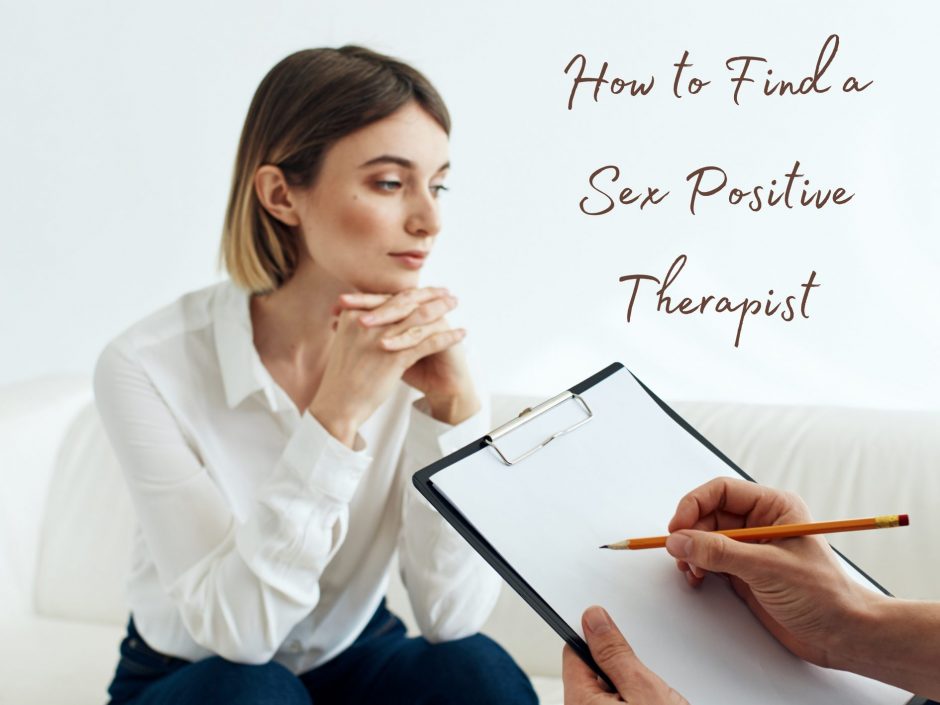
How to Find and Work With a Sex Positive Therapist

When my nesting partner, Mr C&K, and I moved in together, we decided to get joint therapy to help ease the transition and navigate some past traumas that were impacting our relationship. However, as kinky, polyamorous folks in a mixed-orientation and age-gap relationship, it was important to us to find a sex positive therapist who wouldn’t pathologise us.

We got incredibly lucky. The first person we found was, and is, absolutely amazing. She listens to us, believes our experiences, doesn’t pathologise our identities or practices, and educates herself on the issues that impact us.

Most people, however, are not so lucky. It can take a long time to find a good sex positive therapist. Folks with marginalised identities such as queer folks, trans and non-binary folks, people of colour, and disabled or neurodivergent people may struggle to find good sex-positive therapy even more.

These are five strategies I found helpful. Maybe they’ll help you, too!

Use an Appropriate Directory to Find a Sex Positive Therapist

There are directories of kink-aware and sex-positive therapists and other professionals, where you can vet your prospective therapist for specific knowledge and competencies.

Try the National Coalition for Sexual Freedom (multiple countries, somewhat US centric,) the Open List (US only) or Pink Therapy (mainly UK), or do a Google search for sex-positive therapists in your area.

Ensure Your Therapist is Sex Positive By Putting Everything on the Table Upfront

When I say “upfront,” I mean “ideally before the first appointment.” You’ll probably talk to a potential therapist on the phone or by email, and this is a great time to tell them anything you want them to know before setting up your first appointment.

This can be a difficult and vulnerable conversation to have with a stranger. But if you want to ensure that you’ll be getting informed, aware, sex-positive therapy, it’s so worth it. By the time you get into their office (or Zoom room), you’ll feel confident that they understand and respect you for who you are.

Be Matter-of-Fact

Your identites aren’t the problem, so don’t apologise for them. A sex positive therapist will take on board that you’re queer, non-monogamous, kinky, or however you identify and won’t pathologise you for these things.

If your therapist acts as though your sexuality or sexual identities are problematic, or tries to convince you they need to change, fire them immediately and find someone else.

Not sure how to put it? A great sentence is something like: “Just so you know, for context, I’m queer, polyamorous, and I practice BDSM. Do you know what those things are? What that means to me is…”

Expect Them to Educate Themselves

If you manage to find a sex-positive therapist with lived experience of an identity like yours, amazing. But if they’re not already an expert, educating themselves is their job.

Of course, you will need to talk about what words like “polyamorous” or “kinky” or “sex positive” mean to you. But at the end of the day, you’re paying them to help you. That help includes educating themselves. If they’re taking up a lot of your session asking you basic or 101 questions, suggest some resources and move the conversation on. If they make no effort to learn, they’re a bad therapist.

Don’t Be Afraid to Steer the Conversation

Therapy is your time, so don’t be afraid to steer the conversation in the direction you want it to go. “I’d really like to focus on…” is a useful phrase. Again, if your therapist insists that an aspect of your sexuality is a problem when it isn’t problematic for you, think about moving on.

A good sex positive therapist will never use any expression resembling “you wouldn’t have this problem if you were [monogamous/vanilla/etc.]”

Remember You Deserve Top Quality Care

Therapy is expensive, unless you live in a country with a functioning socialised mental healthcare system (lucky you if so.)

You deserve the best care from your therapist. Good sex positive therapy is a relationship built on trust, and you can end the therapist/client relationship any time if things aren’t working out. Please don’t settle for someone who doesn’t treat you – all facets of you – with the respect you deserve.

If this piece helped you, please consider buying me a virtual coffee to say thanks!

New to BDSM? How to Get Started

It’s New Years Eve, the time of new beginnings and new adventures. This is the very first post on this blog. So how better to get started than with some handy hints and tricks on… getting started? If you’re new to BDSM, read on to learn everything you need to know about dipping your toes in safely in this BDSM beginners’ guide.

First Step For Newcomers to BDSM: Get a Fetlife Account

If you have not yet stumbled across it, Fetlife is absolutely the place to be for all things kinky on the internet. It’s not “technically” a dating site, though people do use it that way (for better or worse). Instead, it’s a social networking site for kinksters. The “Facebook of Kink,” if you like.

Before you do anything else – before you go and buy a BDSM starter kit, before you jump on a kinky dating app – get yourself a Fetlife account.

It’s free to join Fetlife and you can give as much or as little information as you like. Paid accounts are available but the main benefit to a paid account is getting access to videos. All the most useful features are free and should be more than sufficient when you’re new to BDSM.

  1. Please don’t use your real name or give out any details more personal than which city you live in. (You can even lie about that if you’re really cautious, though I don’t recommend it because finding local people and events is a big part of the purpose of using Fetlife.)
  2. Put up a profile picture. It doesn’t have to be a face pic, but should be something that speaks to you or represents you (don’t steal other people’s work, though – that’s not cool). Your genitals are NOT a good profile picture, however proud of them you are.
  3. Join some groups related to your interests. Read lots. Listen. Learn. Don’t believe everything you read – the only One True Rule of Kink is that there are no True Rules of Kink (beyond “it is only for informed consenting adults,” of course).
  4. Reach out by message to some people local to you, particularly if they run events or seem very active and respected in the community. Remember: the goal is to make friends and find community at this stage, not to hook up.

Okay, You’ve Got a Fetlife Account. Good. Now Read, Read, Read!

Read posts on Fetlife. Find as many articles, essays and blogs as you can find (on kink in general or on your particular areas of interest.) Read books, watch YouTube videos, listen to podcasts – however you prefer to get your information.

This isn’t a “one shot and done” homework assignment, by the way. You might be new to BDSM now, but I hope you will keep reading, listening and learning for as long as you’re involved in the lifestyle.

Being New to BDSM If You’ve Already Got a Partner or Partners

If you’re single, you can skip this section of the guide as this is written for BDSM beginners already in one or more relationships.

Firstly, if you haven’t already, you NEED to talk to your partner(s) about your interests.

I know how tempting it is, if these desires have been burning inside of you for months or years, to go out and explore them on the sly. We have a word for this, however, and that word is cheating. Most folks in the BDSM community take a dim view of people lying to and cheating on their partners, because this goes against the central ethos of informed consent.

It doesn’t need to be a big sit-down, drama-filled conversation. How about just, “hey, honey? I was thinking it would be really hot if you could be a little dominant in bed sometimes/if you let me spank you/if we explored tying each other up/-insert your interest here.- How do you feel about that?

Hopefully, if your partner is communicative and sex-positive, they’ll be happy to have a conversation about it. That doesn’t mean the answer will be “yes,” necessarily, but you’ll have opened up a dialogue and that’s a huge step.

If they seem curious and excited to know more, talk to them about some of your fantasies and encourage them to have input with things they fantasise about. Explore this through sexting/cyber-sexing if it’s too scary or embarrassing to do it face-to-face at first. Read some erotica or watch some porn together that ticks your kinky boxes. Show them Fetlife, blogs, books and any other material you’ve found helpful. Go to a munch, talk or workshop together.

Explore a few light things first – always with a safeword, of course – and see how you go. Moving slowly, with lots of check-ins, negotiation, love and care is the way to have some really positive kinky experiences. Everything you want to try will still be there weeks, months or years down the line. You don’t have to do everything when you’re brand new to BDSM!

Get out into the community and make friends and build a kinky support network. More on that coming up shortly…

What If They Say No?

If your partner isn’t open to exploring things with you, don’t push. Beginners are often so keen to explore that they end up accidentally or intentionally pressuring their partners.

Give your partner time and space to process, ask open-ended questions, and express yourself honestly. If they’re not interested, is there any other way you can get your needs met? Perhaps with other partners, if you’re non-monogamous, or through opening up your relationship in some limited way if you’ve been monogamous until now? Perhaps with a professional?

If your partner is insistent there is no way your kinky needs can be met while in this relationship, I’m afraid you may have a very difficult decision to make – one which no-one else can make for you.

BDSM Beginners’ Guide If You’re New and Single

Those who already have a partner or partners can skip this section of the guide as it’s written for single BDSM beginners.

If you’re single, it can be really tempting, when you discover this kinky thing, to dive right into trying to find a Dom or sub to explore it all with. However, if you do that, you’re missing out some really important steps.

Hopefully you’ve started off your explorations by joining Fetlife and doing plenty of reading and learning. Perhaps you’ve even reached out to some local people. If not, go and do those things now.

Remember: your goal right now is to make friends and build a community. Partners and opportunities to play will follow. A bit of patience right now will set you up well in the long run, I promise.

Go to a munch, class, talk or workshop (more on this coming up in a minute!) Ask a trusted friend to go along with you if you’re scared.

Get Off the Internet: Getting Out There In Real Life

Yep. After extolling the virtues of Fetlife and all the great material you can find on the internet, the next step of this BDSM beginners’ guide is me telling you to get off the web and out into the world.

Find an event near you – a munch is ideal. A munch is an event in a vanilla location like a pub where kinksters meet up to socialise, hang out and make friends. Most major cities have at least one, and many small towns have them too. Search Fetlife with the name of your city or town to find out what’s going on. If you’re nervous, message the organiser – their Fet name should be listed – and ask if they’d mind introducing you to a few folks. Munch organisers typically do what they do because they love the community and want to give back to it, and most will be delighted to help you find your feet.

Other good events to go to are talks, workshops and classes on your area of interest, or even a kinky conference. These are often a greater time and financial investment than a simple munch, though, so you might want to wait a while before making this leap.

Munch Etiquette 101

Going to your first event when you’re a BDSM beginner is scary. The golden rules, though, are simple. Follow these and you’ll be fine.

  1. Dress and act appropriately. Basically, if it’s okay for a generic pub it’s okay at a munch. Leave the whips and the leather corsets at home. A t-shirt and jeans will be fine in most places, as will a nice shirt and slacks, a cute dress or skirt, or whatever you’d usually wear to meet friends for a drink/ Don’t try to play at a munch unless it’s specifically advertised as one where that’s okay. If in doubt, most events will have a dress code and possibly a code of conduct available online, or you can ask the organiser.
  2. Don’t be a creep. Don’t latch on to that one cute young just-barely-turned-18 girl. Don’t only talk to people of the age, gender and body type you fancy. Don’t ask people to play immediately or ask overly intrusive questions. People will notice and I promise, it’ll piss them off.
  3. Be yourself! Talk about your hobbies, your work, your family, how you came to kink… take your cues from others and just make friends the way you would in any other setting. If you’re shy, a good conversation starter is “I’m new to BDSM and this munch, have you been in the community for long?”
  4. Don’t drink too much or take any drugs.
  5. Don’t touch anyone without permission. Kinksters are often a touchy and huggy bunch, but remember there may be relational contexts you’re not familiar with. Always ask before hugging or otherwise touching anyone.
  6. Don’t be a dick. This covers so many bases. Be friendly, open and welcoming to everyone and don’t be afraid to admit you’re new, nervous and not sure what the protocol is.

Most of all, remember to have fun. If you can, gather the Fetlife names of people you talk to and ask their permission to friend them. (You can always follow up with a PM – “Hey, we met at the ABC Munch. I really enjoyed our conversation about XYZ. Would you like to be friends on here?”

Et voila! You’ve got the beginnings of a kinky community and circle of friends. Now – rinse and repeat. You’ll soon learn who your people are, who you really click with and who you don’t much care for. You don’t need to like everyone but you do need to be polite and civil to everyone (unless, of course, something serious like a consent violation occurs, but that’s beyond the scope of this particular post.)

And there you have it – you’ve made your first steps into Kinkland!

Doesn’t it feel great? I hope this BDSM beginners’ guide was helpful. Now go forth and be kinky, my friends.

Happy New Year.