Five Tools I Use to Deal with Jealousy

Here’s something I feel very strongly about: jealousy in polyamory, non-monogamy, and relationships in general, is normal. Jealousy is a human emotion and something that the overwhelming majority of us will feel from time to time. It is not the devil. And with a little jealousy management knowledge, practice, and self-compassion, it’s actually not that hard to deal it without allowing it to run roughshod over your emotions and relationships.

When people claim to be immune to jealousy, I suspect that they are either suppressing their feelings to an unhealthy degree or that they simply have not encountered a jealousy-inducing situation yet. You can no more be immune to jealousy than you can be immune to happiness, sadness, grief, anger, or any of the rest of the vast array of feelings that make up the human experience.

So when I tell people that I’m polyamorous and they ask “but don’t you get jealous?”, my answer is “sure, sometimes.” That tends to throw people off, as they seemingly expected me to say “nope, never!” The key to healthy polyamory relationship, though, isn’t to never feel jealousy. The key is to find constructive rather than destructive jealousy management techniques.

To that end, here are five tools I use to help me deal with jealousy on those occasions that it does arise. If any of them resonate with you, as always, take what works and leave what doesn’t.

A Surprisingly Effective Polyamory Jealousy Management Hack: Fake It ‘Til I Make It

Sometimes, I like to ask myself “what would the best possible version of Amy do in this situation?” Then I simply do that thing. It might feel a little forced at first, but it usually ends up feeling natural quicker than you might expect.

What would the best version of you do? Perhaps they would be super kind and welcoming to their new metamour, even if they were feeling a little threatened by them deep down. Or perhaps they’d tell their partner they were happy for them after an amazing date, even if they were also feeling really wobbly about it. The point isn’t to lie or to hide your emotions, it’s just to lead with your best foot forward.

This jealousy management strategy won’t be right for everyone. Some people will end up feeling angry, resentful, or even gaslit if they take this route (this is especially true if their jealousy is actually trying to tell them something important. See the next section for more on that.) But if you’re in the place where you know rationally that things are actually safe and okay, and you’re just waiting for your heart (and nervous system) to catch up to your head, this trick works surprisingly well.

Put simply, sometimes I deal with jealousy in polyamory by simply choosing to act in the way a not-jealous person would act in that moment.

Ask the Jealousy What It’s Telling Me

Jealousy is a complex emotion, and often a composite one. This means it is made up of numerous other different emotions. However, I have learned that when I feel jealous, there’s usually a fear at the root of it. This means that one of the best jealousy management strategies, in polyamory or any relationship, is to identify that fear and face it head-on.

Am I afraid my partner likes this other person more than me? If they did, what would that mean for our relationship? Do I see any actual evidence that that’s what is happening? Or perhaps I am afraid that this person is “better” than me in some way (smarter, prettier, kinkier, whatever.) Again, what would it mean if this was true? Even if it was, I’m not in competition with my metamour… so what’s awesome and loveable about me?

Occasionally, your jealousy will have something productive to tell you. It might indicate, for example, that you don’t feel like you’re getting enough of your partner’s attention or that you’d like more one-to-one special time with them. By taking a step back from the immediacy of the emotion, I can assess whether or not my jealousy is telling me anything useful. If it is, I can address that issue by communicating with my partner, finding other ways to meet the need, or remove myself from the upsetting situation. If it’s not, it makes it easier to put the bad feeling to bed.

Talk About It (Sometimes)

The polyamory community preaches “communication, communication, communication” around all kinds of issues, including jealousy. This is good advice in so far as it goes. However, something immensely valuable I’ve learned over the years is that not every single fleeting emotion needs to be communicated about.

Sometimes, in service of feeling like I had to communicate every feeling no matter how small, I’ve ended up having an hour long conversation with my partner over a tiny emotion that lasted no more than a minute. Nowadays that feels like an enormous waste of everyone’s time and energy. If I feel jealous for ten seconds or ten minutes or even an hour or two, I’m unlikely to communicate it to my partner unless I’ve determined that the feeling is trying to tell me something important (see above section.)

However, if the jealousy lasts longer, is more intense or pressing, or is communicating something important, then talking to the partner(s) in question about it is the next step. This doesn’t always need to happen immediately, and often shouldn’t. I’m not going to pull my partner away from a nice date to discuss it, for example. It also doesn’t necessarily need to be a long discussion. Sometimes just a disclosure, a request for reassurance, and a hug is all that’s needed.

When communicating jealousy, it is best to speak as calmly as possible, approach the subject without blame, be vulnerable, and ask clearly for the support you need.

Many times, I’ve used sentences like “I just wanted to let you know that I felt a little jealous when I saw you kissing X yesterday. Obviously you didn’t do anything wrong but I’d love it if you could reassure me that your feelings for me haven’t changed.”

Self Care as Jealousy Management in Polyamory

After many years of doing polyamory, I’ve gained a pretty good handle on what helps me in the moment when I’m experiencing jealousy. Fortunately, many of the things that help are things I’m able to give to myself without anyone else’s input.

I tend to save particularly loving or affectionate messages from my partners so that if I’m feeling low and they’re not around to offer reassurance, I can give it to myself by rereading some of the things they’ve said about me. Getting some love from elsewhere, such as by calling a friend or another partner, can also help to soothe the part of my brain that’s telling me I’m not loveable or not good enough.

Other things that can help include something that takes me out of my head and grounds me in my body, (masturbation is particularly helpful for me but sometimes exercise and yoga also work), warmth and cosiness (a bath, snuggling under a blanket, cuddling my cat), distraction (reading a book, watching TV, playing a game, doing a task), doing something creative, or just taking a goddamn nap.

Release the Feelings

I very rarely feel intense jealousy these days. In the past, though, I’ve felt it powerfully enough for it to be overwhelming. In these instances, some kind of physical and/or emotional release can help to let the feelings out and, ultimately, lessen them or at least make them feel more manageable.

Of course, it’s important to choose a safe outlet or target. Yelling at your partner is not an acceptable emotional release for your jealousy! Some strategies I’ve either tried or heard others recommend include screaming into a pillow, venting to a consenting friend, doing some kind of intense physical pursuit such as running, dancing or weightlifting, hitting a pillow or punching bag, drawing or writing how you feel (which you can then share, keep, or tear up as you choose), laughing, playing loud music and singing along… whatever helps you to feel more relaxed, less tense, and to let out some of what you’re feeling is a great option.

You might find afterwards that you no longer have the difficult feelings any more… or that if you do, you feel more centered and ready to deal with them in a productive way.
How to Set Boundaries Firmly But Lovingly

The older and more experienced I get, the more I learn that all healthy and loving relationships—romantic, platonic, familial, and even professional—must have good boundaries. But what are boundaries, why are boundaries important, what does setting and holding boundaries in a loving way look like?

This post focuses on romantic and sexual relationships, since that’s my main area of expertise and the theme of this blog. However, many of these tips for setting boundaries can apply to any type of relationship.

What Are Boundaries?

Love is Respect (a fantastic resource on healthy relationships aimed at young people) has this to say:

Boundaries are really about your relationship with yourself; they help you honor your needs, goals, feelings and values. Boundaries can be emotional, physical or even digital.

Love is Respect

In other words, boundaries are about the things that are yours and over which you have ultimate say. Access to your body, your time, your home, your property, emotional or physical intimacy with you, and even your digital spaces are all areas where boundaries are essential.

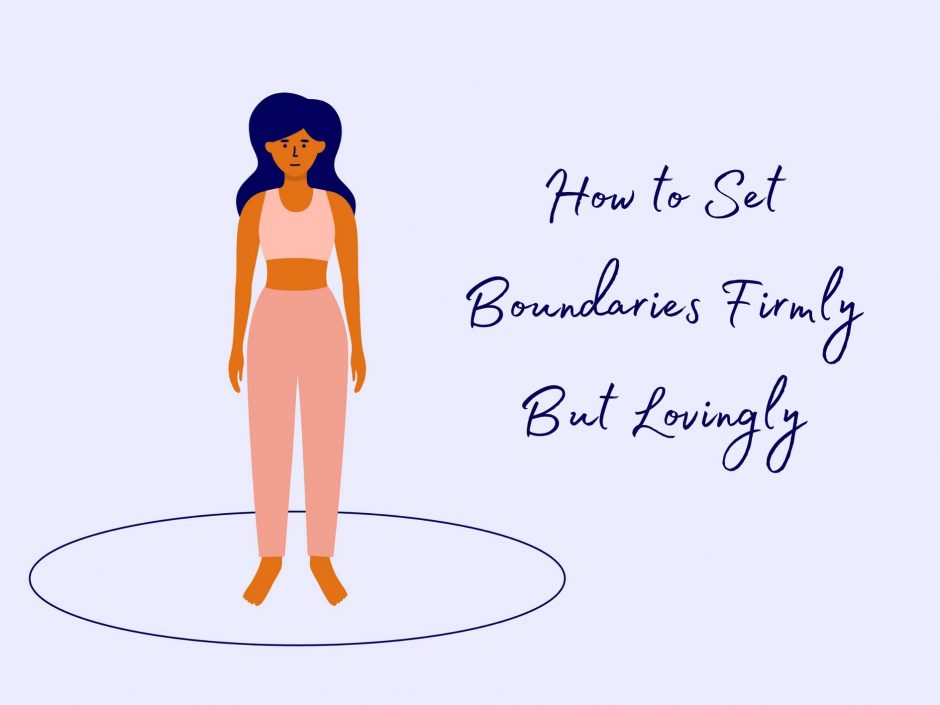
Boundaries are not weapons, rules under another name, or things you should wield to punish someone else. They are ultimately about what you will you and how you will respond to certain situations. “I won’t stay in a relationship with someone who is unfaithful” is a boundary. “I don’t trust you, so you have to let me go through your phone whenever I want” is not.

Why Are Boundaries Important?

Good boundaries are a crucial component of taking care of yourself. Without strong boundaries, you are likely to end up feeling used, burned out, or taken advantage of. This can happen even if no-one has any ill intent towards you. Boundaries are one tool we can use to protect ourselves. They help you to keep a strong sense of self, drawing a clear line in the sand between what you will and won’t tolerate, what you will and won’t do, and where you end and someone else begins.

Good boundaries enable true consent to exist. A person can only give a meaningful yes (to sex, a date, a new project or responsibility, or even just a conversation) if they also have the ability to safely say no. Good boundaries allow us to say yes when we mean it, and no when we need to.

What Do I Mean By Loving Boundaries?

When I talk about “loving boundaries,” I am talking about setting and holding boundaries in a way that enables strong, healthy, and loving relationships to flourish.

If you’ve historically been bad at setting and maintaining boundaries, it can be difficult to know where to start. You might worry that people will be upset, angry, or disappointed when you start to set boundaries with them. You might even be right! But that just makes those boundaries even more important. And in a healthy, loving relationship, your boundaries are gifts to your loved ones. They are a guiding light in how to love you and how to help you love yourself.

There are times, unfortunately, when setting loving boundaries won’t work. If someone is determined to violate your boundaries, you might need to be firmer or impose harsher consequences for overstepping them, such as ending a relationship or telling them to leave your space.

Here are a few of the strategies I’ve found most effective in setting and holding loving boundaries. Hopefully some of them will work for you, too.

Use “I” Statements When Setting Loving Boundaries

Boundaries are about you, so use “I” statements when you set them as far as possible. This can help prevent the other person from getting defensive or pushing back against what you’re saying. It also reduces the likelihood that they’ll hear your boundary as blame, a punishment, or shutting them out.

Here are a couple of examples:

“I’d love to cuddle with you but I don’t want to have sex tonight.”

“If I’m in my office with the door closed, I’m focusing on work and only want to be interrupted if it’s an emergency.”

Use a Calm Tone of Voice

Loving boundaries should be communicated calmly as far as possible. This can help to keep the boundary conversation respectful and positive. Raised voices, name calling, or an accusatory tone are all likely to make them defensive before you’ve had chance to make your point.

It might sometimes be necessary but as a general rule, the middle of an argument isn’t a great time to have a positive discussion about your boundaries and needs.

Here’s a low-stakes example: imagine you’ve had a tough day and you just want to zone out on the couch by yourself for a while, but your partner wants to chat about something non-urgent. Consider the difference between “ugh, go away!” and “honey, I need a little space to myself right now, can I check in with you in half an hour?” One is brusque, harsh, and likely to make your partner feel unwanted or scolded. The other calmly tells them what you need and when they can expect you to re-engage.

Assume the Other Person is On Your Side and Wants to Support You in Setting and Holding Boundaries

Unless you have very clear evidence to the contrary, assume that the other person is on your side and cares about you. This means that they wouldn’t want you to overextend yourself or say yes when you really mean no. Part of loving you is supporting you in setting and holding boundaries.

Assuming you’re on the same side will help you approach boundaries as a necessary self-care step for yourself, and not as something you’re doing to the other person. It can also be self-fulfilling; if you signal to the person that you expect them to be understanding and respectful, they’re more likely to want to live up to that expectation by responding appropriately.

Consider When to Compromise (and When Not To)

Compromise is essential in healthy relationships. This means you might not get 100% of what you want in every situation. If your needs conflict with your partner’s, it can be useful to have a frank conversation and try to come to a compromise.

However, you should never compromise on a firm boundary. If you’re someone who (like me) tends towards people-pleasing, what the other person thinks is loving compromise can look like you conceding your boundaries to keep the peace. Don’t do that.

Directness is Kindness: Loving Boundaries Are Not Ambiguous

One of the biggest headfucks in a relationship can be not knowing where you stand or what the other person needs. By making someone guess at your needs or hiding your true feelings, you’re not doing them any favours. People who care about you would rather know what’s going on with you. Setting and holding firm boundaries is more loving than being vague.

Being direct gives the other person the gift of knowing you better and having clear information about what you need. Clarity, specificity, and directness are essential when it comes to boundaries.

Model Respect for Others’ Boundaries

In a healthy relationship, both (/all) people have their boundaries lovingly heard and respected. So as well as setting and holding your own boundaries, you need to listen to and adhere to theirs.

You Get to Have Boundaries Even If Someone Else Doesn’t Like Them

You might do everything right when you set your boundaries, and the other person might still be upset. While you can sympathise and work with them to get both your needs met, their feelings about your boundaries are ultimately not your job to solve.

If someone becomes very angry or upset about a reasonable boundary, it might be because they felt (consciously or subconsciously) that they were owed a certain level of access to you. This is a huge sign that the boundary was necessary! Stand firm in holding your boundaries. If they’re consistently disrespected, it might be time to rethink the relationship.

Sexual Side Effects: How to Have Sex if Medication is Getting in the Way of Your Pleasure

Unfortunately, sexual side effects are incredibly common with numerous types of medication. Antidepressants and other mental health medications including SSRIs and MOAIs, blood pressure medications, ADHD medications, and certain hormonal therapies are just some of the commonly prescribed medical treatments that can affect sex drive, orgasm, and sexual function.

Sexual side effects can include loss of desire, low arousal, erectile issues, pain during sex, and anorgasmia. Obviously, not everyone who takes medication experiences these issues and not everyone will experience them to the same extent. They can also naturally occur as a result of ageing, stress, physical health issues, and so on. But they are super common. In this post, I’ll share some strategies that can help you to manage them and continue to access sexual pleasure, if you want to.

Note: I am not a medical professional, so I have kept my advice here to sex and relationships advice, not medical advice. If you have any medical concerns or queries, see your doctor.

Talk to Your Doctor About Sexual Side Effects

You shouldn’t have to choose between the right medication and a happy and pleasurable sex life. You should be able to have both! So if you’re suffering from sexual side effects, talk to your doctor. My doctor once told me to stay on my antidepressants even though they killed my sex drive and appetite. I ignored that advice and ultimately switched to a different doctor (and a different drug.)

A good provider will work with you to find a medication solution that helps you without damaging your sex life. This might mean adjusting your dose, trying a different drug, or implementing other strategies to combat the sexual side effects. If your doctor dismisses you or doesn’t think sexual pleasure is important, go to a different doctor.

Sex matters. For many of us, it’s a quality of life issue. You deserve to get medical support and be taken seriously.

Get Creative and Expand Your Definition of Sex

Perhaps you can’t or don’t want to change your medication right now (or ever), but you also want to start enjoying sex again. If so, I invite you to think about your definition of sex. When you think of sex, are you thinking exclusively about penetrative intercourse or another specific activity?

Getting creative, exploring different kinds of touch, and expanding your definition of sex can all be great ways to sidestep sexual side effects and find new ways to access pleasure and sensuality.

What if sex didn’t need to involve penetration? What if there was no pressure for anyone to have an orgasm, and you could just enjoy touch and sensation without racing towards any particular goal? If it didn’t matter whether a cock got hard or a pussy got wet? Paradoxically, removing the focus from things like penetration, erection, or orgasm can actually make those things easier. Don’t underestimate the power of taking the pressure off.

Intimate connection doesn’t even need to involve your genitals! What if you spent an entire session just kissing and making out, focusing on nipple play, trading massages? What if a kink scene, whether that involves flogging or shibari or candle wax or sensation play or power exchange, was the main event rather than an appetiser? When you step away from what you assume sex is, you discover all the things pleasure can be.

Experiment with Toys

Sex toys are amazing for so many reasons! (That’s why I turned talking about them into a career.) One of the ways they’re amazing? They can help to overcome or navigate sexual side effects by offering different kinds and intensities of sensation.

If you’re struggling with a loss of sensation, powerful vibrators can help. When I suffered from anorgasmia and a reduced sex drive due to antidepressants, a wand vibrator helped me to break through the block. Some people with a clitoris find that the focused intensity of suction toys works well when sensitivity is low. If you have a penis and your medication makes it difficult to get or stay hard, a toy like the Hot Octopuss Pulse – which can be used from either erect or flaccid – can be a great choice. If you want to have penetrative sex, a strap-on, fucking machine, thrusting toy, or dildo can facilitate it.

If pain during sex is an issue, toys and accessories can also help. The OhNut is an amazing invention that limits the depth of penetration with a penis or dildo, and dilators can help to gently stretch and relax your vaginal tissue.

Explore Self-Touch

Learning to navigate sexual side effects and adjusting to your body’s new normal can be a process. Whether or not you have a partner, this is a great time to explore self-touch. You might want to experiment with masturbating in different ways (such as in a new position or with toys), experiment with mindful masturbation, or perhaps just touch your body in whatever ways feel good to you.

Talk About Your Sexual Side Effects with Your Lover(s)

Too many of us have, at some point, struggled through sex that was not pleasurable or even sex that was painful. Perhaps we felt pressured, perhaps we didn’t want to let our partner down, or perhaps we believed that maybe we’d “get into it” if we just kept going. I understand the urge, but you deserve so much more than suffering through uncomfortable or painful sex.

A partner who loves and respects you will want to understand your experience and support you. Great sex with a partner is a collaborative process. It begins with honesty and vulnerability, so – as long as you’re in a safe and trusting relationship – talk to your partner(s) about how you’re feeling, what’s going on for you, and how you’d like to address it. If you want them to do or not to something specific, ask for it. If you just want their patience and understanding while you adjust, ask for that.

Fight Shame and Self-Blame

Sexual side effects often bring a lot of shame. You might feel as though there’s something wrong with you, or worry that you’re letting your partner(s) down. Some people even feel as though their masculinity, femininity, or sense of sexual identity is threatened.

There is absolutely no shame in what you’re going through right now. Orgasm problems and loss of sex drive are still stigmatised and, unfortunately, so are certain types of medication such as antidepressants. However, please try to avoid getting into a shame cycle or blaming yourself. But sexual side effects are incredibly normal, and most of us will be on medication that will impact our sexuality at some point in our lives.

If you’re struggling with shame, reach out to others who have had similar experiences, ask your partner(s) for reassurance and support, or talk to a therapist.

Check Out These Resources to Help You Navigate Sexual Side Effects

Wherever you are in your journey with medication and navigating sexual side effects, these are a few resources I recommend. As always, pick the ones that sound most useful to you!

If you find my work useful, you can help me keep doing this by buying me a coffee! This post contains affiliate links.

All the Things “You, Me, Her” Got Wrong About Polyamory

Regular readers might remember that I briefly flirted with a ridiculous quest to review and recap every episode of You, Me, Her, the polyamory-centered romcom that premiered on Netflix in 2016. However, this fizzled out somewhere in the middle of Season 1 because I ran out of time, energy and fucks to give about this stupid show.

By the way: if you enjoyed this post, you might also enjoy my review of everything The L Word: Generation Q got wrong about polyamory.

You, Me, Her was inexplicably well-received, receiving an average review rating of 84% on Rotten Tomatoes and 7/10 on IMDB. However, I suspect the vast majority of the watchers and reviewers were monogamous people who enjoyed this show as a titillating peek into what they imagine polyamory to be like. Amongst polyamorous people, though, it was pretty much universally trashed.

Heads-up that this review contains spoilers for the first three seasons of You, Me, Her.

In case you haven’t seen it, You, Me, Her is an American comedy-drama series following suburban married couple Jack (Greg Poehler) and Emma (Rachel Blanchard.) Bored with their marriage, both members of the couple hire much younger sex worker, Izzy Silva (Priscilla Faia.) When they both fall in love with her, they decide to enter a polyamorous triad. Chaos ensues.

Instead of reviewing this mess one episode at a time, I thought I’d bring you all the things I think it got wrong about polyamory – so far – in one easy post.

1. Triads don’t typically start with married couples hiring the same escort

Or: Izzy would never date these two idiots.

Izzy is a 25-year-old college student who is doing sex work to pay her way through university. Jack hires her for a date and, when Emma finds out, she does the same thing because that’s how mature, married adults slap a bandage on cheating, apparently. However, Izzy inexplicably decides she’s super duper into both of them for real. This would never happen.

Any sex worker in Izzy’s place would do her job, take the money, and leave this pair to work out their shit in suburban hell by themselves. Polyamorous relationships can start in lots of ways, but “we both hired the same sex worker” isn’t one of them.

2. Being polyamorous in Portland would not destroy your life

This show is set in Portland, Oregon, a city that is not only famous for being super liberal, but where I know for a fact there’s a huge polyamorous community. Sure, there are some conservative people there as there are anywhere. But the idea that being outed as bisexual and/or non-monogamous in fucking Portland would totally destroy Emma’s life is wildly unrealistic. If the writers wanted that narrative to work, they should have set it in rural Alabama or something.

3. Partners are not commodities that you have to share out equally

Jack and Emma agree that they each get “two nights with her… I mean you” (that is, with Izzy) per week. They then have a debate about who “gets” Izzy first.

Do I really have to spell out all the ways this is gross beyond belief? She’s a human being, not a pie to be shared out in equal slices. Ethical polyamory does not involve married couples treating third parties like literal toys.

4. Using polyamory to save a failing marriage never works

The entire You, Me, Her polyamory situation begins when Jack and Emma decide they’ll each go on dates with Izzy, then come back fired up and ready to ravish the hell out of each other. However, that’s not how polyamory works. That’s also not how feelings or sexual desire work. And once again, it’s objectifying as hell. They’re basically using Izzy as a human sex toy.

Opening up the relationship isn’t how you inject sexual spark back into your ailing marriage. “Relationship broken, add more people” is a cliche because people attempt it all the time and it works… literally never.

Also, can we talk about how angry Jack gets mad Emma comes back from her date and isn’t up for fucking him right there and then? Your partner doesn’t owe you sex just because they just went on a date with someone else.

5. Jealousy is inevitable, but courting it isn’t healthy

Jealousy in polyamory is normal and fine, as long as you deal with it in a healthy way. Trying to make your partner jealous deliberately in order to make them want you more is manipulative, cruel, and ineffective.

Jack and Emma use Izzy to make each other jealous. Izzy then uses Andy, who is a kind of dick but seems to be really into her, to make Jack and Emma jealous. No-one is having a good time.

6. Polyamory isn’t just for rich white people

Jack and Emma are the type of white, affluent, married professionals you’d expect to see at a swingers’ club. There’s nothing inherently wrong with that, except that the polyamorous community is actually hugely diverse and we’re all bored as hell of seeing every representation of polyamory reduced down to “rich white people who don’t like fucking their spouses any more.”

7. No-one falls for two people at the same rate, at the same time, and in the same way

Unfortunately, this is exactly what Jack and Emma expect of Izzy. In fact, it’s pretty much what all inexperienced unicorn hunters expect of their new partners and it is wildly unrealistic.

At one point in the show, it becomes apparent that Izzy’s connection with Emma is growing stronger while her connection with Jack is developing at a slower pace. Instead of dealing with his feelings or communicating with his partners, Jack throws a fit and fucks off for several days.

8. You don’t have to live with all your partners (and most people don’t)

Jack, Emma and Izzy move in together almost the moment they’ve decided to give a triad relationship a go. Not only is this the mother of all bad ideas, it’s also just unrealistic.

Most people, regardless of relationship structure, want to wait until a relationship is stable and established before cohabiting is even discussed. Many polyamorous people never want to live with all their partners. Many of us have one nesting parter. Others prefer to live alone.

By the way: regardless of relationship set-up, the trope of three people sharing a double bed every night trope is sweet but unrealistic. Being the middle spoon is lovely for about five seconds, until you overheat or both your partners start snoring.

9. Extremely conservative, homophobic parents don’t come around in three seconds flat

When Emma’s parents visit, they inevitably find out about the polyamory situation almost immediately. However, they also transition from being hyper-conservative, openly-homophobic bigots who only care about Emma having babies to being totally chill with everything in less than five minutes of screen time (which equates to perhaps an hour in plot-time).

People can come around, of course. People question their assumptions when they are directly confronted with them by someone they love. But it usually takes more time than this, and often much more.

10. Communication, not sex, is the way to solve your problems

Whenever Jack, Emma and Izzy have a relationship problem, they just fuck and it all goes away (until it inevitably returns, of course, because they didn’t actually address it.) Sex is great but it’s not a way to fix problems. Only honest, open, and respectful communication can do that.

And by the way? Treating someone like shit until they leave and then chasing them through an airport is not romantic.

11. And finally, we are all monumentally sick of MFF closed triads

Many people assume that all polyamory is one straight, cisgender man with two bisexual, cisgender women in a closed triad. Polyamorous newcomers often assume this is the most desirable configuration. However, it’s actually a fairly rare set-up, hard to attain and even harder to maintain over a long period of time. Yet it’s the only fucking representation the mainstream media is willing to give us.

Can we move on to something more representative and less male-gazey already, please?

You, Me, Her review: a bad show with worse messaging

I am convinced the people who made this show have either never met a polyamorous person or don’t like us very much. This is bad representation. It furthers negative stereotypes, it romanticises behaviour that is at best toxic and at worst abusive, and it views polyamory through the “tee-hee look at these weirdos” gaze of the monogamous world.

There are two more seasons of this show still to come, so maybe I’ll watch them and come back with a full review when we’ve seen how it ends. On the other hand, maybe I don’t hate myself that much.

Did you enjoy this You, Me, Her review of sorts? If so, please buy me a coffee!

Threesome Tips: How to Be a Good Couple to Have a Threesome With

Threesomes are amongst the most common sexual fantasies, but threesome tips often focus on how to find a third person to play with as an established couple. I wanted to take things in a slightly different direction with this threesome guide and instead focus on how, once you’ve found that person, you can be a good couple to have a threesome with.

In other words, how can you give them a great experience, treat your special guest star well, and end the night with everyone feeling good?

The Absolute Most Important Threesome Tip Of All: No Pressure

Pressure is the ultimate desire- and pleasure-killer. It’s a really bad idea to go into a threesome (or indeed any sexual experience) with an overly rigid idea of how you want it to go. This puts undue pressure on everyone. It’s especially unfair on an incoming third party, who may well be at a power disadvantage when playing with an established couple.

Don’t rush things. Don’t invite a potential playmate over with the goal that you must have a threesome and that anything else is a failure. Spend time getting to know the person, learn about what they’re into, ask what they’re hoping to get out of the experience, and talk about what kind of ongoing dynamic you all want to have, if any.

If things do progress to a sexy place, don’t make it a rush to tick off sex acts like you’re trying to round all the “bases” as quickly as possible. Making out, touching, groping, massage, hand sex, oral sex, and kinky play can all be amazing in and of themselves. Don’t rush to penetrative sex, or even assume that penetrative sex is on the table at all.

Before You Have a Threesome, Get Your House In Order

No, I don’t mean your physical house, though tidying up before you have a date over is a nice and courteous thing to do. I’m talking about the house of your relationship.

What’s the only thing more awkward than being in the middle of a couple having a fight? Being in bed with a couple having a fight. It is tremendously unfair to bring another person into your dynamic, even casually, if your relationship is on rocky ground. My top threesome tip to couples having problems? Don’t do it. Wait until things have stabilised.

Before you take your threesome plans to reality, discuss your feelings in depth with your partner. Talk about any insecurities or jealousies that might come up, and plan for how you’ll handle it if they do. Your plan should focus on kindness and compassion towards everyone, including the third person. “Well we can just kick her out if one of us gets jealous” is neither a solid plan nor an ethical way to treat a human being.

“Relationship broken, add more people” is a cliche because so many couples try to do it… and it never, ever ends well.

Good Threesome Sex Tip: Approach It As a Collaboration, Not a Service

Too many threesome guides focus exclusively on the couple and seem to forget that there are three humans involved, not two humans and a toy. Good sex is a collaboration, a dance between equals. Everyone should be free to both give and receive pleasure The goal should always be mutual enjoyment satisfaction for all parties, not just the established couple.

Your threesome buddy may not be a fully fledged member of your ongoing relationship, but they are a fully fledged member of whatever dynamic the three of you are creating together. Even if the sex is casual, they are not a life-size sex doll! They’re a person with their own wants, needs, desires and feelings, and those deserve to be honoured.

Check in with everyone involved early and often, and make enthusiastic and ongoing consent your minimum standard. If you’re not absolutely 1000% sure you have consent for something, always ask. “Ruining the mood” is a myth. A good time will never be ruined by checking on consent, but it can easily be ruined by overstepping someone’s boundaries.

I hope it goes without saying that no means no, and you should never push someone to do something if they don’t want to.

Safer Sex Tips for Threesomes

Safer sex is essential, and you should never go into a threesome (or any sexual encounter) without thinking about and discussing it.

Ideally, this discussion should happen while clothes are still on, long before any sex happens, but it can happen in the moment if necessary (for example, if your threesome evolves spontaneously.)

Everyone should disclose their testing status, their safer-sex protocols, the method(s) of birth control they’re using if relevant, and any other relevant information such as allergies.

Safer sex is at least as much your responsibility as a couple as it is the third party’s responsibility! Everyone is responsible for looking out for their own and their intimate partners’ sexual health.

By the way: if you’re using toys in your threesome, read my guide to sex toys, STIs, and sharing toys safely.

What Do You Need? Have It On Hand

Ensure that your stash of condoms, lube, gloves, dams and any other relevant safer sex supplies is well-stocked and easily reachable. If you might want to use toys, make sure they’re close by (and charged, if applicable!)

Water, snacks, blankets, extra pillows, and towels are also useful things to have on hand.

Make An Aftercare Plan

Most threesome tips forget this part: what happens afterwards?

Will your threesome buddy stay over, or would they prefer to go home afterwards? How will they get home safely? If they do stay, would they prefer to sleep with you both or in a separate bed? What do they like to eat and drink in the morning? If they’re going home, would they like you to check in the following day?

Make sure there’s time to cuddle, debrief if necessary, and make sure everyone is okay and has everything they need after sex. Offer, and ask for, reassurance and affection freely as needed.

And that’s it! I can’t guarantee you’ll have an amazing threesome if you follow the tips in this guide, but you’ll be safe in the knowledge that you’re treating your very special guest star with the respect, compassion and consideration they deserve.

If you enjoyed this post, you can buy me a coffee to say thanks.

Beyond Safewords: 8 BDSM Safety Tools You Can Use

There are very few things in kink that I take an unshakeable hard line on. But as someone who is passionate about BDSM safety and more ethical ways of practicing kink, one of them is this: BDSM safewords are essential.

What Are Safewords?

Safewords are simple code words used in kink scenes that mean “stop.” They’re particularly useful for scenes in which words like “no” and “stop” may not be taken at face value as part of the game, but I recommend having one in place regardless of what type of kink you’re doing.

The best safeword is something that you can easily remember and wouldn’t otherwise say in a kink scene. The most commonly used safewords these days seem to be the traffic light system:

  • Red = “stop everything right now”
  • Orange/Yellow/Amber = “pause and check in”
  • Green = “everything is good, keep going”

Use these if they work for you, or come up with your own. Safewords I’ve used include canary, aardvark, and banana.

Beyond Safewords: Other BDSM Safety Tools

Safewords are vital but they are not the be-all/end-all of BDSM safety. That’s why I wanted to suggest a few other tools, tricks, and pieces of wisdom you might want to keep in your kink safety toolkit.

“No”: The Ultimate Safeword

In the absence of very explicit negotiation to the contrary, “no” is the ultimate BDSM safeword. Unless you and your partner have agreed that (for the duration of a scene, or during kinky play in general) “a ‘no’ is not to be taken at face value”, guess what?

No means fucking no.

A “Check In” or “Adjust” Word

I touched on this above as it forms part of the increasingly popular traffic light safewords system. If you need to pause, check in with your partner, or adjust something, a check-in word can help to facilitate this without bringing the entire scene to a screeching halt.

A check-in word is useful for moments when (for example) your leg has gone to sleep, you need to change positions but want to keep going, or you need to grab some more lube.

Really Robust Negotiation

BDSM negotiation is all about what happens before you start playing. It can be a long and involved process where you both fill in Yes/No/Maybe lists and compare your answers, a quick conversation before you begin, or anything in between. This all depends on your experience level, your existing dynamic or relationship if there is one, and the types of play you’ll be engaging in.

Of course, things can still go wrong. There’s no shame in that as long as everyone was operating in good faith. BDSM safewords are vital, but negotiating thoroughly reduces the chances you’ll need to use one and increases the likelihood of enjoying a fun scene where everything goes well.

A 1-10 Pain/Sensation Scale

This tool is particularly useful if you’re engaging in pain play of any kind, though it can be useful for any type of play that involves intense sensations. It’s a quick way to check in with a bottom or receiving partner and see how they’re feeling. As a general guideline, 1 means “I can barely feel that” and 10 means “I am at or very close to my limit and may safeword soon.”

As well as asking your partner what level they’re at, it’s also useful to ask them what level they want to be at. A hardcore masochist might want to get up to a 9 or 10 and stay there, while a lighter player may be happier staying at a much lower number. Of course, the desired level can also vary day to day and scene to scene.

Body Language and Non-Verbal Communication

If you and your partner know each other well, you probably know each other’s body language and non-verbal cues pretty well. Body-language is far from foolproof, and even people who have known their lovers for decades can get it wrong. But it’s also a major part of human communication and can be a valuable tool if you take the time to tune in.

Does he go silent when something is wrong? Do deep, guttural moans mean she’s having fun, but high-pitched squeaks mean she’s reaching her limit? Do they clench their fists when they’re having a tough time with something? Is crying good or bad?

References

If you want to play with a new person, it’s a good idea to scope out what their reputation is. Are they known to push boundaries or disregard safewords, or are they highly respected for their ethical and risk-aware play style? You can ask around your local kink scene or check with the organisers of events they go to. References, vetting, and community safeguarding are essential parts of enhancing BDSM safety for everyone.

Sadly, this method has its problems. How useful it actually is will likely depend a lot on your local scene politics. Unfortunately, some kink communities have a problem with protecting abusers, especially if the abuser is popular, charming, or good at throwing parties. Ask several people and if in doubt, seek a second opinion.

Safe Calls

Sadly, some people can be perfectly charming and seemingly safe players in public, but behave very differently behind closed doors. That’s why I recommend implementing a safe call if you’re going on a play-date or into a private space with a new person.

Agree to call, text, or otherwise contact someone (a friend, another partner, or a trusted person in your community) at a prearranged time to let them know you’re safe, and agree on what they will do if you fail to check in.

Aside from the obvious benefits of someone knowing where you are, who you’re with, and what to do if something goes wrong, setting up a safe call and informing your date about it can also tell you a lot about them. If you say “I need to call my friend by 4pm to let her know I’m safe,” a good play partner will say “sure, maybe set an alarm to remind yourself?” and not “what the fuck!? Don’t you trust me!? I’M A NICE GUY!!!”

A Spotter

Finally, we have a BDSM safety tool that I feel is underutilised but tremendously valuable. A spotter is a person who watches a play scene but is not directly involved unless they’re needed. For example, a more experienced rigger might observe a rope scene to make sure the tie is safe.

Using spotters is a brilliant way to minimise risk when you’re learning and trying new skills, but their usefulness extends beyond beginners. If you’re playing with someone new or someone you don’t know very well, having a trusted third party there can help to keep you safe. They can step in if boundaries are overstepped or safewords not adhered to. Someone who knows you, your body, and your reactions well is ideal. At a play party, a Dungeon Monitor (DM) may also be able to take on this role.

If you enjoy my content, please consider buying me a coffee, sharing this post on Bluesky or Fetlife, or shopping with my affiliate retailers to show your appreciation!

BDSM Negotiation: 4 Valuable Tools to Help You

One of the coolest things about kink is that it’s almost infinitely varied. Everyone’s interests, experience, and reality are completely different and there is more to explore than any of us will get to in a lifetime. This variety is also why BDSM negotiation is important.

Just because two people are kinky, you can’t assume that they’ll have many (or any) kinks in common. Kink negotiation is the process of figuring out what you want to do together, what’s off the table, and how you want to feel during your scene. Negotiation is a vital component of BDSM safety.

If you’re new to BDSM negotiation, it can feel forced or awkward at first. You might not be sure what to say or how to communicate your needs. If so, these tools should help you.

BDSM Negotiation Tool #1: A Comprehensive Yes/No/Maybe List

A Yes/No/Maybe list is a worksheet listing various kinky activities on which you can indicate whether you’re a yes, a no, or a maybe for engaging in each activity.There are hundreds of variations of the Yes/No/Maybe list available online. I like this one, which is pretty thorough and includes spaces to indicate your experience and level of interest.

You can either go through the together with your partner or prospective partner, or complete them separately and then swap lists to compare. Either way it’s a brilliant tool to get discussion flowing, figure out what kinks you have in common, and maybe discover some activities you didn’t know existed. (Ask me how I learned what “figging” and “rimming” are back in the day.)

BDSM Negotiation Tool #2: Pervocracy’s Concise Kink Worksheet

Yes/No/Maybe lists are great, but the good ones are also long. That’s why Cliff Pervocracy (one of the OG sex bloggers!) put together this “Concise Kink Worksheet“.

When you’ve established you have some compatible kinks and are wanting to get down to playtime, this sheet suggests some essential talking points to help you establish desires, limits, health and safety precautions, and what you want to get out of a scene.

BDSM Negotiation Tool #3: A BDSM Test

A BDSM test is an online quiz that asks you a series of questions to determine what kinky archetypes or roles you might be drawn to. I like this one from Fetish.com. If you’re not sure where to start, why not complete a quiz like this one and ask your partner to do the same, then compare your results and talk about what they mean for your kinky connection?

Remember not to take your results too seriously. It’s a guide, not a command. If the quiz tells you you’re a Mommy Domme but you identify more as a Mistress with a nurturing streak, that’s fine! If the quiz says you’re a masochist but you prefer the term “bottom”, you get to choose the terminology that works for you.

BDSM Negotiation Tool #4: Erotic Content

If you like to consume kinky content such as ethical porn, audio porn, or written erotica, it can be a great starting point for your real-life kink negotiations. Consume content together with your partner if you’re comfortable with that, talking about what appeals to you and what doesn’t. If you can’t or don’t want to do this together, consider sending each other clips or links that do it for you and use them as a jumping-off point.

Remember, of course, that porn is not reality. Real-life BDSM is unlikely to look exactly like a beautifully-shot professional scene or play out exactly like your favourite erotic story. Erotic content is entertainment, not education. But it can still inspire you, give you ideas, and spark conversations that can help with your BDSM negotiation process.

If you enjoyed this post and would like to support me, please consider sharing it on Bluesky or Fetlife, buying me a virtual coffee, or shopping with my affiliates in the right hand sidebar.

Online Dating Tips for Men Into Women: 10 Dating App Mistakes You’re Probably Making and How to Fix Them

We all know by now that the number one online dating mistake is to use our genitals as our profile picture, right? (We do, right?) But what other less-obvious-but-equally-offputting things are you doing or saying on dating apps that are causing potential matches to swipe right? I don’t really date men any more, but I learned enough from my years of doing so to put together this list of online dating tips for men based on dating app mistakes you really need to stop making.

Online Dating Tips for Men Into Women: 10 Mistakes to Avoid

Whether you’re using Tinder, Feeld, OKCupid, Fetlife, or another dating site or app entirely, avoid these common mistakes at all costs.

“I hate writing about myself” or “ask me”

This is the most boring cop-out of an “About Me” section possible. You might as well have written “there is nothing interesting about me whatsoever.”

You only have a small amount of space on your dating profile, and this is a waste of it. Instead, share a few carefully chosen tidbits about you that will intrigue a potential match and make them want to know more.

“Ask me anything you want to know” and its variations sidestep the process of putting any actual effort in. It indicates an assumption that your prospective will be so blown away that they’ll put all the work in for you. Spoiler: they won’t.

“I’m just a normal guy”

What does this mean? There are 8 billion people on this planet and approximately half of them are men. What is a “normal” guy?

Rather than lumping yourself into some nebulous, gendered category, think about what makes you YOU.

Too much negativity

I’m not a “positive vibes only” person and I certainly don’t embrace toxic positivity. However, your online dating profile is not the place for lengthy rants about the last person who broke your heart, how much you hate your job, or how much online dating sucks.

By the way: this also applies to talking about the kind of partner you want. Talk about the positive attributes you’re looking to find, not the negative ones you want to avoid.

“I’m really good at eating pussy”

Want to know a secret? No man who bragged about his cunnilingus skills on his dating profile has ever given me an orgasm. My theory is that this is because they were so confident in their knowledge of “what women like” that they forgot to pay attention to what I like.

Every vulva is different and there is no such thing as being universally “good at eating pussy.” That thing that had your first girlfriend moaning in orgasmic bliss that one time in 2008 is not necessarily going to do anything for the rest of the women you will have sex with throughout your lifetime.

“I’m looking for a real woman”

Again, what does this mean? What makes a woman “real” and, by extension, what makes one “fake?”

This reeks of some really problematic and outdated assumptions about gender. There are endless ways to be a woman (or to be any gender.) All women are real women. If there are specific traits you’re looking for in a partner, be specific about it.

Disregarding a person’s stated preferences

Unfortunately, one of the most commonly cited but really bad online dating tips for men is “shoot your shot regardless!”

Please don’t.

If she says she’s a lesbian, you are not the exception. When her stated upper age limit is 30 and you’re 50, move along. If she says she wants someone local and you’re in another country, don’t waste your time or hers. When she says she only dates older men and you’re only a couple years out of high school… you know what I’m going to say, don’t you? Leave her alone.

There is a certain degree of common sense at play here. If her stated upper age limit is 45 and you’re 46 but clearly a great match with tonnes in common, a respectful first message is probably fine as long as you’re willing to accept a no gracefully. And a lack of response is a no, by the way.

Text-speak

Are you twelve? No. There’s no excuse for this and yet it’s still a weirdly common dating app mistake.

Type in full words that form actual sentences. Use punctuation. Flawless spelling and grammatical perfection is not necessary, but making an effort is. Srsly m8. K?

“We have nothing in common but opposites attract!”

No, that’s not how this actually works. Most people want to date someone they have at least some things in common with. If you seem like you’d hate each other in real life, she’s probably not the love of your life. Move along.

Asking to meet immediately

I understand the desire to see if there’s real-life chemistry before you invest too much energy in someone online. But for women, meeting a man from the internet can be a risky endeavour. At best, we’re risking an awkward coffee date. At worst, we might find ourselves in real danger. That’s why one of my number one online dating tip for men is simply: be patient.

Get to know a prospective match at least a little bit first. Exchange a few messages. Don’t say “want to meet for a drink?” in the first message. Don’t ask to swap numbers or personal info, either.

Mentioning sex in the first conversation

Nothing tells me “this person doesn’t care about me as a human being” more than immediate sex talk. I don’t want to know about your fetishes, sext, send or receive nudes, or hook up before I’ve learned what you do for work or whether you’re a dog or cat person.

This is probably my single most important online dating tip for men: approach women as human beings. Because we are! A good rule of thumb is that if you wouldn’t say it to a stranger at a party, then don’t say it to a new contact on a dating app.

If you enjoy my writing or found these online dating tips for men into women useful, please buy me a coffee!