Deinfluencing You: 6 Sexual Wellness and Pleasure Products You Do Not Need

I’ve only ever been called an “influencer” once and to be honest, friends, it made my teeth itch. I never set out to be an influencer, and ultimately the only thing I want to “influence” anyone to do is to have healthier, happier sex lives and more fulfilling relationships. That may or may not include buying quality sexual wellness or pleasure products. And today I’m going to be deinfluencing you from buying a bunch of shit you don’t need.

Settle in, get comfy, and grab a beverage, because this one got long.

I’m tremendously grateful, of course, to all the brands and business owners that have trusted me to test, review, and promote their products and to everyone who has ever used my affiliate links to make a purchase. Those deals and the money I make from them help me to keep the site going and pay my bills But my first duty is and will always be to my readers.

I promised right at the beginning of Coffee & Kink that I would never lie, deliberately omit pertinent information, or promote things I hadn’t tried or didn’t believe in. I’m proud to have stuck to that philosophy for more than 8 years.

I’ve been thinking a lot about this “deinfluencing you” trend that I’m seeing all over the various social media platforms, particularly Instagram and TikTok. In a nutshell, deinfluencing is all about the things you don’t need to buy. It’s about encouraging people to be more mindful about the products they buy, avoiding both overhyped nonsense that doesn’t work and micro-trends that will be used a handful of times and end up in landfill by this time next year.

Done right, deinfluencing can help to reduce overconsumption, reduce waste, and save money.

What I haven’t seen yet, though, is any deinfluencing content specifically related to sexual wellness products. So I thought I’d create some.

Deinfluencing You: 6 Sexual Wellness and Pleasure Products You Do Not Need

First, a quick disclaimer: this is ultimately my opinion. If you’ve bought any of these products and found that they changed your sex life for the better, you do you! I’m happy for you. The point of this isn’t to say these products are inherently bad (though some of them are). The point is to get you to look past the marketing hype and consider whether they’ll actually be beneficial to you.

So what pleasure and sexual wellness products do you not need? Here are six I’d like to deinfluence you from buying.

Sex Toy Cleaner

Dedicated “toy cleaner” for sex toys is a scam, and an expensive one at that. Simply put, it probably won’t hurt you but you definitely don’t need it. There’s nothing special, magical, or unique about sex toy cleaner. It’s literally a body-safe (sometimes) antibacterial spray or liquid, that’s it. If you’re using non-porous, body-safe toys, you don’t need it. If you’re using porous or toxic toys, it won’t help you.

You can safely skip the toy cleaner and save money by learning how to clean your toys quickly and easily without it. Here’s the TL/DR version of a few ways to do it:

  • Boil silicone, glass, or stainless steel non-motorized toys in a pot of water on the stove for 10 minutes.
  • Clean ABS plastic toys and water-resistant motorized toys with some warm water and a gentle antibacterial soap.
  • For everything else, or for a quick clean-up between uses, a body-safe sterile wipe (the kind you can buy in bulk designed for cleaning medical instruments) is a great option.

Anything to Change How Your Genitals Taste, Smell, or Look

Though no-one is immune, these types of products and services are disproportionately marketed at people with vulvas. There is an enormous and hugely profitable industry out there designed to make you feel bad about the appearance, smell, or taste of your genitals. This category covers everything from sprays, creams, douches, and intimate washes through to supplements and even extreme solutions such as cosmetic surgeries.

But here’s the thing: pussy is supposed to smell and taste like pussy. Not flowers or honey or fucking cookies. And healthy, normal genitals come in numerous shapes, sizes, colours, textures, levels of symmetry, amounts and types of hair, and more. I want to deinfluence you not just from buying bogus products, but from thinking there is a single thing wrong with your beautiful, perfect genitals exactly as they are.

At best, anything designed to change the smell or taste of your genitals is unlikely to work for longer than a few minutes. At worst, these products can be actively dangerous. Many of them contain harmful ingredients which can disrupt the delicate balance of bacteria, throw off your pH levels, and lead to discomfort or even infection.

The amazing thing about the vagina is that it’s self-cleaning. You don’t need to – and shouldn’t – put any products inside it at all. The external vulva needs nothing more than a daily wash with some warm water to keep it clean. Some experts say to use a gentle and unperfumed soap, others say to avoid soaps entirely.

Short of surgery, you also can’t change how your genitals look. And you don’t need to! Your bits don’t need to be bigger, smaller, tighter, plumper, skinnier, neater, or any other bullshit you’ve been fed. They’re perfect exactly as they are. Anyone who shames or criticises you for the normal look, feel, taste, or smell of your genitals doesn’t deserve to be anywhere near your glorious body.

Scented or Flavoured Lube (Especially Seasonal Flavoured Lube)

I’m a big fan of lube. I probably have about ten or fifteen bottles of the stuff scattered around my bedroom, in my party kit, in my various travel bags for visiting my long-distance girlfriend, and in my “to be reviewed” pile. I believe lube can help to make mediocre sex good, and good sex great.

Flavoured lube, though?

No. That stuff can fuck off.

Flavoured lube is often packed with ingredients such as glycerin and other sweeteners, flavourings and fragrances. All of these can be really bad for vulvovaginal health. It also tends to have an unpleasant sticky texture.

And again: genitals are meant to smell and taste like genitals. Not strawberry. Not bubblegum. And certainly not any “seasonal” flavours, like that caramel latte stuff I reviewed once and then forgot about and ultimately threw away two years later because, even though it was less gross than many such products, I still don’t actually want my/my partners’ bits to taste of coffee and sugar.

While I’m deinfluencing you from buying flavoured lubes, I think we also need an honourable mention for flavoured condoms. I can sort of see the appeal of them if you’re someone who uses barriers for oral sex. Latex tastes nasty, after all. But in my considered opinion, those horrible artificial flavours taste worse. Pro tip: choose non-latex condoms made from materials like polyurethane (PU) condoms, and go for the non-lubricated variety, to minimise the taste and smell.

Libido or Arousal Supplements

Libido-boosting supplements and arousal supplements are big business. Manufacturers of these products make lofty claims, but do they work? Probably not, says Harvard Medical School. Some of these products may contain ingredients for which there is some evidence base, but at best they’re a helping hand, not a magic solution. Often, they’re pure pseudoscience.

Sometimes, libido supplements they can even be dangerous. They can cause unforseen side effects, allergic reactions, or interactions with other prescription or over-the-counter medication. If you’re going to try one, always consult a healthcare professional first. My ultimate recommendation, though, is to avoid these products unless you’re specifically directed to take one by your doctor.

Why? They’re a neat and easy “solution” to a complex issue which may or may not even be a problem at all.

Sexual desire (it’s not a drive!) is complex. Many people do not experience spontaneous desire (that “out of the blue” horniness or desire for sex, without any kind of sexually relevant stimulus) at all. Others experience it rarely, or find that its frequency declines with age. And some experience it all the time! All of these experiences are normal and healthy.

If your sexual desire is low, whether it’s always been low or has dipped recently, you don’t need scammy pills and potions. Instead, you need to take the time to understand what’s going on for you. Factors such as ageing, hormonal changes, pain, disability, stress, mental health problems, pregnancy and parenting, caring responsibilities, relationship challenges, and bereavement are just a few of the things that can impact sexual desire and sexual response. You might also be on the asexual spectrum or just a person with naturally low sexual desire. If your level of desire or lack thereof is not causing a problem for you, then… it’s not a problem!

Emily Nagoski’s Come As You Are and its accompanying workbook is an unbeatable resource for anyone who is struggling with sexual desire. It’s primarily about the experiences of cis women and other people with vulvas, but Nagoski’s insights and the science underpinning them can be transformative for anyone. It’ll cost you a lot less than a packet of “libido-boosting supplements” and it’ll likely help you a hell of a lot more. (I might be deinfluencing you from buying crappy sexual wellness products, but I’m very happy to influence you into reading and internalising the brilliance of Dr. Nagoski!)

Note: what I’m not talking about in this section is pleasure balm, clitoral stimulation cream and so on. You apply these topically and they contain ingredients that stimulate blood flow or provide a pleasurable tingling sensation. I’m a big fan of these products and to the best of my knowledge, believe them to be safe.

Numbing Lubes, Sprays, and Creams

Numbling lubes, as well as other products such as sprays and creams, contain desensitising ingredients such as lidocaine or benzocaine. They’re particularly popular for anal sex. Some people also use them to delay ejaculation.

This is another product that isn’t just bad and a waste of money, it’s dangerous.

Never, ever, ever use a numbling agent for any kind of penetrative sex, whether anal or vaginal. Sex should not hurt. Yes, including anal sex – this is one of the biggest and most harmful anal sex myths there is. Yes, including the first time you have penetrative sex. If sex is painful, something is wrong. You might not be sufficiently aroused or lubricated. You might be tense or worried. Or there might be an underlying medical cause.

Regardless of the reason, numbing the area so you don’t feel the pain isn’t the answer. Pain is your body’s way of telling you something is wrong. Without its vital signals, you literally won’t be able to tell if damage is happening to your delicate tissue. Sex should never be something you have to push through or numb your body to get through.

Though it’s not as dangerous, I’d also like to deinfluence you from using numbing agents to delay ejaculation. Firstly, they reduce pleasure, which is likely one of the main reasons you’re having sex in the first place. Some people experience unwanted side effects such as redness, irritation, or even an allergic reaction. They can also transfer to your partner during penetrative sex, numbing or causing irritation to their vagina or anus.

If you’re tempted to reach for the numbing lube or spray, whether to deal with painful sex or to manage ejaculation that’s faster than you would like, seek support from a qualified medical professional such as a doctor or psychosexual therapist instead.

Yoni Eggs, Quartz Wands, and Other Crystal Sex Toys

Remember those “jade eggs” that Gwynneth Paltrow’s company, Goop, was selling a few years back? The company ended up paying $145,000 in fines for “unsubstantiated” marketing claims. Goop claimed that its jade eggs and quartz eggs could correct all kinds of medical issues, from hormonal imbalances to irregular mentrual cycles. Spoiler: they couldn’t.

Yoni eggs are egg-shaped pleasure products, designed to be inserted into the vagina. They’re usually made from gems such as jade or rose quartz. Other, similar products include quartz wands, which are basically dildos made from rose quartz. Proponents claim that these products have an array of impressive benefits, from altering hormones to healing sexual trauma. Spoiler: they don’t.

Some claims about crystal sex toys are readily disprovable with, you know, science. Others are so vague and wishy-washy as to be functionally meaningless. “As for ‘female energy’… I’m a gynaecologist and I don’t know what that is,” quips the amazing Dr. Jen Gunter.

Say it with me: crystals look pretty but they have absolutely no other powers or properties. Sorry pals, but I’m here to tell you that these things are absolute, solid gold, grade A bullshit. It’s pure woo nonsense made up to sell you things. And if you put crystals inside your body, they can also be dangerous.

Firstly, crystals are often porous. This means they will harbour bacteria and never get truly clean, leading to issues such as infections. This is a particular risk for products such as yoni eggs, which are designed to be worn inside the vagina for hours at a time. Some gynecologists have even identified them as a risk for toxic shock syndrome, which can be fatal.

Stones and crystals vary widely in both their porosity and their overall quality. Because the sex toy industry is largely unregulated, it can be hard to be sure that what you’re getting is what the manufacturer claims it is. That’s why writers, educators, and advocates like me are constantly banging on about how you should only buy from reputable retailers. This risk goes up massively when you’re dealing with things like crystals.

Crystal mining can also be harmful to the environment and to the people who actually dig these stones out of the ground. According to solicitor Rebecca Swan, writing for UK law firm Leigh Day, crystal mining can come with a steep human cost: injury, death, child labour, and economic exploitation. According to Tess McClure, writing for The Guardian, crystal mining is contributing directly to rainforest destruction and threatening the survival of endangered species. Some activists have even called crystals “the new blood diamonds.”

Not so “healing”, huh? If these facts don’t deinfluence you from being tempted by crystal pleasure products, I don’t know what will.

Leave the crystals alone. Your body and the planet will thank you.

I hope this has given you pause for thought if you were considering buying any of these products, which vary from “unnecessary and expensive” to “actively dangerous.” If I think of other sexual wellness and pleasure products you definitely don’t need, I might follow this up with a part 2.

Looking for pleasure products that are good for your body from companies you can trust? Check out my favourite retailers in the right hand sidebar or read my sex toy reviews for an unbiased and informed perspective.

Sexual Incompatibility in a Relationship: Is Polyamory the Answer? [Polyamory Conversation Cards #20]

Sexual incompatibility in a relationship can take many forms. Perhaps you have a much higher or lower libido than your partner. Maybe you’re kinky and they’re not, you’re asexual and they’re not, or you’re in a mixed-orientation relationship. Perhaps your kinks, fetishes, or sexual interests don’t overlap. One of you might be unable or unwilling to have sex for reasons relating to physical or mental health, trauma, ageing, or disability, while the other still desires sex.

Sexual incompatibility can be a tricky thing to navigate, and an even harder thing to overcome. It’s also one of the reasons that formerly-monogamous couples might consider opening up a relationship to polyamory, swinging, or another form of consensual non-monogamy (CNM.)

But is polyamory actually a solution for sexual incompatibility? That’s a difficult question.

In case you missed it, this post is part of a series inspired by Odder Being’s Polyamory Conversation Cards. As often as I can, I’ll pull a card at random and write a piece of content based on it. There will likely be some essays, advice pieces, personal experiences, rants, and more! You can read the whole series at the dedicated tag. And if you want to support my work and get occasional bonus content, head on over to my Patreon.

This week’s card asks:

“What sexual activities would you prefer your partner(s) to explore with someone else than you?”

Sexual variety is definitely one of the reasons I’m polyamorous, though it’s far from the only (or main) reason. I enjoy getting to have sexual adventures with different people, and getting to connect with people naturally in the way that feels right for us, whether that connection involves a sexual component or not. I have a lot of sexual desires, kinks, and interests, and polyamory allows me to meet those needs and wants with different people.

Another reason I love being polyamorous, though? It also allows my partners to get certain needs met outside our relationship.

Let’s take it out of the sexual realm for a second to illustrate what I mean. I realise I might lose my Polyamorist Card for this admission but… I don’t play Dungeons & Dragons and I’m not that into board games. My nesting partner, though, loves those things. If we were monogamous I might feel bad that I couldn’t share those interests with him, or be tempted to force myself into taking part in activities I don’t enjoy. As it is, though, he can enjoy those things with his girlfriend and everyone is happy.

Sex is much the same way. Realistically, it’s very unlikely that desires, kinks, and needs will overlap 100% in any sexual relationship. Being polyamorous takes that pressure off, allowing each relationship to find its own sexual groove. When I know that my partners can also meet their sexual needs in other relationships, I don’t feel guilty or inadequate because of the things I can’t provide for them.

But does that mean polyamory is the answer to sexual incompatibility in a relationship that was formerly monogamous? Not necessarily.

Will Meeting Your Sexual Needs Elsewhere Actually Help?

After everything I’ve just said about polyamory being a wonderful way to explore different sexual needs with different people, I have to add on this enormous caveat: for me and for many people, sexual desire for a person isn’t transferrable.

What do I mean by that?

If I want to experience a particular act, I can probably meet that need with any partner with whom I have a sufficiently healthy and trusting relationship. But if what I’m craving is sex with Partner A, then sex with Partner B will probably be very nice but won’t actually address that desire.

Of course, no-one ever owes you sex. If what you actually desire is sex with your partner specifically, and they’re unwilling or unable to meet that desire, polyamory or non-monogamy is unlikely to help. Better options might be to explore together to find other ways to connect intimately, to adjust your expectations for the relationship and make peace with the situation (perhaps meeting your sexual needs through solo sex and fantasy), or to end the relationship.

It’s also okay if sexual intimacy is a core component of any romantic relationship for you. And if it is, a relationship that is sexually incompatible on a long-term basis is probably a relationship you won’t be able to be happy in, even if you also have other sexual relationships. (As fabulous sex blogger Kate Sloan wrote, “it’s okay to break up because of sex!“)

Would You Want to be Non-Monogamous if it Weren’t for This Incompatibility?

If the answer to this question is no, then you probably don’t actually want to be non-monogamous. Polyamory and non-monogamy are things you should pursue because you desire them for their own sake, because they align with your values, and because they represent how you want to live your life. They’re not a bandage for things that are missing in your existing relationship.

Opening up a relationship because of problems or deficiencies within it is almost always a bad idea. The experienced polyamorists amongst us have seen this approach, and seen it go wrong, so many times that we have a name for it: “relationship broken; add more people.”

Is the Problem Actually Sex, or Something Else?

Sexual incompatibility can certainly be a relationship issue in itself. However, it can also be a symptom of other problems. So before you leap into opening up, why not sit down with your partner and have a conversation about what your sexual incompatibility means and what it is telling you?

Sexual incompatibility that has been there since the beginning, or that is due to a fundamental aspect of identity such as asexuality, is unlikely to change. However, sexual incompatibility that has emerged over the course of your relationship can be a symptom of all kinds of things.

Physical health issues, mental health struggles such as depression, pain during sex, hormonal changes, stress, trauma, broken trust in the relationship, resentments over other conflicts or relationship problems, or one partner coming into a new understanding of their sexual orientation or gender identity are just some of the things that can be at the root of sexual incompatibility in a relationship.

Many of these issues can be worked through with mutual willingness, shared effort, plenty of love and kindness, and possibly an appropriately qualified therapist (for example, many couples find that psychosexual therapy is tremendously helpful.) Others likely spell the end of the road for your relationship, signalling that it’s time to peacefully part ways. Only you two know which is true for you.

So When Can Polyamory or Non-Monogamy Be a Solution to Sexual Incompatibility?

Sexual incompatibility, like so many aspects of relationships, is complex. If you’re sexually incompatible but want to stay together, there is unlikely to be one quick or easy fix. It will require lots of time and effort on both sides.

With all of that said, polyamory or non-monogamy can sometimes be one possible way to navigate maintaining a happy, healthy relationship when you’re sexually incompatible.

It could be a good option for you if…
  • You would both still like the idea of polyamory or non-monogamy as a relationship structure, relationship orientation, or lovestyle even if you had great sexual compatibility with each other.
  • You’ve talked about what opening up would mean for your relationship – the challenges, changes, pitfalls, and fears as well as the opportunities.
  • You’re able to have open and vulnerable conversations about your relationships, sex, and your feelings.
  • You’ve done your research – read the books, listened to the podcasts, gone to the meet-ups, made polyamorous friends, and learned the theory.
  • You’ve worked on decoupling/disentangling, learning to view yourselves as two autonomous individuals in a relationship rather than a single unit.
  • You’re willing to sit with uncomfortable feelings, communicate, and maintain personal boundaries rather than relying on rules and restrictions to keep you safe.
  • You are ready to treat incoming partners well, work to eliminate or minimise hierarchy, and actively dismantle couples’ privilege.

In general, opening up a relationship to polyamory or non-monogamy should feel like the next exciting step on an adventure you’re taking, both together and as individuals. It should not feel like an ultimatum, a proverbial gun to the head, or the only way to bring a dying relationship back from the brink.

And sure, sometimes sexual incompatibility can be the catalyst for transitioning from monogamy to non-monogamy. But it’s rarely the only catalyst, and it’s certainly not a quick fix or an easy solution.

If you find my work helpful, I’d love it if you shared it on Bluesky. You can also buy me a coffee to say thanks!

[Guest Post] When Your Antidepressant is Anti-Libido by Destiny Marshall

Remember the fantastic guest post about navigating OCPD and sex back in October? I’m delighted to welcome writer Destiny Marshall (she/her) back again today with another post about depression, antidepressants and libido – a struggle I know all too well!

Over to Destiny!

Amy x

When Your Antidepressant is Anti-Libido by Destiny Marshall

Sometimes, we have experiences but don’t give serious thought to them until something or someone else draws our attention to them. That’s what happened to me when I read Karen Colby’s post about her sex life on Coffee & Kink. When she mentioned coming off certain medications and regaining her sex drive, I suddenly remembered my own experience with psychotropic medication and how those antipsychotics and antidepressants impacted my libido.

For a bit of background, I grew up in purity culture. It wasn’t until I was 20 that I had sex for the first time. Even before then, though, I knew I was really into sex. I had a multitude of crushes, and I was an accomplished flirter. Feeling guilty over my “sins” didn’t stop me from making out with people often.

Sometime after starting university, I broke out of purity culture. That was when I started actively considering having sex. My first time didn’t cause stars to fall from heaven, but it was beautiful and I knew I wanted to do it often. Once I started, there was no stopping me. I was sex-positive before I knew the term existed.

In 2020, I was diagnosed with borderline personality disorder, clinical depression, and generalised anxiety disorder. My psychiatrist wanted to place me on medication. I was hesitant, because of some vaguely negative view of psychotropics. But I was at rock bottom, thanks in part to the COVID-19 pandemic, and I needed help to get myself up. I was prescribed an antidepressant, and soon afterwards, an antipsychotic. And so it began.

What My Antidepressants Did to My Libido

I daresay that no doctor ever hands you a prescription and says, “Here’s to wrecking your sex life!”. In my experience, the only drugs worse for my libido than antidepressants and other mental health medications were hormonal contraceptives, but that’s a whole other blog post.

I lost a great deal of control over my body while on the medication. I no longer had any say over when I wanted to sleep, because I was sleeping most of the time, and I bloated up like a ball. My dreams got weirder and weirder. My already healthy appetite felt like it was on steroids. Worse still, I nearly had an aneurysm thinking I’d got breast cancer when I started secreting breastmilk (a side effect of risperidone that nobody tells you about). But few side effects bothered me more than the loss of my sex drive.

At first, I didn’t notice what was happening. It started as feeling a bit disconnected when sexting with my then-boyfriend. I thought the physical distance between us was the matter, and I’d feel all spicy once I was with him again. But the anticipated spiciness still failed to come through when we got together in person. I couldn’t find my enthusiasm any more. So I admitted to myself that I was having a low libido moment, and assumed things would be better next time.

I started getting worried when the next time was a lot worse. Here I was, with a person I loved and was crazily attracted to, and I didn’t want to kiss him. I didn’t want to be touched by him. I finally had a lightbulb moment and linked my libido dip to the antidepressant drugs I was taking. It felt a bit comforting to know I wasn’t losing my love of sex out of the blues, but that didn’t make it any easier to accept.

What to Do About It?

I tried to fight my way back to being a sex lover. The disconnect between the great sex I’d had in the past and my present, fumbling self was disconcerting. I tried going into a performative mode to keep my reputation alive, but it just wasn’t working. I didn’t feel like sex, and that was that.

Tired out, I surrendered. When sex partners asked what was up, I let them know I was on medication and as a result, was no longer in the mood. I started thinking that, perhaps, I might never like sex again. I started wondering what all the fuss about sex was about. Porn nauseated me. I forgot how it felt to touch myself.

On the flip side, I was feeling better mentally. Trading sexual pleasure for peace of mind seemed like a perfectly good bargain. Despondency soon gave way to acceptance. I had lost my libido to my antidepressants, and that was alright. I settled into my non-desire for sex. It wasn’t the end of the world.

I was on the meds for two years. In that time, I got quite a lot better. But the side effects had still not really worn off, and I was becoming tired of them. After two years, I did some research and weaned myself off the meds, since my psychiatrists wouldn’t listen to my consistent requests to come off them. I can’t remember what I expected, but my desire for sex didn’t come roaring back. For some time, things were as they were. It didn’t help that I was far away from most of my sex partners.

But slowly, my desire was returning. I started off returning to masturbating. I was thrilled to feel horny again, even if only slightly. When I had been enjoying solo sex for a bit, I finally wanted to be with another person again. My hormones were still finicky, so the road to libido restoration was slow and bumpy. But it did happen.

I’m glad I got off the meds. They had done their job when I needed them to, and I was doing well with therapy. Their side effects were beginning to outweigh their benefits. The medical community has a long way to go in listening to patients, so it helps to be in tune with our bodies and minds, to know what they need at each point and to honour that.

Looking back at the experience, I wish I’d given myself more grace and hadn’t felt the need to force a desire that wasn’t there. It’s alright to not want sex all the time (or at all), no matter how sex-positive you are. We needn’t place sex-god/goddess expectations on ourselves, and we have no business shouldering other people’s expectations, either.

Desire isn’t a constant. Libido dips and peaks, based on all kinds of variables including antidepressants and other medications. But what we can make a constant in our lives is being true to how we feel at any given moment. The best sex we’ll ever have is the sex we really want to have.

About the Writer

Destiny Marshall is obsessed with the interconnectedness of mental health and sexuality. When she’s not writing about that, she works on her meme scientist ambitions and gets to know her bed better.

[Better Sex Products Review] For Play Couples’ Chocolate

Whenever I encounter a sex-related thing I haven’t tried before, I immediately want to try it (and tell my readers all about it, obviously.) That’s why, when For Play Couples’ Chocolate came across my social feed recently, I immediately fired off an email to founder Victoria to enquire about featuring them on my blog.

She was kind enough to send me some samples of her company’s products to try. We decided to publish this review today in celebration of World Chocolate Day.

Sex and chocolate are, after all, two of life’s greatest pleasures.

So What is For Play Chocolate?

For Play Couples' Chocolate

For Play Chocolate came about when Victoria – a former CMO with an MBA – began to research the issue of sustaining intimacy in a long-term relationship. Drawing on research from an array of experts including Dr Karen Gurney and Emily Nagoski, PhD, she decided to create a product to “remind couples to make time for intimacy and play.”

Known variously as couples’ chocolate, sex chocolate, horny chocolate, and aphrodisiac chocolate, For Play Chocolate kits are designed to help couples to connect, get in the mood for romance, and enjoy greater levels of intimacy.

Each box of For Play Chocolates comes with six chocolates (three for each partner) and six “Play Cards”. The cards offer suggestions for erotic experiences to try, from taking a sexy shower together to experimenting with food play. There are also question prompts you can use to help you connect, reflect, and learn more about each other and your relationship.

The chocolates are labelled “His” and “Hers”, and there are boxes available for same-gender or different-gender couples. I’d love to see a non-binary or genderless version added to the range in the future, if possible.

They come beautifully packaged in sleek and stylish boxes in either pink, purple, or green. The chocolates themselves are beautiful, too, decorated with pink and bronze edible shimmer. The overall first impression is of luxury and high quality.

For Play’s products are vegan and made using ethically sourced 62% Ecuadorian dark chocolate. Their supplier is Original Beans chocolate, rated as a leading company by Chocolate Scorecard for environmental, sustainability, and labour practices.

How Does It Work?

For Play’s chocolate is super delicious, combining the sweet-bitter combo of quality dark chocolate with the infusion of subtle, natural botanical flavours. It melts smoothly in the mouth and the popping candy leaves a fun tingling sensation in its wake.

But how does it work?

Mr C&K had a long chat about this when we sampled our chocolates, and we came to the conclusion that this product works in two main ways. I’m going to call them “direct” and “indirect.”

The Direct Effects: The Science Bit

The direct way that For Play Chocolate works is through its botanical and adaptogenic ingredients. To understand this better, we need to delve into the science a little bit.

An aphrodisiac, in the most basic sense, is “a food or drug that arouses sexual instinct, brings on desire, or increases sexual pleasure or performance” (Healthline.) Numerous foods, from oysters to strawberries and even hot chilli peppers, have been alleged to be aphrodisiacs throughout history.

Another common food thought to have aphrodisiac properties? Dark chocolate.

Little to no concrete scientific evidence directly links most common aphrodisiac foods to an increase in sexual desire. However, this doesn’t mean there is nothing to the concept at all. Experts have attempted to explain aphrodisiacs’ apparent benefits through various means, from simple placebo to the sensual pleasure of consuming delicious things, the “luxury” status that society affords some of these foods, and the impact on bodily functions that play a role in sexual activity and desire (such as blood flow and dopamine release.)

Some foods and edible compounds, therefore, may play a role in sexual functioning in various ways. Let’s look at the active ingredients in For Play’s couples’ chocolate and what the research has to say about them.

Dark Chocolate

Cacao pods

Dark chocolate is rich in both antioxidants and caffeine, both of which can improve blood flow. It also contains L-arginine, which may enhance sexual responsiveness. A 2021 systematic review suggested that “l-arginine, as part of a combination product, may be considered for the treatment of women with Hypoactive Sexual Desire Disorder, regardless of age.” (Hypoactive Sexual Desire Disorder or HSDD is, broadly, a lack of sexual desire or very low desire that causes distress or negatively impacts your life.) Consuming chocolate also triggers the release of chemicals such as endorphins and dopamine, which are associated with feelings of happiness and wellbeing.

Maca

Maca powder

Maca, which comes from the Peruvian maca root plant, has long been thought to boost fertility and sexual desire. One 2002 study indicated an improvement in self-perception of sexual desire in men after 8 weeks of maca use. Another pilot investigation also indicated that treatment with maca extract increased sexual desire amongst male athletes. Maca is only in For Play’s “For Him” chocolates, as there is currently more evidence for its effectiveness in (cis) men.

Ashwagandha

Ashwagandha

Ashwagandha is a herb that originated in India and has been utilised in various ways for centuries. A 2015 pilot study showed that ashwagandha root extract could improve sexual functioning in otherwise healthy cis women. Another 2022 study indicated that treatment with ashwagandha provided a “statistically significant improvement” in sexual functioning amongst women with HSDD. Ashwagandha is in For Play’s “For Her” chocolates.

Fenugreek

Fenugreek seeds

Fenugreek, a clover-like herb that belongs to the pea family, finds use in both cooking and herbal medicines. One study found that “Sexual function analysis for all women… found that treatment with fenugreek resulted in reported increases in sexual arousal and desire in women” (Tester, 2015.) Another double-blinded and placebo-controlled 2021 study found that fenugreek “offered significant beneficial effects to sexual problems” amongst its female participants.

Korean ginseng

Ginseng

Ginseng is a vasodilator, or something that opens the blood vessels. By increasing blood flow in this way, it can have sexual benefits such as helping with erectile dysfunction. A small 2002 study and a 2008 systematic review found “suggestive evidence for the effectiveness of red ginseng in treating ED.” Likewise, a placebo-controlled double blind 2010 study found that “Oral administration of KRG extracts improved sexual arousal in menopausal women.”

In a Nutshell…

A product like For Play Chocolate is a helping hand, not a magic bullet. If you’re stressed out, angry at your partner, or suffering from the sexual side effects of health problems or medication, it isn’t going to magically override all that and make you horny. No food or substance can, because human sexuality is way more complicated than that.

What its ingredients can do, though, is give your body a natural nudge in the right direction. Combined with creating the right conditions for pleasure and intimacy – which we’ll discuss more in the next section – these adaptogenic ingredients can work with your body to enhance intimacy and pleasure.

For Play notes that you should seek medical advice before using their products if you are pregnant, breastfeeding, or taking any medications. And, of course, you should avoid this product if you are allergic or sensitive to any of the ingredients.

The Indirect Effects: Finding New Ways to Stay Connected

For Play Couples' Chocolate

The indirect way that For Play Chocolate works is all about creating the time, space, and physical and emotional context for greater intimacy in your relationship.

Sex, after all, is mental at least as much as physical. In her life-changing book Come As You Are, Emily Nagoski writes extensively about the devastating impact that life stress, mental health challenges, lack of trust, lack of emotional safety, and feelings of pressure can have on sexual desire. To connect better with our partners and ourselves, we need to reduce stress, feel safe and seen, and make space for desire and pleasure.

Staying connected and keeping intimacy, passion, and sex going in a long-term relationship can be challenging. New relationship energy (NRE) naturally fades over time into the more comfortable, cosy warmth of long-term love. This is particularly true when you’re married or nested, your lives are very entangled, or you’re raising children together.

It is important for couples to set time aside to focus on each other and their relationship. Exploration, adventure, and trying new things can all help to keep the spark of novelty alive. With those things and a little effort, the long haul can be where the really good stuff is. There’s nothing like completely knowing someone and them knowing you inside and out, and choosing each other every day.

Using a product like For Play Couples’ Chocolate can help you to create that all-important time together. It can facilitate the conditions needed for intimacy of all kinds – including sexual, physical, and emotional – to flourish.

For Play Couples’ Chocolate is really a date night in a box. You get to set aside dedicated time for your relationship, enjoy some tasty treats together, and explore new ways of connecting. There are even some suggested Spotify playlists to help set the mood.

I found the question cards particularly great for this aspect of the experience. The question prompts sparked some interesting discussions and also plenty of laughter. Even seemingly simple questions (“What does intimacy mean to you?” was my favourite) can get you thinking and talking about things in a different way.

Verdict

For Play Couples' Chocolate

I really enjoyed this product, which is far more than just a gimmick. A lot of thought and care has gone into the formulation and creation of For Play’s kits. The quality of the chocolate, ethical credentials, and beautiful presentation really elevates them, too.

For Play Chocolates retail for £28 per kit. That’s less than you’d pay for a meal in a mid-range restaurant or about what you’d pay for a couple of drinks in a nice bar. Since you only need one chocolate each time, you’ll get three experiences out of one box. And, of course, you can continue to use the cards for as long as you like.

A thoughtful (and tasty) romantic gift or a cute way to set aside a little “us time” with your partner. There’s also a 30 day satisfaction guarantee with your purchase.

Shop For Play Couples’ Chocolate here.

Thanks to For Play Chocolate for sending me this product to test and sponsoring this review. All views are, as always, mine. Professional product images by For Play and reproduced here with permission.

[Cosmetics Review] Eye of Love Pheromone Perfume

Scent is powerful. It can evoke feelings, stir memories, and play a major role in the sensory experience of arousal and sex. That’s probably why pheromone perfume is having a big moment right now. There are 33.5k posts carrying the #pheromoneperfume tag on TikTok and 57.5k posts on Instagram at the time of writing. So when I got offered some Eye of Love pheromone perfume products to try out, I couldn’t wait to delve into what this viral craze is all about.

What Are Eye of Love Pheromone Perfumes?

Eye of Love Pheromone Perfume in Black Diamond (left) and Red Diamond

To understand what pheromone perfumes are, we first have to understand what pheromones are.

In short:

Officially named in 1959, pheromones are chemical substances that are secreted outside of the body in fluids like urine and sweat. Essentially, pheromones are a hidden form of communication. They send signals from one individual to another of the same species. This triggers a response in the individual receiving those signals, such as a hormonal change or specific behavior.

– Healthline

Interestingly, there is still a gap in scientific understanding when it comes to exactly how, or even if, pheromones work in humans. According to one paper from 2013 published in Facts, Views and Vision in ObGyn, “Many examples exist in animals but their role in humans remains uncertain since adults have no functioning vomeronasal organ, which processes pheromone signals in animals.” Deb Levine, MA and Stephanie Watson, writing for WebMD, say, “It’s not clear how the [pheromone] process works in humans. We do have VNO organs, but they’re small and may be too poorly developed to process pheromones like the VNO organs in animals can. More likely, we process these signals through our olfactory system.”

Pheromone perfumes, then, operate on the assumption that – like animals – humans use pheromones to increase their sexual attractiveness to potential mates. These fragrances contain synthetic versions of the substances that are commonly called human pheromones. The idea, then, is simple. Wear them and people will be more attracted to you.

Eye of Love pheromone perfumes utilise two key compounds that have been deemed to be human pheromones or to have a pheromone-like effect in humans: estratetraenol and androstenol.

All Eye of Love pheromone perfumes are vegan and cruelty-free. They smell yummy, as we’ll discuss more a bit later. But do they actually work?

Do Pheromone Perfumes Really Work?

Eye of Love’s pheromone perfume can supposedly help you “be more attractive. Be more social. Be more successful.” It’s a lofty claim.

There’s a lot we don’t understand about how attraction works. And, as we established in the section above, there’s also a lot we also don’t understand about how (or if) pheromones work in humans. So whether or not these perfumes “work” in any scientific sense isn’t really provable right now.

And look, I’m inherently somewhat cynical. As a general rule, I don’t believe in things for which I cannot see meaningful evidence.

Anecdotally, pheromone perfumes do seem to have a positive impact for many people. You’ll hear stories about service staff doubling their tips when they wear pheromone perfume, people getting asked out at the shops, and people suddenly having way more sex with their long term partners when they start using these products.

Is that down to the perfume, though? Honestly, until there’s more robust scientific backing behind the pheromone phenomenon, I’m going to assume it’s a placebo affect. If you believe something is going to make you more attractive, you’ll act like a person who believes themselves to be attractive. This, in itself, can be highly desirable and can draw people to you in a way that might make you think “wow, it’s the pheromones!”

Let’s not forget the fact that simply smelling nice can be a turn-on to many people, too. When I see a woman I find attractive, smelling a nice perfume on her as she walks by can make her even sexier.

Shawn Talbott, PhD, quoted in a piece by Charlotte Hilton Anderson, MS, for The Healthy, also points out that “We know that plant compounds, like lavender and chamomile, can be used to reduce stress and enhance relaxation. So if stress is interfering with mood and suppressing libido, then we can use ‘plant pheromones’ to reduce stress. And if you’re less stressed then maybe your sex drive increases a bit.” In other words, the perfume might be having an impact but possibly not in the way you think.

What I’m really saying is, if you’re going to try pheromone perfumes, go in with realistic expectations. You’re not going to just spritz this stuff on and instantly become irresistible to everyone of your preferred gender(s) who lays eyes on you. (That’s fairytale love potion silliness and even if it was real, it would be highly ethically questionable!)

What you might find, though, is that you find a little more confidence. A little more of your own, internal and unique brand of sexiness. And that can be just as magical, if not more so.

Eye of Love Matchmaker Collection

The Eye of Love pheromone perfume Matchmaker Collection consists of two scents: Black Diamond and Red Diamond. Red Diamond is marketed more towards straight women and other people looking to attract men, while Black Diamond is marketed towards straight men and other people looking to attract women. (There are LGBTQ+ versions of each also available – mine both say “Attract Her” – though I’m unclear on whether there’s any actual difference in the product! I assume they contain different pheromones according to the genders of the people you’re trying to attract.)

Ultimately, though, both scents (like all scents!) are gender-neutral and for whoever feels good wearing them.

Eye of Love “Black Diamond”

Eye of Love Pheromone Perfume in Black Diamond

Eye of Love describes Black Diamond as “a bold blend of cedar, blackcurrant, and lemon. Undertones of oak, white amber, and musk.” I’m kinda wary of describing scents using gendered language, but this one feels decidedly masculine to me.

When I first put it on, the cedar is the main thing I can smell. I actually like this one more when I’ve been wearing it for a couple of hours and it’s had time to mellow out on my skin. At that point, the fruity scents start to come out a little more.

Black Diamond is definitely sexy. This one calls to mind dark corners in atmospheric cocktail bars, leaning over to kiss a soft butch girl whose lips taste of whiskey. It calls to mind the black leather and dark wood of the swankiest BDSM dungeons I’ve been to, of the tug of restraints around my wrists and the slap – slap – slap of a flogger across my back.

Ultimately, I think I enjoy this perfume best on someone else rather than on myself. Black Diamond is a lovely scent, I just don’t think it’s my scent.

Eye of Love “Red Diamond”

Eye of Love Pheromone Perfume in Red Diamond

Eye of Love describes Red Diamond as “a sensual blend of jasmine, grapefruit, and amber with a touch of citrus.” There are also middle notes of lily and blackcurrent and base notes of musk and vanilla. It feels femme and flirty, and calls to mind the way that summer sunshine always makes me feel sensual and sexy.

This one feels far more at home on my skin. I like the way it softens over the hours I’m wearing it, leaving me feeling like I’m wearing a bouquet of fruit and flowers.

Red Diamond is sexy, too, but in a very different way to its counterpart. If Black Diamond is kissing in a dark corner of a cocktail bar, then Red Diamond is flirting at a wholesome coffee shop while thinking about alllllll the terribly non-wholesome things I would like to consensually do to the pretty femme across the table.

This one smells good enough that I’ll seriously consider buying more when my sample bottle runs out.

How Did I Feel Wearing Them?

I tried Eye of Love pheromone perfume at an… interesting time. I’m not dating at the moment, mostly because I’m still recovering from the most brutal breakup of my entire life. So opportunities for trying them out in traditionally “sexy” contexts were few.

However, I did manage to find a few chances to try them out. For example, I wore Black Diamond to a kink play party with Mr C&K and Red Diamond to a munch. I’ve also been wearing them around the house to see if they can help to lift my mood amidst my endless fog of post-breakup depression, even if just for a moment.

Who doesn’t feel more confident with a sprizt of a scent that makes them feel most like themselves? Confidence is the sexiest thing of all to many people, and it’s something I have been sorely lacking in the last couple of months.

This perfume didn’t help me find the next great love of my life. But it did help me to briefly remember what it feels like to see myself as sexy, attractive, and desirable. And right now that’s something.

Where to Buy

You can get each Eye of Love Pheromone Perfume from the Matchmaker range individually (£23 for 10ml in a tube or £42 for 30ml in a gorgeous glass diamond-shaped bottle), or a set of both (£39 for two 10ml tubes) directly from the company’s shop.

Thanks to Eye of Love for sending me these products to try. All views are, as always, my own. Affiliate links appear within these posts.

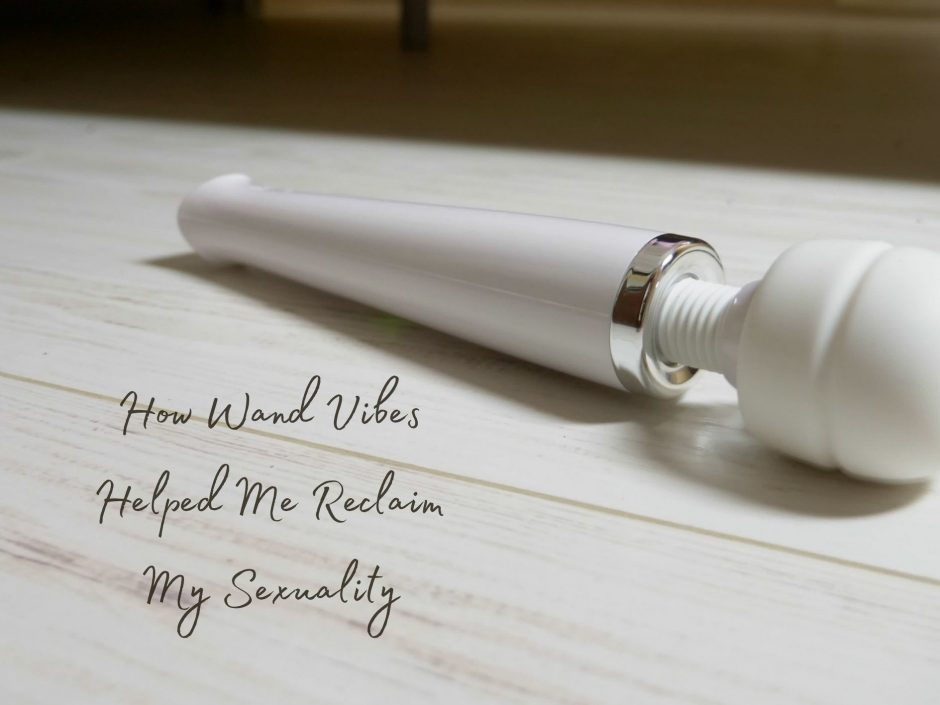
How Wand Vibrators Helped Me Reclaim My Sexuality When Antidepressants Killed It

I’ve been on antidepressants for the majority of my adult life, in three separate stints. I’m very pro medication for those who need it which, at the times I was taking it, I absolutely did. I’m not exaggerating when I say that those meds saved my life on more than one occasion.

Wand vibrators - Honey Wand from Honey Play Box
Honey Wand by Honey Play Box

But like any medications, antidepressants often have side effects, which can range in severity from mildly annoying to seriously debilitating. One of the worst side effects I experienced on two out of the three antidepressants I tried was a significant change to my sexuality. This manifested in different ways on each drug.

On Fluoxetine (Prozac), I pretty much lost my sexual desire entirely for months. Anything that had been pleasurable just felt like… nothing. This wasn’t limited to sex, either – I also lost my appetite and all ability to derive pleasure from food. On Citalopram, I lost my ability to orgasm while my body adjusted to the meds. While this did have some pleasant results (particularly discovering that I have an orgasm denial kink), it was also upsetting and frustrating. Feeling like I had no control over my body and like I’d lost one of my greatest sources of pleasure was so damaging that I seriously considered coming off the meds that were otherwise helping with my depression.

Trying Sex Toys

The first time antidepressants killed my sex life, I was so thoroughly miserable (both from the depression and from the side effects of the meds) that I wasn’t even interested in reclaiming it. I’m pretty sure I didn’t have sex or masturbate for about nine months at one stage. In hindsight, this probably made things even worse, because my sexuality has always been one of the key ways that I access pleasure and joy. At that time, I didn’t own any sex toys, and any touch from either myself or my partner left me cold.

The second time was a different matter, though. This time, the antidepressants actually took the edge off the worst of the sadness and hopelessness, and I still wanted sex. I just couldn’t orgasm, either with my partner or by myself. Though orgasm is not necessarily the goal of sex, this quickly became frustrating and then enraging. I felt like my body was betraying me. Like I had to choose between having a properly functioning brain and a satisfying sex life.

The turning point came when my then-partner pulled out a wand vibrator after about a month of this issue. That thing finally broke through the orgasm block. And, once that dam broke, it became easier and easier to get there again. I invested in a wand for myself pretty quickly after that, and it became my go-to toy.

Breaking Through the Depression-Haze

Even now, when I’m not currently on any psychiatric medication (though I accept I might be again in the future), I’m most likely to reach for my wand vibes when I’m in the middle of a bad depression funk. Contrary to popular belief, it’s still possible to feel horny at the same time as being depressed. Sad people need pleasure and orgasms, too! There have also been times when I haven’t felt horny, but I knew intellectually that an orgasm would make me feel better.

Sometimes, when I’m very very depressed, I feel as though there’s a kind of fog around me. The fog keeps me at least partly disconnected from everything and everyone around me. At its worst, it creates a sense of being somewhat outside and detached from my own body. In this state, many types of touch that would normally be pleasurable struggle to penetrate the fog. When that happens, I need intense stimulation and lots of it. It’s times like this that I might crave certain BDSM activities even more than usual. It’s also times like this when knock-your-socks-off powerful wand vibes are a Godsend. It might be possible to power through to orgasm with a lacklustre, buzzy vibrator but ultimately why bother?

The thing with my favourite wand vibes is that ultimately, they can wrench an orgasm from my body with very little active input from me. This has a lot of fun potential (forced orgasm scenes anyone?) It’s also extremely useful during periods of significant depression. If I want to orgasm at my own or a partner’s hand, or with a lower powered toy, it can be fun but often requires significant effort, mentally if not physically. With a powerful enough wand, I basically just put it in the right spot and wait for the orgasm to happen. In this way, I can access pleasure and the positive physical and mental health benefits of orgasm even when I feel so low I don’t want to leave my bed.

Sexual Pleasure Matters

When someone is dealing with severe health issues, either physical or mental, it’s often tempting to see sexual pleasure as trivial. Certainly when I spoke to my doctor about the side effects of my various medications, they dismissed my concerns. Did I want to be able to orgasm or did I want to not be sad? Because I couldn’t have both.

Except I actually could, and I needed and deserved to have both.

If you’re struggling with pleasure or orgasm due to health issues and medication, I want you to hear this: sexual pleasure matters! It’s not trivial and it’s not unimportant. If it’s important to you, then it matters. And you deserve to have what you need to feel sexually satisfied – whether that’s a change of medication, a super powerful vibrator, or just to change up what you’re doing.

Thanks to Honey Play Box for sponsoring this post. All views and experiences are my own!

There is No Time Limit: Exploring Your Sexuality Later in Life

I occasionally receive questions from readers who are wondering if it is “too late” for them to enjoy some aspect of sex or relationships. Some haven’t had sex by the time they reach their 20s. Others are realising they’re queer or trans and coming out later in life. Some are considering trying polyamory, exploring kink, or experimenting with threesomes for the first time in their 50s, 60s, or beyond. Regardless of your reasons for exploring your sexuality later in life, I’m here to tell you this: there is no time limit.

You can have amazing sex at any age or stage of life, including if you’re a “late bloomer.”

You can find love after the age of 35.

Polyamory, kink, group sex, and all those other wonderful things aren’t just for youngsters.

You can have your first orgasm in your 30s or 50s or 70s.

Why Exploring Your Sexuality Later Can Be Beneficial

I understand that it’s hard, and daunting, to feel like you’re running late. Honestly, though, sometimes exploring your sexuality later in life can give you some advantages. There are times when it can be beneficial to have a bit of life experience behind you.

It’s true that a lot of people are now finding sex positive communities and resources to help them explore their sexuality earlier. In large part, this is thanks to the internet. As someone who discovered polyamory and kink in my late teens, there was a time when I’d be the youngest person in any sex positive space by 10-15 years. I don’t think new adults exploring these spaces generally have the same experience today.

For a long time, I was grateful for finding these communities early and for the experiences I had. Now, though, my relationship with that time in my life is more complicated.

I’m glad I’ve had my entire adult life to explore, of course. But looking back with the wisdom and knowledge of a woman in my mid 30s, I can see the ways that I was tremendously vulnerable back then. The ways I’d walk into a room, young and wide-eyed and naive, and I might as well have had a sign over my head saying Fresh Meat the way some of the men looked at me. I spent a lot of time in those early days fending off the advances of men ten or twenty or thirty years older than me. Or not fending them off and falling into situations I was wildly ill-equipped to handle.

It was all kind of fun, until it wasn’t. I had some amazing adventures, but I also picked up a lot of new traumas. I’m saying all this to illustrate that the knowledge and wisdom that comes with being older can be a huge asset in keeping you safe, healthy, and boundaried when you’re exploring your sexuality later in life.

4 Tips for Exploring Your Sexuality Later in Life

Whatever your story and whatever the reason you’re exploring relationships, pleasure, and sex in later life, the first thing I want this post to do is give you a sense of permission. To let you know that you’re welcome and it’s not too late for you. But I also thought some tips and suggestions might be useful. As always, pick the ones that work for you and leave the ones that don’t.

Give Yourself Permission to Be a Beginner

No matter your age or prior experiences, there’s no shame in being new to something. That includes sex, relationships, dating, queerness, kink, masturbation, pleasure… all of it. Something a lot of people find helpful is to approach whatever aspect of sexuality they’re exploring as if it were a new hobby.

You wouldn’t sit down at a piano and expect to play a Beethoven sonata perfectly. You wouldn’t go to your first ever language class and expect to come out speaking fluent Italian. Sexuality is just the same. None of us are born knowing this stuff, and as long as you’re breathing and curious there’s always, always, always time to learn.

Being a beginner isn’t shameful. It’s a beautiful sign that you had the courage to step out of your comfort zone and learn something new.

Get Educated About Sex, Relationships, Pleasure, and Your Body

Depending on your age and where you grew up, your sex education was likely somewhere on the spectrum from “lacking” to “non existent.” If you’re exploring later in life and feel like you don’t know all that much about your sexuality, your body, or what you enjoy, that’s no reflection on you. But it is something you can take control of! This might include some unlearning, letting go of old narratives or shame that isn’t serving you.

Check out the resources section below to help you get started.

By the way: don’t forget to learn about sexual health, too. Even if pregnancy is no longer a concern for you, you’ll still need to understand how to protect yourself and your lover(s) from STIs.

Embrace the Power of “I Don’t Know Yet”

It can be daunting to be asked questions like “what do you like?” or “how do you identify?” and not know the answers. But not knowing is part of the journey, and it’s okay not to know! It’s also okay if your answers tomorrow, or a year from now, or ten years from now are not the same as they are today. Change, growth, discovery, and rediscovery are all part of this process.

Meet Your Body Where It Is

Your body may not be the same now as it was ten or thirty or fifty years ago. It’s normal to feel some complicated feelings about that, but ageing or disability needn’t be a barrier to enjoying your sexuality in its full glory. If you’re exploring your sexuality later in life, it’s important to get to know your body as it is now.

Get curious, learn about your responses and desires and the reality of your current body, and practice radical acceptance of your body and yourself. You might need to expand your definition of sex and pleasure (it’s not all about penetration!). Navigating sexual side effects, such as a drop in libido or anorgasmia, can also be issues for folks of any age who take some medications.

Pro tip: tools like a good lube, positioning aids, and smart sex tech can be game-changers at any age.

Resources for Exploring Your Sexuality Later in Life

Whether you’re exploring your sexuality in your 20s, your 80s, or anywhere in between, check out some of these resources to learn more.

If You’re Ready to Explore, You’re Right on Time

We all have a finite amount of time on this planet. But as long as we’re still here, there’s no time limit on learning, exploring, adventuring, experiencing.

Tomorrow is always a new day. No matter your age or your experiences so far, you can always wake up and decide that you want to do something differently. You can try something new, learn something new, chase some new dream.

Sex, relationships, love, pleasure… they’re for everyone who wants them. You don’t have to have had your first sexual experience by 20, met your life partner by 25, got married by 30, or discovered kink while you’re still young enough to attend the “Under 35” munch.

We all come to things at different stages and for different reasons. Wherever you are in your journey and whatever your reasons for exploring your sexuality later in life, those of us in the sex positive community are waiting to welcome you.

Sexual Side Effects: How to Have Sex if Medication is Getting in the Way of Your Pleasure

Unfortunately, sexual side effects are incredibly common with numerous types of medication. Mental health medications including SSRIs and MOAIs, blood pressure medications, ADHD medications, and certain hormonal therapies are just some of the commonly prescribed medical treatments that can affect sexual function.

Sexual side effects can include loss of desire, low arousal, erectile issues, pain during sex, and anorgasmia. Obviously, not everyone who takes medication experiences these issues and not everyone will experience them to the same extent. They can also naturally occur as a result of ageing, stress, physical health issues, and so on. But they are super common. In this post, I’ll share some strategies that can help you to manage them and continue to access sexual pleasure, if you want to.

Note: I am not a medical professional, so I have kept my advice here to sex and relationships advice, not medical advice. If you have any medical concerns or queries, see your doctor.

Talk to Your Doctor About Sexual Side Effects

You shouldn’t have to choose between the right medication and a happy and pleasurable sex life. You should be able to have both! So if you’re suffering from sexual side effects, talk to your doctor.

A good provider will work with you to find a medication solution that helps you without damaging your sex life. This might mean adjusting your dose, trying a different drug, or implementing other strategies to combat the sexual side effects. If your doctor dismisses you or doesn’t think sexual pleasure is important, go to a different doctor.

Sex matters. For many of us, it’s a quality of life issue. You deserve to get medical support and be taken seriously.

Get Creative and Expand Your Definition of Sex

Perhaps you can’t or don’t want to change your medication right now (or ever), but you also want to start enjoying sex again. If so, I invite you to think about your definition of sex. When you think of sex, are you thinking exclusively about penetrative intercourse or another specific activity?

Getting creative, exploring different kinds of touch, and expanding your definition of sex can all be great ways to sidestep sexual side effects and find new ways to access pleasure and sensuality.

What if sex didn’t need to involve penetration? What if there was no pressure for anyone to have an orgasm, and you could just enjoy touch and sensation without racing towards any particular goal? If it didn’t matter whether a cock got hard or a pussy got wet? Paradoxically, removing the focus from things like penetration, erection, or orgasm can actually make those things easier. Don’t underestimate the power of taking the pressure off.

Intimate connection doesn’t even need to involve your genitals! What if you spent an entire session just kissing and making out, focusing on nipple play, trading massages? What if a kink scene, whether that involves flogging or shibari or candle wax or sensation play or power exchange, was the main event rather than an appetiser? When you step away from what you assume sex is, you discover all the things pleasure can be.

Experiment with Toys

Sex toys are amazing for so many reasons! (That’s why I turned talking about them into a career.) One of the ways they’re amazing? They can help to overcome or navigate sexual side effects by offering different kinds and intensities of sensation.

If you’re struggling with a loss of sensation, powerful vibrators can help. When I suffered from anorgasmia due to antidepressant medication, a wand vibrator helped me to break through the block. Some people with a clitoris find that the focused intensity of suction toys works well when sensitivity is low. If you have a penis and your medication makes it difficult to get or stay hard, a toy like the Hot Octopuss Pulse – which can be used from either erect or flaccid – can be a great choice. If you want to have penetrative sex, a strap-on, fucking machine, thrusting toy, or dildo can facilitate it.

If pain during sex is an issue, toys and accessories can also help. The OhNut is an amazing invention that limits the depth of penetration with a penis or dildo, and dilators can help to gently stretch and relax your vaginal tissue.

Explore Self-Touch

Learning to navigate sexual side effects and adjusting to your body’s new normal can be a process. Whether or not you have a partner, this is a great time to explore self-touch. You might want to experiment with masturbating in different ways (such as in a new position or with toys), experiment with mindful masturbation, or perhaps just touch your body in whatever ways feel good to you.

Talk About Your Sexual Side Effects with Your Lover(s)

Too many of us have, at some point, struggled through sex that was not pleasurable or even sex that was painful. Perhaps we felt pressured, perhaps we didn’t want to let our partner down, or perhaps we believed that maybe we’d “get into it” if we just kept going. I understand the urge, but you deserve so much more than suffering through uncomfortable or painful sex.

A partner who loves and respects you will want to understand your experience and support you. Great sex with a partner is a collaborative process. It begins with honesty and vulnerability, so – as long as you’re in a safe and trusting relationship – talk to your partner(s) about how you’re feeling, what’s going on for you, and how you’d like to address it. If you want them to do or not to something specific, ask for it. If you just want their patience and understanding while you adjust, ask for that.

Fight Shame and Self-Blame

Sexual side effects often bring a lot of shame. You might feel as though there’s something wrong with you, or worry that you’re letting your partner(s) down. Some people even feel as though their masculinity, femininity, or sense of sexual identity is threatened.

There is absolutely no shame in what you’re going through right now. Sexual problems are still hugely stigmatised and, unfortunately, so are certain types of medication (such as antidepressants). However, please try to avoid getting into a shame cycle or blaming yourself. But sexual side effects are incredibly normal, and most of us will be on medication that will impact our sexuality at some point in our lives.

If you’re struggling with shame, reach out to others who have had similar experiences, ask your partner(s) for reassurance and support, or talk to a therapist.

Check Out These Resources to Help You Navigate Sexual Side Effects

Wherever you are in your journey with medication and navigating sexual side effects, these are a few resources I recommend. As always, pick the ones that sound most useful to you!

If you find my work useful, you can help me keep doing this by buying me a coffee! This post contains affiliate links.

[Guest Post] From Clueless Virgin to Enthusiastic Wife (with Psychosexual Therapy Along the Way) by Christine Woolgar

Today I’m so excited to be hosting my first guest post. It comes from my friend Christine Woolgar, a sex positive Christian writer and thinker. I have known Christine for a few years and been an admirer of her writing for about as long. I am honoured that she has chosen to share this intense, vulnerable, wonderful story about her relationship, having sex for the first time after marriage and with very little knowledge about her body or sexuality, and ultimately the breakthroughs that came with getting psychosexual therapy.

_________________

TW/CN: This post doesn’t describe abuse, but it is loaded with intra-personal dialogue that enables/allows abuse.

From Clueless Virgin to Enthusiastic Wife (with Psychosexual Therapy Along the Way) by Christine Woolgar, Sex Positive Christian Writer and Thinker

Night 1 minus 5 days: My period is late. Darn, I thought my body had fully adjusted to the pill already. I don’t want to have sex on my period but I don’t want an argument on Night 1. I don’t want disappointment on Night 1. So I tell him now that I won’t want sex on Night 1. He agrees. We both figure it’s for the best as we’ll be tired from the wedding anyway.

Night 1: I see him naked for the first time. Wow. And just a bit scary too. But it’s OK, because I’m not taking off my knickers. Not tonight. It’s not the night I had envisaged but it’s a good night.

Night 2: I consent to taking my knickers off. We caress each other and have fun together. He doesn’t come.

Day 3: I’m kinda aroused, but he doesn’t come. Odd. I thought it’d be easy for him.

Night 3: A bit more intensive tonight, but still taking things slowly and gently.

Day 4: I think my hymen has broken. I muse on the idea that I am no longer a virgin by some definitions. And yet neither of us has come. Not what I had expected. What is wrong with me? Why is this so hard?

Night 4: I’m naked and he’s not getting hard. What is wrong with me? Am I unattractive?

Day 5: He is finally hard enough and I’m relaxed enough, but he doesn’t come. What is wrong with me?

Night 5: This is getting silly now. I feel alone. I talk to him about it and it helps.

Night 6: We caress each other. Variable arousal. He doesn’t come.

Night 7: He still doesn’t come.

Night 8: Finally! I am genuinely happy for him.

As for me, I always knew I’d be the difficult one. Can’t expect to orgasm immediately. No woman can. I knew I was lazy with my kegel exercises. It’s my fault really that I haven’t come yet.

Day 11: Honeymoon is over and we’re back at marriage prep. I learn there are couples out there who’ve taken a year to consummate their marriage. So why am I all upset about taking seven days? I don’t have issues. I must be being picky.

Week 3: By now it’s not too much of a problem for him any more. But it stings when I pee after sex.

Weeks 4-5: It keeps on stinging badly when I pee after sex. I search for causes on the internet. Not helpful.

I feel madly uncomfortable after sex. But I don’t understand why. I know sex is important. I know sex is important for him. But I also know it’s not entirely straightforward for him, so whenever he gets hard I just have to make myself available, otherwise it’ll never happen.

Months 2-6: It takes forever for me to get aroused. I count the days between sex. Then I feel really bad when it’s longer than seven days. I still feel uncomfortable.

He’s always the one who initiates. I say “I don’t mind”. But I don’t want it. Sometimes I say “I don’t know” – that means I really don’t want it. I don’t tell him I don’t want to have sex with him. That would be selfish. It would make me a failure as a wife.

If the marriage fails, it’s my fault.

I try squeezing my pelvic floor muscles during sex. OW! PAIN! BAD! Ow! That hurts! Not good! Do not want! Note to self: do NOT do that again!

I’m picking up my pill and I tell the woman there that I’m in pain after sex. She doesn’t know what to do. She talks to a colleague and comes back saying it’ll go away with more sex. I’m in tears.

He says he doesn’t like seeing me in pain. He says he wants me to enjoy sex. I wonder if that will ever be possible.

I get better at judging my body’s state of arousal so it doesn’t hurt (most times) (much) afterwards. I’m using lube, but I hate the stuff. He asks me what I want, but I don’t know what I want. I am indifferent to his touch.

Months 6-18: Friday evenings: Tired or meeting friends. Saturday mornings: Maybe there’s a chance, but it depends on how much we need to do that day. Saturday evening: Have supper before all desire drains away. Sunday morning: I need to be up to play hymns and all that jazz. Sunday evening: I’m stressing because we haven’t had sex all weekend. Forget arousal. During the week: Forget arousal.

We speak to a friend and he encourages us not to focus too much on coming, but on enjoying our time together. It helps. Marginally.

It’s not about what I want. It’s about what I can bear to give. Sometimes I get away with just offering cuddles. But it’s not the same as sex and we both know it. How long is this going to last?

I tell him what I mean by “I don’t mind” and “I don’t know”. And I tell him that I hardly ever want sex. I realise that I’m actually afraid of his penis and have been since Night 1. Realising this helps. Marginally.

When he’s physically affectionate, I feel nothing in response. I just let him touch me and wait for him to stop.

Month 17: I’m talking to HR about stress and say that my sex life is through the floor. I’m in tears. HR asks how my husband’s handling this; I say he’s being a saint. But there is this aching sadness inside me.

Month 20: I’m talking to someone about it. I try and explain that I have no good memory of sex. Every time I try and have sex it’s like I have to talk myself round that it won’t be a bad thing. I have nothing to look forward to in sex. I’ve learned not to be in pain, but it’s SO HARD to get aroused enough that I’m not in pain.

There are only two things that actively get me aroused: thinking about degrading myself and the thought of being tied up. Problem is, I don’t want to degrade myself and he doesn’t want to tie me up. He’s studied too much history to want to do that to me.

Month 22: I’m talking to my pastor/minister/vicar person about it. He says it’s important that the problem is sorted. He says there’s no shame in getting professional help.

Month 25: I’m picking up my pill again and I’m in tears. The woman there refers me to a sexual health clinic.

I get a letter in the post inviting me to make an assessment appointment for psychosexual therapy. It says that they can’t help couples where there is complete loss of arousal as this comes from relationship issues. We don’t have relationship issues. Letter goes in the bin. They can’t help me. I must be being whiney.

Month 27: He buys me some fantastic clothes to help me feel good about myself. They help. Marginally.

Month 28: I tell him just how bad I feel about not wanting to have sex with him. I tell him how I feel unfaithful. He tells me that I don’t need to feel like I have to save the marriage alone. He made a vow too. That helps. A lot.

Well, it helps me feel better about myself. Doesn’t help me get aroused.

Month 30: It’s pill time again. Tears again. This woman I speak to actually books us an assessment for psychosexual therapy.

Month 31: We have the assessment. She says the clinic can help. She says it’s a six-month waiting list. We can wait. We’ve waited this long.

She says it’s no bad thing to think of degrading oneself to get turned on. But I don’t want to. And I don’t see why degrading myself should be the ONLY way I can get turned on.

Am I asking too much when I want to be turned on by thinking about the one I love? Seriously?

Month 33: He buys me more fantastic clothes to help me feel good about myself. Positive effect is short-lived. I begin to feel bad about the money spent.

Month 34: He says he’s been doing some research and there are these things called “rope dresses”. He says in Japan, tying a rope around something can symbolise ownership. He says there’s a whole art form called “shibari”. It doesn’t have to be degrading, he says. He says he’s willing to give it a try if I am.

We start learning about rope. I begin to not dread sex.

Month 36: I’m getting better at understanding my body so that I don’t consent until I’m ready for him. I realise one day I’ve made a mistake: I’m not ready and he’s inside, but if he carries on he’s going to hurt me. I ask him to stop. He stops and withdraws gently. No hard feelings.

He wants me to tell him if he’s going to hurt me. He always has. I’m no longer afraid to be completely honest with him.

Month 38: I tell HR that we’ve reached the top of the waiting list and I’m going to need regular time off work to go to the sessions. They’re cool with this.

He tells his department head that we’ve reached the top of the waiting list and he’s going to need regular time off work to go to the sessions. Department head is cool with this. Line manager however is gutted she didn’t happen to be in when he asked. Not because he’s taking time off, but because she’ll never know the reason why he asked for it.

Month 39: Psychosexual therapy begins. Therapist is like: “So you’re no longer experiencing pain during or after sex; you already know that you love each other, even when you don’t want sex; you’re getting enjoyment out of this shibari stuff. Kinda makes me wonder what the problem is.”

It’s official. There is no problem. We are wasting therapist’s time. We’re bunking off work. We have massively unrealistic expectations and should just get over ourselves. After all, no therapist can PROMISE orgasms or satisfying sex.

I move department at work and need to tell my new line manager about the time off. There’s a moment when I just don’t know how to say it. But when he hears the words “psychosexual therapy” he nods and I don’t need to say anything more. He doesn’t think I’m making a fuss.

Month 40: We’re not having sex and I don’t have to feel guilty about it because it’s required as part of therapy.

There’s relief. Though I miss doing rope.

Following all the exercises our therapist gives us. Must show we’re serious and co-operative.

Buy helpful book, Becoming Orgasmic, recommended by the therapist. Massively unhelpful shop assistant waves it around and reads out its title loudly. Not impressed.

Therapist suggests I masturbate. I tell her I never have and I don’t want to start now. Besides, what difference would it make? Touch doesn’t turn me on.

Month 41: I switch shower products at the therapist’s suggestion. I can now come out of the shower and feel remotely comfortable about my body. Wasn’t the case before. I also get proper lessons about the human reproductive system. Majorly embarrassed at my previous level of knowledge (read: lack of knowledge).

Therapist is like: “So on Night 1, you were both virgins and neither of you had ever masturbated in your entire lives. I’d say having vaginal sex after seven days is pretty impressive.” Feel-good feeling quickly gets swamped by feeling that I am wasting the therapist’s time.

I begin to enjoy our physical time together. Though I don’t have orgasms. At least, I don’t think so. I’m not sure. He begins to lose the fear of hurting me unintentionally.

Month 42: Therapist says we’re making progress and can cut down sessions to once a fortnight. I confide my long-standing sexual fantasy with the therapist.

Then I come out of therapy and think about my sexual fantasy. I ask myself if there is a way I can think of it (and myself within it) that isn’t degrading. And I realise that there actually is a way. So I picture myself in my fantasy – or rather, within a particular story that resonates with my fantasy. And suddenly I’m wet. I picture myself in another story I love and OH MY GOODNESS I AM SO WET!

I talk and talk and talk with him about power and types of power and all these very sexual thoughts I’m having.

Now when he touches me, I welcome it.

I wake up the next day and I’m wet the whole time. Just as well I’m not playing hymns. I remember nothing of the sermon but cry buckets with a friend after the service. I don’t tell him why, just that it’s a good thing.

Next day, I commute to work and I’m wet. I try to work, but my goodness, every five seconds I get turned on. Are people going to notice me going to the toilet so often? My knickers are soaked all day long.

Next day: Wet all day. Can barely think all day. When is this going to end?

The whole week, even the slightest thing gets me turned on. I gradually cool down, which is actually a good thing.

Next session and therapist says we’re done. We book a follow up session in four months.

Now when he touches me I beg him not to stop.

Month 44: We’re a bit stressed, but go back on the ropes and find it’s a disappointment. We decide to try again when less stressed.

Month 45: Follow up therapy session. We talk over the previous month. I reckon last month was a blip but generally speaking we’re on the up. We book another follow up for three months’ time – we can always cancel if we don’t need it.

Month 46: Back on the ropes and enjoying it.

I’m reading about other people’s experiences of sex and realise I DEFINITELY have not had an orgasm yet. But hey, who cares? I’m having a great time even without them.

I’m relaxed enough now that I let him touch me where I’ve never let him touch me before: directly on my clitoris.

Month 47: He’s stimulating me and it gets proper intense. Oh my goodness, what is this? Don’t stop! I scream. Now THAT was an orgasm! Wow! OK, I need to recover now.

So does he. He wasn’t expecting me to scream and only kept going because I was giving continuous active consent.

Next day: second orgasm (a less dramatic experience for us both, but no less satisfying).

The next day: third orgasm.

And the next day: don’t need to keep count.

Month 49: Last therapy session. I tell therapist that looking back, there was definitely something wrong, but there isn’t now.

I now know I wasn’t a time waster. More relief.

Sex life gets better and easier. We can enjoy rope but we don’t need it to enjoy sex. I squeeze my pelvic floor muscles during sex. No pain this time.

Month 52: We’re talking about consent. We talk about the early days when I didn’t want sex and he got frustrated. We talk about the upset that put on me and the pressure he didn’t even realise was there for me to say yes. We’re realising there were times when I said yes, because I couldn’t allow myself to say no. He is deeply, deeply upset at the thought of violating my consent (his words), even if it was something he only did because I deliberately hid my true feelings from him. We both know better now. We share big hugs.

Month 56: I wake up in the early hours of the morning. I lie still so I won’t disturb my dearly beloved. I start to think about him caressing me. And then, almost before I know what’s happening, my body gives me a gorgeously gentle orgasm. It is the first orgasm I have ever had without being physically touched. Wow.

________________________

About Christine:

For anyone curious to know a bit more about me, I would describe myself first and foremost as a Christian theological thinker. I live in the UK with my husband, and have a passion for shaping the church’s attitudes in areas around consent, sexuality and equality because… well, you can probably guess why from this post. I am unafraid to tackle awkward questions and I’m an unashamed critic of Fifty Shades.

__________________________

Footnote for anyone concerned about the non-consent described in this story:

I used to think in terms of male privilege and I didn’t know it. Yes, that terrifies me. No, no one had taught either of us about enthusiastic consent. Yes, I am working on changing this. I have blogged in more depth about how I now frame consent in a long term relationship and you can read about that on a fabulous blog run by Ashley Easter. Yes, she’s a Christian blogger. No, this post doesn’t talk about religion. Or marriage. Despite the title.

____________________

Longer footnote for anyone concerned that my husband and I, as sex positive Christians, are at risk of going to hell and/or besmirching the name of the church:

I thought long and hard about sharing this story in this much detail.

A lot of what is here is already in the public domain. Back in 2011 (around month 26) I made a short video in which I disclosed publicly that we didn’t have sex in the first seven days of our marriage; the narrative of that video that was also published in 2013 on a multi-author Christian blog. In February 2016 (that is, two years after month 56) I blogged for them again about being on the “receiving end” of sex, and disclosed that my husband and I had psychosexual therapy. Shortly after, I blogged on my own site about our learning experiences of going through sex therapy, writing an open letter to a Christian evangelical couple who I knew were considering it.

I know that these posts have really helped people.

Now, I grant you, none of them were as explicit as this writing is. And although anyone who follows my blog knows that I’m not afraid to write about BDSM, this is the first time I’ve disclosed that my husband and I actually practice anything that remotely resembles BDSM.

Yet this is my story and I believe that sharing it has the potential to really help people. For some people, it might open up conversations on Christianity that wouldn’t happen otherwise. Yes, I have asked myself whether it’s right to disclose this much detail. No, I’m not 100% certain that I’ve got it all right. But then, I don’t think I can be certain because whatever I do, I won’t please everyone.

I decided to disclose about the shibari because if that hadn’t been within our story, then I’d never have started to engage with people in the BDSM scene. You see, around month 43, my husband asked whether we should starting trying to make connections with people on social media and engage in discussions about BDSM, given that we had benefited from the idea of shibari. It was just a question, but as soon as he asked it the Holy Spirit was persistently on his case, saying “Yes, this!” And that’s what led to my blog. Gosh, that’s what led to me being even capable of writing the stuff that’s on my blog. And it is bearing good fruit. So if you’re worried about me, judge me by my fruit. My times are in His hands.