4 Anal Sex Myths You Should Stop Believing

Anal sex is probably one of the most misunderstood sex acts of all. It carries an allure for a lot of people, whether they want to be on the giving end or the receiving end or both. However, it also scares a lot of people. This is, in part, due to incorrect assumptions and beliefs. Anal sex myths can scare people off who might otherwise be interested in trying this type of play. They can also lead people to engage in dangerous behaviours or take unnecessary risks due to a lack of knowledge.

Here at C&K, we’re all about fact-based and non-stigmatising information. So let’s bust some anal sex myths, shall we?

Anal Sex Always Hurts

This is perhaps one of the most harmful anal sex myths, and actually likely leads to more avoidable pain and injuries. After all, if you think anal is supposed to hurt you’ll be more likely to push through pain, which can be dangerous. In fact, though anal can be intense and some mild discomfort can be normal, pain is your body’s way of telling you that something is wrong.

With proper lubrication, warm-up, enthusiastic consent, and communication with your partner, anal sex does not need to be – and should not be – painful. If something hurts it’s time to adjust, add more lube, or stop for now.

And by the way: those “numbing” or “desensitizing” lubes designed for anal sex? Avoid them at all costs. The ingredients in them can be harmful, they increase your risk of injury, and (frankly) if you have to numb your body to engage in a particular sex act, then you probably shouldn’t be doing that thing at all.

It Isn’t Pleasurable for the Bottom

This particular myth always strikes me as really sad, particularly when I see questions from people who are trying to grit their teeth and force themselves into anal sex they don’t want to please their partner.

Anal sex isn’t pleasurable for everyone and, if you don’t enjoy it, then you shouldn’t do it! However, if you do want to, it can be just as pleasurable for the bottom (the person being penetrated) as for the top (the person doing the penetrating.) Think about it: if anal sex wasn’t pleasurable for the receptive partner, why would anal sex toys such as butt plugs and prostate massagers be so popular?

One of the reasons that anal sex can feel so pleasurable for cis men and other people assigned male at birth is due to the prostate. Approximately the size and shape of a walnut, this gland is located just below the bladder and in front of the rectum. It is responsible for producing some of the fluid in semen and, when stimulated, it is incredibly sensitive.

However, anal sex isn’t all about the prostate, and can be just as pleasurable for receptive partners who do not have one. There are still tonnes of highly sensitive nerve endings in and around the butt, which can feel incredible. And, of course, it is located close to the genitals. According to a 2022 study on (cis) women’s experiences of anal pleasure: “[the anus] contains a dense network of sensory nerves that participate with the genitals in the engorgement, muscular tension and contractions of sexual arousal and orgasm.”

Yes, it’s even possible for some people to have an orgasm from anal sex without any direct stimulation of the genitals! Aren’t bodies awesome?

Anal Sex is Only For Gay Men (Or All Gay Men Have Anal Sex)

Wrong on both counts! Many of the most common anal sex myths centre on sexual orientation, from who engages in it to what it means about your sexuality if you do.

Firstly, anal sex is for anyone who wants to have it. We all have a butt, after all! Liking or not liking anal sex doesn’t imply a single thing about your sexuality. Your sexual orientation is about who you’re attracted to, not which acts you want to do.

Also, not all men who have sex with men (MSM) have anal sex. One 2011 survey of almost 25,000 gay and bisexual men in the US found that only 35% of respondents had had anal sex during their last sexual encounter. Some queer men do it regularly, some do it occasionally, and some never do it at all. All of this is completely normal and awesome.

You Can’t Get Pregnant, So Anal Sex is Safe Sex

It’s true, of course, that a person cannot become pregnant from anal sex, but the idea that this makes it safe is a myth. Like all forms of sex, anal has some risks.

In fact, when it comes to the transmission of STIs, unprotected anal sex is actually riskier than most other kinds of sexual activity including unprotected vaginal sex. However, it’s easy to mitigate this risk with a few basic precautions.

The best way to protect yourself and your partner(s) is to use a condom every time you have anal sex. If you choose to go barrier-free for anal – which I only recommend in the context of an ongoing relationship with someone you trust – make sure that both you and your partner(s) are having regular sexual health screenings.

You might also want to ask your healthcare provider if pre-exposure prophylaxis, or PrEP, is suitable for you. PrEP is a daily medication for people at risk of exposure to HIV, whether through sex or through drug use. According to the CDC, it reduces the risk of contracting HIV through sex by about 99% when used as directed.

FYI: this post was sponsored. All writing and views are, as always, entirely my own.

“Help, I Hate My Metamour!” When a Metamour Relationship Goes Wrong [Polyamory Conversation Cards #5]

“Help, I hate my metamour!”. This subject crops up in polyamory spaces all the time, so I thought it was time I wrote about it. Metamour relationships can be complicated, but they don’t need to be acrimonious.

Throughout the 15 years I’ve been polyamorous, I’ve had a mixed bag when it comes to metamours. In recent years, I’ve mostly been very lucky. My partners are smart and discerning humans with excellent taste and judgement. This means the people they date tend to be pretty damn cool.

In the past, though, I’ve had metamour I disliked and metamours who disliked me. I’ve had metamours who (accidentally or intentionally) triggered some of my deepest insecurities and traumas. I’ve even had a couple of abusive or excessively controlling metamours.

One of the hardest things for many people to come to terms with, when they start being polyamorous, is the fact that they cannot control who their partner chooses to date, have sex with, fall in love with, or invite into their inner circle.

In some cases, metamours click beautifully and end up becoming close friends (or, more rarely, becoming partners themselves.) It’s wonderful when this happens. Often, metamours will coexist happily and healthily without drama but not feel the need to spend lots of time together. This, too, can be great. But what if your partner chooses someone who isn’t at all the type of person you’d have wanted for them? What if they’re dating someone you simply cannot stand for some reason?

In case you missed it, this post is part of a series inspired by Odder Being’s Polyamory Conversation Cards. As often as I can, I’ll pull a card at random and write a piece of content based on it. There will likely be some essays, advice pieces, personal experiences, rants, and more! You can read the whole series at the dedicated tag. And if you want to support my work and get occasional bonus content, head on over to my Patreon.

This week’s card asks:

“To what extent and in what way would you prefer to be involved with your metamours or others in your polycule?”

First, let’s get clear on our terminology. A metamour (sometimes shortened to “meta”) is the partner of your partner, with whom you do not have a romantic or sexual relationship [*]. So if I’m dating Alice and Alice is married to Bob, Bob is my metamour. If Cleo is dating both Dave and Emily, but their partners are not dating one another, then Dave and Emily are metamours. The mutual partner connecting two metamours is often referred to as a “hinge.”

[*] There are nuances and grey areas here, of course. Some people do have sex with their metamours regularly or occasionally. Me and my former meta used to do this but weren’t romantically involved, and we called ourselves “metamours with benefits.” You’ll settle on the language to describe your relationships that works best for you.

With that understood, let’s talk about hating your metamour.

Metamour Relationships Are Unique to Polyamory… Except They’re Not

People think of the metamour relationship as a unique facet of polyamory that doesn’t apply anywhere else. And this is sort of true, in that polyamory is the only context in which your romantic partner is likely to have other romantic partners that you’re aware of.

However, even in a monogamous context, your partner will have other significant relationships outside of you. Friends, family, coworkers, and so on. These relationships may include people you don’t particularly care for, or even people you really cannot abide. In this way, I think “I hate my metamour” is just a variation on “my mother-in-law is the worst” or “I can’t stand my partner’s best friend.”

The fact that your partner has a romantic and possibly sexual relationship with your metamour doesn’t actually change the fundamentals of this type of situation all that much. Remembering this may help you to realise that this situation is, in most circumstances, entirely navigable.

Why Do You Hate Your Metamour? Getting Specific

When someone says “I hate my metamour,” the first thing I want to ask them is “why?” Because the answer to this question will inform the advice I give next. The reasoning can also be hugely telling in itself. The reason think you hate your metamour might not be the actual reason when you really dig into it. So, obviously, the first thing we’re going to do is… really dig into it.

You’ll need to be really honest with yourself here. Observe your feelings without judgement or reactivity, and see what comes up for you. What is it about your metamour that rubs you the wrong way? Where do you think those thoughts and feelings are coming from?

Sometimes, two people simply do not get along. Neither of them have done anything wrong, but they are too different and cannot find a way to gel. For all the often-true jokes about polyamorous people who date three different versions of the same person, it’s equally likely that your partners will be very different from one another… and that your metamours will be very different from you. This is really, really normal. Unfortunately, these situations can sometimes lead to personality clashes.

If you determine that the cause of your “ick, I hate my metamour” feelings are just a personality clash, that’s pretty easy to handle. In a nutshell: don’t hang out with them! We’ll talk more about how to achieve this in practice a bit later on.

In some cases, your metamour might remind you of someone else you don’t care for. Perhaps they look, sound, smell, or behave like somebody who hurt you or your partner at some point in your life? This might mean that you’re projecting past experiences onto them due to baggage or trauma. This is also surprisingly common, especially if your partner has a “type” and your new metamour reminds you of a previous, problematic meta.

Of course, it’s possible you dislike (or even hate) your metamour for a really valid reason. You might have seen serious red flags in their behaviour or heard damning things about them in the community. Perhaps you don’t like the way they treat your mutual partner (or their other partners, or someone else in their life.) This gets more tricky to navigate and we’ll get into it in more detail below.

It’s also possible that your issue with your metamour is actually about something that’s going on within you. This is what we’ll talk about in the next section.

So You Hate Your Metamour. Is It About Them, or About You?

Sometimes, even with the best of intentions, metamours can inadvertently trigger insecurities, traumas, deep-seated fears, or other complicated and painful feelings. This is actually pretty normal and doesn’t necessarily mean anyone has done anything wrong. Realising that’s what is going on can even be pretty empowering. After all, if the issue is about your stuff, you have the power to work on and fix it.

Seeing your partner fall in love or lust or both with a new person can be challenging. This might be particularly true if you’re new to polyamory, if your relationship with your partner is having problems, or if you have particular traumas or insecurities that are getting triggered by the new relationship for some reason.

If you determine that your dislike or hatred of your metamour is more to do with your own stuff than with them, then you have several options. But before you do anything, take a breath. Don’t panic. You’re not broken or bad at polyamory or any of the things you’re probably telling yourself right now.

So what can you do next?

First, you can take a break from the metamour in question. We’re going to talk more about parallel polyamory a bit later on, but just know that it’s okay to minimise or pause social interactions with your metamour—even temporarily—if you need the space to get a handle on your difficult emotional response to them.

If you do this in a time-limited way with the intention of re-establishing contact and building some sort of positive relationship later, it can actually be hugely beneficial in the long run. There are also instances where staying parallel permanently (or at least indefinitely) is the right choice. You can decide what’s best for you with the help of your support network.

Alternatively, you can decide to consciously give your metamour a chance and try to build a positive relationship with them. We’ll look at how to do this more in the next section.

This is also the time to shore up your relationship with your mutual partner and ask for what you need. Do you need some reassurance, more quality time, a dedicated date night? You might have identified unhealthy patterns, unmet needs, or problematic behaviours from one or both of you that are being highlighted by the new relationship and need your partner to work on resolving these issues with you. Perhaps you just need them to hold space for you to talk through your feelings and difficulties in a non-judgemental, loving environment.

Finally, this is the time to work on yourself. Examine the things that the new relationship has triggered within you, and call upon your coping and healing strategies. If you’re not already, this is a great time to get yourself into therapy. Journal, find and consume relevant resources (Polysecure and Polywise, both by Jessica Fern, are two I highly recommend.) Reach out to your extended support network. Aim to build your self-esteem, confidence, and inner sense of security.

Can You Give Them a Chance?

The answer to this might be “no”, but I invite you to consider the possibility that you’re being overly harsh in your judgement of your metamour. Would you conceivably feel differently if you gave them a real chance? This is often a particularly beneficial option if you’ve determined that your issues with your metamour stem from your own trauma, baggage, or internal “stuff.”

Many people find that humanising their metamour by getting to know them is challenging initially but hugely beneficial in the long run. You’ll see that they’re neither a monster nor the embodiment of perfection. They’re just a person with their own quirks, flaws, wonderful qualities, and personality traits.

I’m going to write a whole piece on meeting your metamours successfully soon. In the meantime, though, here are some quick tips that might help you.

Timing is crucial here. I do not recommend meeting or instituting hangouts when you’re deep in the “I hate my metamour” rage-spiral. This will backfire spectacularly. Take the time to calm your nervous system, do some of your own internal work, and get to the place where you can genuinely meet them with an open mind and a generous spirit.

Whether you meet by yourselves or with your mutual partner is something you’ll have to negotiate. There are pros and cons to each approach. If your mutual partner will be in attendance, negotiate what levels of PDA you’re all comfortable with seeing and engaging in. Meet in a neutral space such as a bar, restaurant, or coffee shop rather than at someone’s house. It can also be helpful to bookend your time together with a built-in limit (e.g. “I’ve got two hours because I need to pick the kids up at 4.”)

Try to go in without too many expectations. The goal isn’t to become best friends. Remember that you’re just two humans who happen to love the same person. You’re both doing your best and, hopefully, want a good outcome for everyone involved. After that, just be yourself! Be polite and friendly, look for common ground, and treat them like you would any new person you’re trying to get to know.

This all assumes, of course, that your metamour is up for meeting you or hanging out. It’s never okay to force a meeting if one party really doesn’t want it or isn’t ready. But if things go well, you might very well find that this leap of faith does great things for your metamour relationship.

If they go badly, or if you really can’t bring yourself to give this metamour a chance? It’s time to consider going parallel.

Parallel Polyamory is Valid

Like many polyamorous people, I love kitchen table polyamory—the close, family-style structure where the various partners and metamours in a network are totally comfortable in each other’s presence and may even actively choose to hang out.

There are tonnes of potential benefits to kitchen table polyamory (KTP.) Your metamours can become dear friends and members of your chosen family. There’s more support for everyone when things are hard. There are more people to celebrate with when good things happen. If children are involved, there are more adults to love and care for those kids. There’s the potential for group outings, polycule trips and adventures, and even group sex if you’re all into that. However, practicing KTP is a personal preference and it won’t work for everyone.

In parallel polyamory, metamours know about each other but don’t spend time together and have minimal or no direct interaction. Like parallel lines, the relationships do not meet or intersect. Despite having a bad reputation in some parts of the community, parallel polyamory is an equally valid choice. And in situations of dislike or animosity between metamours, it’s often the best one.

Some people even prefer parallel polyamory right from the beginning! It doesn’t have to come out of metamours disliking each other. Some just prefer to keep things very separate for all kinds of reasons.

Parallel polyamory can look a few different ways. The common thread, though, is that the metamours have little or no direct interaction. They may also prefer not to hear much or any information about the other person, or to have their own information shared. There’s also Garden Party Polyamory, a middle ground where metamours can be polite and friendly to one another in occasional social situations, but otherwise have little interaction and do not hang out independently of their mutual partner.

It’s possible to shift between structures over time as necessary or dictated by circumstances, too. You don’t have to pick one and stick to it forever! Like so many things in polyamory, it’s an ongoing journey and may require renegotiation over time.

Personally, as I’ve said, parallel polyamory isn’t my preference. But if there was ever a time when I had two partners who couldn’t get along with one another, or a metamour I really couldn’t stand (or vice versa,) I would accept it as the healthiest option for everyone in that situation. It’s not a lesser form of polyamory. It’s just different.

“I Hate My Metamour, But Our Partner Wants Us All to Live Together!”

I hear this (and its less extreme cousin, “I hate my metamour but my partner is desperate for us all to hang out”) so, so, so often.

It’s far too common for hinge partners to try to force closeness between metamours who don’t get along. This might look like trying to arrange group hangouts or social interactions despite the metamours’ wishes. At its most extreme, it can look like trying to force metamours to date (see: unicorn hunting), have sex, or live together.

If you’re one of the metamours in this situation: stand firm with your boundaries. You do not have to hang out with anyone you don’t want to hang out with. You certainly don’t have to date, have sex with, or live with anyone you don’t want to.

The fact that your partner wants it—even really, really wants it—is ultimately irrelevant here. You can hear and sympathise with their desires, of course. But you cannot and must not compromise your boundaries and needs for the sake of their desired structure. Doing so will just breed resentment and mistrust, ultimately destroying your relationships. At its most extreme, you may end up feeling coerced, violated, or abused.

If your partner continues to push for more of a relationship between you and your metamour than you want, and will not respect your boundaries when you state them clearly, then it might be time to consider leaving the relationship.

If you’re the hinge in this situation and trying to force a dynamic between your partners: stop it! I can’t overstate how damaging this is. Firstly, people tend to hate being coerced into things they don’t want, including a relationship with a metamour they dislike. Secondly, let’s say they give in and do what you want. How do you think this is going to go? Does a social hangout with two people who don’t like each other sound fun to you? Does living with two people who don’t like each other sound fun!? Exactly.

I understand you have a dream for how you want your ideal polyamorous life to look. However, you’re dealing with actual people with actual personalities and feelings. When you try to force your partners to be friends, date, become lovers, or live together against their wills… chances are you’ll lose both or all of them.

If you want to be with these people, you’ll need to accept that (for now at least, possibly forever) they love you but care for each other much less. If anything other than kitchen table polyamory or nesting with all your partners is a dealbreaker for you, that might mean you need to end these relationships and find others that better meet your desires.

Friendship Isn’t Necessary In Your Metamour Relationship, But Mutual Respect Probably Is

If you take nothing else away from this post, I hope you’ll take this: you don’t have to like your metamour! It’s perfectly fine to feel indifferent towards them. It’s also okay to actively dislike them, though I hope you’ll first follow the steps I’ve outlined to examine where that dislike is coming from and if it is truly warranted.

How you frame things, both in your mind and externally, really matters here. In the vast majority of circumstances, hanging on to intense dislike, disrespect, or contempt for another person isn’t going to do you or your relationships any good. Can you reframe “I hate my metamour” to “my metamour and I are very different people who don’t really get along, but our goal is to coexist peacefully because we both love our mutual partner”?

In the end, mutual respect for your metamour(s)—even if you are not friends or dislike one another—is both possible and desirable in most circumstances. Here’s what that can look like in practice:

  • Accepting and fully internalising that they have just as much right to their place in your mutual partner’s life as you do.
  • Giving your partner space to have their relationship with your metamour. For example, not trying to infringe on their dates or spoil their time together.
  • Articulating and maintaining clear personal boundaries around things that you control: your time, your space, your energy, and your possessions.
  • Hearing and respecting your metamour’s boundaries around the things that they control, even if those boundaries are different from your own.
  • Respecting your metamours’ privacy and consent. This includes things like not expecting intimate details about their activities with your hinge partner, unless they enthusiastically consent to such sharing. It also means not trying to find or use personal information about them that they may not wish you to have.
  • Ensuring that agreements you make with your hinge partner do not negatively impact your metamour or their relationship.
  • Retaining a reasonable level of flexibility around things like scheduling and the use of shared spaces.
  • Not trying to convince your partner to leave your metamour, change their relationship, or view them the way that you do.
  • Not badmouthing your metamour (either to your partner or to others.)
  • Resisting the temptation to compete or frame your metamour as an adversary.
  • Wherever you can, assuming good will. Your metamour probably isn’t trying to piss you off, trigger your insecurities, or replace you.

Sometimes Metamours Really Are Terrible

In the vast majority of circumstances, your metamour probably isn’t actually a bad person. They might be perfectly lovely but simply not one of your people. They might have their heart in the right place but still exhibit some behaviours that rub you the wrong way. In these situations, mutual respect, a little courtesy and goodwill, good communication from your mutual partner, and minimising unnecessary interactions will probably be all you need to keep things harmonious within your polycule.

But what if you’re right? What if your metamour actually is kind of terrible? Perhaps they hold horrible, oppressive views or regularly do unethical things. At the worst end of the spectrum, perhaps they’re abusing someone—your mutual partner, another partner, or even a child.

I’m not going to sugarcoat it: this situation fucking sucks. It’s also probably largely out of your control. You cannot force your partner to leave someone, even for their own good. There are times when going parallel will sufficiently mitigate the issue. There are also times when it won’t. Firm boundaries, strengthening your relationship with your mutual partner, and calling on the rest of your support network can help. Sometimes, though, even all of this won’t be enough.

Sadly, problematic metamours can sometimes lead to the end of a relationship. I once ended a relationship because my metamour was so controlling—and my partner was so willing to capitulate to all their demands—that we couldn’t actually have a relationship. Leaving devastated me, but ultimately staying would have been worse.

What About Abuse?

This article is about what to do when you dislike or hate your metamour. But what if you suspect (or know) that your metamour is abusing your mutual partner?

I’m going to write a whole article soon about handling abuse within your polycule. That subject deserves thousands of words of its own and there isn’t space to delve deeply into it here.

I just wanted to acknowledge that this can happen. It’s heartbreaking and painful on a whole other level when it does. The reason I’m not going into it in this piece is that I want to give it the attention and space it deserves, taking the time and doing the background research to make sure I get it right.

In the meantime, Eve Rickert has compiled this incredible list of resources on abuse in polyamorous relationships.

Do You Actually Have a Metamour Relationship Problem, or Do You Have a Hinge Partner Problem?

In polyamorous spaces, you’ll often see people say things like “metamour problems are really partner problems.” This isn’t always true, but it’s often true. If you hate your metamour or your relationship with them is acrimonious, you should at least consider the possibility of your hinge being the problem.

Take, for example, the controlling metamour I mentioned above. Ultimately, the problem was that my partner chose to follow all the arbitrary rules and restrictions they laid down. My partner had a choice there, and they could have refused. They weren’t powerless. They could have advocated for me and for our relationship. The fact that they didn’t is actually what ended things between us.

Obviously, this doesn’t apply to situations of abuse. In those situations, your partner may really be powerless in a very real way. But if your metamour is behaving unreasonably but not abusively, it is your partner’s job to manage the situation. They need to take steps to ensure your metamour’s behaviour doesn’t spill over onto you and your relationship too much.

It’s almost impossible, in anything but the strictest form of parallel polyamory (and probably even then), to keep relationships from impacting each other entirely. After all, if I’ve had a fight with one of my partners and am then due to go on a date with another partner, that is likely to impact my mood and energy levels even if my partners have absolutely no interaction with one another.

The choices you make in one relationship can, and often do, affect your other relationships. This isn’t necessarily a bad or problematic thing in itself. It does, however, require intentionality and care to manage it well. That’s particularly true if the metamours do not get along.

In some cases, your partner’s choice of partners or behaviour in other relationships might directly impact how you view them. Let’s imagine, for a second, one of your partners knowingly brings home someone with extreme and violently right-wing politics. This problem isn’t going to be solved by going parallel. This problem is deeper, in that it says something pretty fundamental—and pretty damning—about your partner and their values.

One of the most important skills in polyamory is partner selection. This extends to being able to trust your partners’ judgement in their partner selection. Unfortunately, when “I hate my metamour” turns into “I hate that my partner chose this person and what that choice says about them”, there might be little you can do but leave the relationship.

Last Words on Hating Your Metamour

Wow, even for me this has turned into a mammoth essay! Like so many relationship-related subjects, it’s nuanced and highly contextual. To sum up, though, my 10 key points are as follows:

  • You do not have to be friends with your metamour. You don’t have to like them, or even ever meet them if you don’t want to.
  • If you’re deep in the “I hate my metamour” space, start by asking yourself why and really interrogating it.
  • Examine what your feelings about your metamour are telling you about what’s going on within you.
  • Give them a real and fair chance if you can.
  • It’s fine to be parallel polyamorous.
  • You never have to interact with your metamour in a way that violates your boundaries or consent. Your partner (and metamour) should never pressure you to.
  • Mutual respect, even in the face of indifference or dislike, will go a long way.
  • Metamour issues are often, but not always, really hinge partner issues. Hinge partners have a lot of responsibility here.
  • Relationships can and do impact one another, which is one of the reasons good partner selection is so vital.
  • It’s okay to end a relationship over unresolvable metamour issues, especially if your mutual partner isn’t respecting your boundaries or advocating for you appropriately.

Polysaturation: How Do You Know When You’re Polysaturated? [Polyamory Conversation Cards #4]

It’s safe to say that the polyamory community likes its cute wordplay. We’ve got “metamour,” from meta (beyond or after) + amor (love), to mean your partner’s partner. We’ve got “polycule”, from poly + molecule, to mean an interconnected network of relationships (because when we draw out our romantic networks they can kinda resemble scientific models of chemical molecules.) Then there’s the subject of today’s post: polysaturation. Let’s talk about what it means to be polysaturated.

In case you missed it, this post is part of a series inspired by Odder Being’s Polyamory Conversation Cards. Once a week or as often as I can, I’ll pull a card at random and write a piece of content based on it. There will likely be some essays, advice pieces, personal experiences, rants, and more! You can read the whole series at the dedicated tag. And if you want to support my work and get occasional bonus content, head on over to my Patreon.

This week’s card asks:

“How much time, energy, and other resources do you have left for potential new attachments?”

My personal answer to this is “very little,” but that doesn’t make a very exciting post, does it? So let’s delve into the topic of polysaturation, how to know when you’re at your relationship limit, and what do to about it.

What is Polysaturation?

Polysaturation: “The state in which a polyamorous person has as many significant relationships as they can handle at a given time” (definition courtesy of Multiamory.)

Polysaturation is the point at which a polyamorous person has the maximum number of relationships that they can handle. Typically, when people are polysaturated, they stop actively looking for new relationships. They may also take the possibility of new relationships off the table until or unless their circumstances change.

Polyamorous people feel differently about polysaturation. Personally, I kind of love the feeling of polysaturation. I find “dating” and actively trying to make romantic connections difficult and demoralising, so being at the point where I am comfortable and satisfied in my romantic life is wonderful. Others dislike it because they feel it limits their options for making connections if they happen to meet someone incredible but don’t have time to pursue a relationship with them.

What is an Average Polysaturation Number?

There’s no one right answer to this, because it depends on so many factors. Being polysaturated feels different for everyone, and we all have different saturation points. Physical and mental health, work, child rearing and other caring responsibilities, life stage, geography, finances, and the status of existing relationships are just some of the factors that can play a role in determining someone’s polysaturation point.

I will say, though, that I have been polyamorous for 15 years and I’ve encountered very few people who can manage more than three serious relationships well. Overall, two and three are by far the most common polysaturation numbers.

My own polysaturation point, in case you’re wondering, is currently two serious relationships. I can enjoy situationships, friends-with-benefits, and casual encounters (such as occasional play parties or swinging) alongside those relationships, because these casual dynamics demand very little in terms of ongoing time commitments or emotional investments. But actual, Capital-R Romantic Relationships with people I’m in love with? Right now it’s two, and I am struggling to imagine that number ever being higher than three.

More Partners =/= Doing Polyamory Better

I know or have known of people with five, seven, ten romantic partners. On the surface, it might look like these people are absolutely killing it in the realm of polyamory. In reality, though? When you look closer at this type of situation, you’ll often see an exhausted, burned-out person who’s massively over-committed themself and a lot of neglected, pissed off, unsatisfied partners.

Are there exceptions? Sure. But not many.

What you need to let go of here is the idea that having more partners means you’re doing polyamory better. The goal of polyamory isn’t to constantly add new people, to “collect them all” à la Pokémon, or to compete to have more partners than anyone else. The most experienced and successful polyamorous people I know tend to be in anything from one to three committed romantic relationships at a time.

By the way: it’s totally possible to identify as polyamorous but go through a period where your polysaturation point is one partner, or even zero partners. Being polyamorous simply means that you have the desire and ability to love and be in relationship with more than one person at a time. It doesn’t mean you always have to be actively doing so. There’s no “poly card” that someone will revoke if you don’t have two or more partners at all times!

Spotting Polysaturation: What Does Being Polysaturated Look Like?

When you first started exploring polyamory, you might have had some idea in your head about how many relationships you thought you’d be able to handle. If you’ve been practicing for some time, you might have found that that number is lower in reality than it was in theory. If so, that’s super normal. Many of us underestimate how much time and energy relationships take up, especially with the added complexities inherent in polyamory.

One of the keys to happiness in polyamory, I’ve found, is learning to identify what it feels like for you to be polysaturated before you accidentally become polyoversaturated. That is, in more relationships than you can actually manage.

Polysaturation feels slightly different for everyone. I experience it as a lack of something, primarily. Specifically, a lack of any desire or inclination to add new romantic partners to my life. It also feels like a sort of “enoughness” and satisfaction. Kinda like the relationship equivalent of being comfortably full after a great meal, but not overly stuffed!

But in short, you’ll know you are polysaturated when you know—emotionally, intellectually, or both—that you are in a space where you cannot reasonably add any new partners to your life.

What If I’m Polysaturated But Meet Someone So Amazing I Simply Have to Pursue It?

This is a difficult one and I can’t give you a simple answer.

One of the realities of living a successful and happy polyamorous life is accepting that there are simply too many shiny people in the world to ever be able to build relationships with all of them. Sometimes, you have to let a potential interest go because you just do not have enough time in the day and it wouldn’t be fair to yourself, your existing partners, the new person, or others who also rely on you (such as your children or other dependents) to pursue something.

So your first option is simply “decide you don’t have the bandwidth, and leave it alone.”

It’s possible that this new relationship will be a low-time-and-energy-investment one, in which case you might be able to shift things around to accommodate it with relatively little pain and stress. But if it’s a relationship requiring a higher level of investment, particularly in the new relationship energy (NRE) phase, you might have some difficult decisions to make.

What you shouldn’t do, in almost any circumstances, is dump or demote an existing partner to make room for the new one. This is a profoundly shitty thing to do to someone you claim to love. Of course, if one of your relationships isn’t working or isn’t making you happy, you have the right to end it. But you should really be doing that at the point that it’s making you unhappy and isn’t fixable (or worth the energy to fix), not at the point that there’s a New Shiny to step in and fill the gap.

So if this new relationship seems too good to pass up, what can you do?

Be Honest with Yourself and Your Partners

What can you actually offer this new person in terms of time, energy, and current or future commitment? How will those choices impact you and your existing partner(s)?

Be unfailingly honest with everyone, yourself first of all. Don’t convince yourself you have energy or hours in the day that you simply don’t have. Don’t overcommit yourself to the new person just to let them down later. And don’t lie to or mislead your existing partners to get their buy-in if they are understandably reticent about you adding someone knew when you’re already at your polysaturation point.

Look at What Else You Can Move Around If You’re Already Polysaturated

If you’re polysaturated but still decide you do want to pursue the new connection, something else in your life will likely have to give.

You might be able to shift some things around in your life to accommodate the new relationship with minimal disruption to your existing relationships, if you get creative. Is there a hobby or activity you’re willing to let slide (or dedicate a little less time to?) Will the grandparents take your kids for a few hours after school one evening a week to allow you to visit your new sweetie? Do you have the means and flexibility to take one fewer shifts at work or to move your working pattern around a bit?

The answer to all of these things might be no. But if nothing can realistically change and you don’t have the time or energy, then I’m back to my original advice: don’t pursue this new relationship.

Negotiate a Casual Relationship

When you meet someone new and make a connection, you don’t initially know what shape that connection might naturally take. So consider whether you and your new interest would be happy with an occasional, casual, friends-with-benefits or comet-style relationship.

Some relationships cannot be casual. Forcing a relationship that wants to be serious and committed into a casual box will hurt everyone involved and probably blow up in your face. But if circumstances allow and your needs and desires align, negotiating a low-key casual style relationship can be a great way to navigate this situation.

Avoiding Polyoversaturation Before It Happens

“Kid in a candy store syndrome” is a slightly snarky name for the phenomenon of newcomers who discover polyamory and immediately leap into DATING ALL OF THE PEOPLE ALL OF THE TIME. All the possibilities are overwhelming and exciting. The next thing you know, they’ve got twelve partners and their Google Calendar is full until August… of next year.

If you’ve found yourself in this situation then… I’m sorry. It’s an easy mistake to make and a hard situation to be in. I can’t tell you what to do about it, because it’s obviously not as easy as “just break up with six to eight of those partners to bring your polycule down to manageable numbers.” I will say that a lot of people make this mistake in the early days and things usually even out over time. Still, you might be in for a bumpy ride in the short term.

Experienced polyamorists, by the way, typically won’t date people who do this. We’ve seen it all before and we know the pain, neglect, and frustration it causes.

Fortunately, if you’ve not yet made this mistake, it’s fairly easy to avoid. Instead of seeing polyamory as a smorgasbord where you can indulge yourself without limits, approach dating and relationships with intention. Where possible, build new relationships one at a time (two will be doable for some people, but not for everyone. You know yourself and your capabilities best.) And before you start dating a new person, take a clear-eyed and critical look at your current situation. Do you actually have the time, energy, and bandwidth?

Remember, to go back to that food analogy: the goal is “pleasantly full,” not “uncomfortably stuffed.” With time and self-awareness, you’ll get to know what being polysaturated but not oversaturated feels like for you.

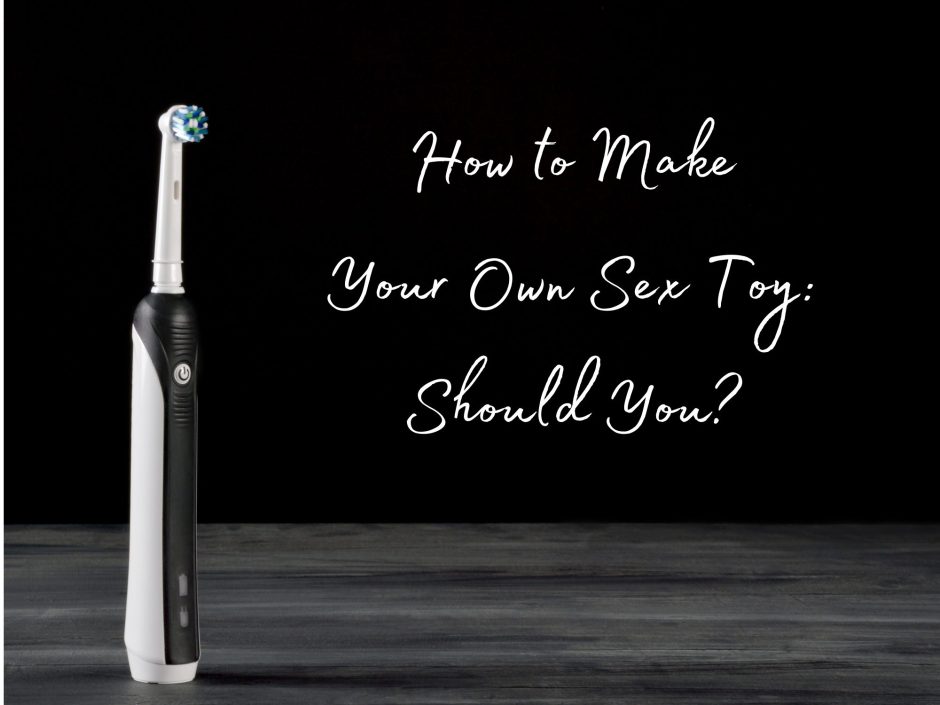
How to Make Your Own Sex Toy: Should You?

I’m a big fan of pervertables for kink. That is, ordinary items that can be misappropriated for sexy purposes. Think wooden spoon spankings, clothes pegs on nipples, makeup brushes for clitoral teasing or sensation play, and so on. But when it comes to things to use on your genitals, how to make your own sex toy – and even deciding whether or not this is a good idea – is not quite so straightforward.

I understand the temptation of making your own sex toy. Toys can be expensive. If you live with family, have little privacy, or live in a place with strict laws, they can also be difficult to get hold of. That’s why I’m not going to tell you not to do it. Instead, I’m going to give you some quick safety facts and show you some ways you can go about making or improvising a sex toy while minimising your risk of harm.

Making Your Own Sex Toy: Safety Considerations

Overall, most people have a very poor level of understanding when it comes to the things that are and are not safe to use on their genitals. This is for two main reasons:

  1. Sex education sucks almost universally. So unless you were lucky enough to have very switched on parents or go to an incredibly progressive school, you almost certainly weren’t taught this stuff.
  2. The sex toy industry is almost entirely unregulated. This means that manufacturers can lie, both about what materials they’re using and about the safety profile of those materials, and there is little recourse to call them on it when they do.

So with that in mind, be very very cautious about what you use as a sex toy. All kinds of items and materials can harm your body. This can run the gamut from physical injuries (for example, from using items with sharp edges) through to infection (from using items that aren’t properly sterile or are made of porous materials which can harbour bacteria.)

Quick Safety Tips

Follow these tips to keep yourself as safe as possible if you’re going to experiment with homemade sex toys:

  • Only use items that are smooth and free from sharp edges
  • Never use anything sharp, pointy, or that may have splinters
  • Never use anything breakable (such as glass items)
  • Avoid porous materials
  • Put a condom over anything you are going to insert into your body
  • If you are doing anal play, always always always make sure your item has a flared base or a large handle so you can retrieve it easily
  • Don’t use anything electrical in the bath, shower, or near water
  • Do not use items that have already been used for other purposes (such as used electric toothbrushes) and keep the item for sexual purposes only – or retire it – once you’ve used it as a sex toy
  • Please don’t use food items such as fruits and vegetables. But if you really must, do not eat them afterwards. Throw them away instead.
  • Only ever use your own items as sex toys, never something belonging to someone else

How to Make Your Own Sex Toy: 3 Ways

Cast Your (or Your Partner’s) Genitals

Making your own sex toy at home is relatively affordable thanks to the invention of genital casting kits such as Clone-a-Willy and Clone-a-Pussy. These kits typically cost under $50 and allow you to make a replica of your or your partner’s penis or vulva. The finished toy will be made of silicone, so it will be body-safe and should last for many years with the right care.

Bonus: it’s a fun and surprisingly hilarious date night activity.

If You Want to Make Your Own Sex Toy, Learn How to Work With Body-Safe Materials

If you want to make your own sex toy, you can always turn it into a project or a new hobby by learning how to actually work with body-safe sex toy materials and how to make things to a good standard.

For example, you might learn how to mix and pour silicone and make your own toy moulds. Or you could take up woodturning and make beautiful wooden sex toys (don’t forget to glaze and seal them properly with a body-safe finish!) on your lathe at home.

Repurpose Safe(r) Items

Fortunately, there are several household items you can use as a makeshift sex toy that are unlikely to cause you any harm. The following are likely to be okay with some basic safety precautions:

  • A new, clean electric toothbrush (use the back of the head, i.e. the non-bristled end)
  • A vibrating back massager
  • An electric showerhead
  • Smooth handles of items like hairbrushes (as long as they are clean and covered with a condom)

Let the Professionals Handle It

If you want something designed perfectly for you, it’s time to hand things over to the professionals. Yes, there are companies out there who will make you your very own personalized sex toy based on the specifications that you request.

The ones I recommend are:

  • Nothosaur, a company that offers custom sex toys in an array of fantastical designs from tentacles to dragons to Zodiac-themed designs and many more. You can choose from a range of sizes, firmness levels, custom colourways, and extras such as vac-u-lock attachments. Use code COFFEE for 10% off your order!
  • Mr Hankey’s Toys, a company offering both realistic and fantasy toys including oversized options. Choose your shape then customise the size, firmness, colours, and extras.
  • Uncover Creations, a company specialising in fantasy aesthetics and selling toys including dildos, grinders, and made-to-measure penis extenders. Dildos, grinders, and other toys are available in an array of colours and firmness levels, and upgrades such as straps, a hole for a vibrating bullet, and UC’s “Silky Smooth” silicone additive. Extenders are available in four skin tones and five styles, with custom sizing and firmness levels as well as optional extras such as dual density silicone.
  • Many indie makers and creators!

These retailers’ custom platinum silicone toys are of the highest quality and made using 100% body-friendly materials. So you’ll know you’re getting value for your money as well as a safe toy that you can use with complete peace of mind.

This post was sponsored by a company that is no longer in business. All views, as always, are mine.

What Does Inclusive Sex Toy Design for the LGBTQ+ Community Look Like?

I believe, and have believed since the first day I started working in this industry, that sex toys are for everyone. Unfortunately, sex toy design and marketing often fail to live up to this ideal. Toy retailers are often unintentionally exclusionary at best, and outright offensive at worst. But what does it actually look like to create and market inclusive sex toys? Today, in partnership with Arosum, I want to look at this question specifically through the lens of LGBTQ+ experiences.

No Sex Toy Design Will Suit Everyone

There are so many reasons I cringe when I see phrases like “best ever sex toy for women!” and “orgasm guaranteed!” in sex toy marketing copy. The main one, though, is that sex—and bodies—simply do not work that way. We’re all different. Our bodies, minds, and relationships have diverse needs. This means that it is absolutely impossible to design a sex toy that will work for everyone or to guarantee that a product will work for any particular individual.

With that in mind, let’s look at a few different ways that sex toy design can become more inclusive for the LGBTQ+ community. Hint: I love colourful Pride-themed things as much as anyone, but this issue is much more complicated than just slapping a rainbow on something during the month of June.

This post is by no means meant to be exhaustive, but includes some considerations for sex toy designers and makers who want to be LGBTQ+ inclusive to think about.

Inclusive Sex Toy Design for Diverse Bodies and Preferences

LGBTQ+ people’s bodies can look and function in a whole myriad of different ways, and inclusive sex toy design accounts for this beautiful variety. It is essential for inclusive sex toy design to not only consider but to centre trans, non-binary, and gender-diverse bodies.

Arosum has recently released two new products, the G-Snuggle and the LushVibe, that are specifically crafted for people with tighter or narrower vaginal canals. This might include trans women who have undergone gender confirmation surgery, some intersex people, and cis women, trans men and AFAB non-binary people who suffer from conditions such as vaginismus. Arosum has designed these toys with a slim design and a unique hooked tip shaped like a bean sprout that applies gentle pressure to the vaginal walls.

To be honest, even as a cis woman who simply prefers slimmer toys for penetration most of the time, I think I’d enjoy these products. It’s really nice to see companies breaking the “bigger is always better” narrative when it comes to toys. (The Arosum LushVibe, by the way, is also suitable for anal use.)

Toys that are useable when flaccid are also popular amongst some trans women and non-binary people who take estrogen, which can affect erections. I’m eternally disappointed that one of the best sex toy designs in this category, the Hot Octopuss Pulse, is marketed with the cringeworthily-gendered term “Guybrator.” Wand vibrators are another great gender-neutral option, because high-powered vibration feels awesome for most genitals.

Highly versatile toys, in general, are wonderful and there should be more of them.

Sex Toys and Gender

Sex toys can play a role in gender affirmation, too. Simply de-gendering your toys entirely is a step in the right direction and can help you to avoid inadvertently causing gender dysphoria.

There are even toys specifically designed with gender affirmation in mind. For example, there are strokers designed specifically for trans men and transmasculine people who have experienced bottom growth due to taking testosterone. And pack-and-plays allow wearers to both pack (create the look and feel of having a penis) and have sex with the same cock.

Toy Kits for Couples

Something that’s tremendously popular in the sex toy industry is bundles or kits for couples. Some of these sets include two toys, one for each person. Sometimes the two products will link up or work together in some way (such as through an app. Isn’t technology marvellous?) Others include multiple toys, kink and BDSM items, or a mix.

But these bundles are, with very few exceptions that you really have to go looking for, incredibly cisheteronormative in their marketing and design. I’d love to see LGBTQ+ toy manufacturers like Arosum designing sets and kits for couples with the same genitals… and for couples with different genitals but without the “his & hers” marketing.

Be Aware of Other Intersections for More Exclusive Sex Toy Design

Privilege and oppression exists as a huge and complex system of intersecting identities. This means that, when designing products with the LGBTQ+ community in mind, it’s important to consider other intersections of identity and experience as well.

For example, the sex toy industry has a huge and ongoing racism problem. “Historically, “flesh” dildos and vibrators were the color of Caucasian skin,” writes Hallie Lieberman. This is still a common occurrence and, when sex toy designs are available in other skin colours at all, companies often market them using problematic or even outright racist language. In the same article Shani Hart, CEO of the Hart’s Desires boutique in the D.C. area, calls out the “racist and derogatory” packaging and marketing copy that still appears far too often in this industry.

Disability inclusion matters, too, and it’s important to remember that disability doesn’t look just one way. Disabled writer, advocate, and sex worker Ruby Rousson writes that “Nearly every toy I’ve come across has not been designed with accessibility in mind. Whilst we’re slowly getting there, we’re not there yet.” Size, weight, shape, button size and placement, positioning, care and cleaning, and noise are just some of the factors you’ll need to consider when it comes to disability-friendly sex toy design. Even then, you should probably avoid claiming that your toy is “good for disabled people” without specifying what that actually means.

The Words and Images You Use Matter

Okay, this is a sex toy marketing issue rather than a sex toy design issue, but it’s all intricately connected. Think about the language and images you’re using when you market your toys. Are you using a lot of images of cisgender, heterosexual-presenting people and couples? If so, your LGBTQ+ audience is unlikely to see itself represented and will probably feel excluded by your marketing.

Are you using gendered language? If so, that should be the first thing to go. For example, not everyone with a vulva is a woman and not all women have vulvas, so marketing a clitoral vibrator as a “toy for women” is exclusionary and alienating.

Think about language around sexual orientation and gender identity, too. I advocate against categorising toys by sexuality because, well, inanimate objects don’t have sexual orientations. You might think it’s inclusive to categorise a strap-on, for example, as “for lesbians.” But people of a huge array of sexualities, genders, and relationship configurations can and do use these toys.

If In Doubt, Ask

Remember that, when designing and marketing products for the LGBTQ+ community, you should actually ask us for feedback! Even if you and your team are part of the community, you probably don’t have every single identity under the LGBTQ+ umbrella represented and your experience won’t be someone else’s experience. Always seek the direct input of the individuals and communities you’re looking to serve.

Thanks to Arosum for sponsoring this post on inclusive sex toy design. Check out Arosum’s range of products designed with LGBTQ+ people in mind! All writing and views are, as always, my own.

Polyamory Will Change Your Relationship: Navigating Change Well [Polyamory Conversation Cards #3]

“How can we do this without it changing our relationship?”. This is one of the most common advice questions people ask when they’re new to polyamory or considering a poly relationship.

On the surface, it’s a reasonable question. You love each other. You love the relationship you have, and you view polyamory as a way to add to your happiness together and separately, not detract from it. So how can you transition to polyamory without changing your existing relationship?

You can’t.

If there’s one thing I want people who are new to poly relationships to understand (after “unicorn hunting is bad” and “jealousy is normal, what matters is how you handle it“), it’s this: polyamory. is. going. to. change. your. relationship.

There is simply no way around this fact. If you are not prepared for change, you are not ready to be non-monogamous. In this post, I’ll share some of my advice for navigating the transition to polyamory well.

In case you missed it, this post is part of a series inspired by Odder Being’s Polyamory Conversation Cards. Once a week or as often as I can, I’ll pull a card at random and write a piece of content based on it. There will likely be some essays, polyamory advice pieces, personal experiences, rants, and more! You can read the whole series at the dedicated tag. And if you want to support my work and get occasional bonus content, head on over to my Patreon.

This week’s card asks:

“What practices in your relationship help you feel safe when navigating change in your relationship dynamic?”

Okay, so let’s talk navigating the changes that will inevitably come when you’re exploring polyamory and non-monogamy for the first time… or when you’re significantly changing another aspect of your non-monogamous relationship in some way.

New to Polyamory? It Will Change Your Relationship.

All relationships are constantly changing and evolving. Whether you’ve been with your partner for a year, a decade, or just celebrated your 50th wedding anniversary, chances are you do not have the same relationship now that you had on day one.

When you make big changes in your life, your relationship changes along with them. Perhaps, in the time you’ve been together, you and your partner have got married, had a baby, or bought property. Maybe you’ve moved to a new city or country, changed jobs, or suffered bereavements? Any and all of those things, and so many others, can change a relationship.

Moving from monogamy to non-monogamy is, whichever way you slice it, a huge change. You are fundamentally altering the structure, the style, the modus operandi of your relationship. Even if you both want it desperately, this transition is likely to be challenging and sometimes difficult.

Being poly brings new people into your lives in close, intimate ways. You cannot know in advance how those new people, those new relationships, will influence and change you as individuals and together as a couple. All the significant relationships in my life have changed me, and chances are yours have changed you too. This doesn’t just apply to your own romantic relationships either, by the way. I’ve had metamours and metamour relationships that have profoundly changed me in all sorts of ways.

Polyamory might mean exploring feelings, interests, and desires you’ve previously buried or didn’t even know you had. It might change practical life things such as your schedule and how you manage your finances. It involves personal work and relationship work. It’s going to change things.

The good news is that…

Change Does Not Have to Be Bad

The first step in navigating change successfully is understanding that change does not have to be a bad thing.

Let’s revisit those other big life changes we touched on above. So many things have likely shaped and changed your relationship in the time you’ve been together. But would you consider any of those changes “bad?” They might have been challenging. You might have had to work hard together to navigate them. But did you ultimately come out of them with a healthier, better relationship? Chances are that, often, you did.

The changes that polyamory will bring about don’t have to be bad, either. In fact, they can be profoundly joyful, healing, and life-enhancing.

Good Changes You Might Experience When You’re New to Polyamory

Perhaps, despite what I’ve said above, you’re now descending into a panic spiral about the impending change to your existing relationship that I’ve just told you is inevitable. Okay, slow down. Take a breath. My advice is to think about all the positive things polyamory can bring to your life and why you wanted to do it in the first place. Here are 20 positive ways that polyamory can change your relationship.

  1. It gives you opportunities to be vulnerable, share your feelings, hold space for one another, and support each other authentically
  2. Exploring dating, relationships and sex with new people will introduce you to new facets of yourselves which you can then bring home to each other
  3. Polyamory demands personal reflection, self-work, and internal growth which inevitably strengthens relationships
  4. You might get to see your partner through someone else’s eyes as they date new people, introducing you to new parts of them to love
  5. Experiencing new relationship energy (NRE) elsewhere can often spill over, causing an injection of romantic and/or sexual energy into your existing relationship
  6. You’ll have more people to support you through difficult times
  7. One or both of you might learn about new kinks, sex acts, or ways of being intimate that you can enjoy together as well as with your new partners
  8. Spending time apart in order to date separately can be scary, but absence really does make the heart grow fonder and you’ll enjoy your time together even more for it
  9. The scheduling demands of polyamory will require you to schedule quality time and date nights with each other as well as with your new partners
  10. If you have children, polyamory can potentially introduce new loving, supportive adults into those kids’ lives
  11. You’ll build security as you see that, even with the freedom to date or have sex with whomever they please, your partner still loves you and keeps coming back to you
  12. If you’re practicing kitchen table or garden party polyamory, your new metamours might become treasured friends or family members
  13. If one or both of you has hobbies, interests, or kinks that the other doesn’t share, you can get those wants and needs met elsewhere
  14. Seeing your partner happy and in love with someone else can bring about compersion, a hugely positive emotion in which you take joy in their joy
  15. You’ll both grow your relationship skills, communication skills, and emotional intelligence
  16. Polyamory can expose cracks in your relationship, which may sound scary but actually gives you a golden opportunity to face them, fix them, and enjoy a stronger relationship in the long run
  17. Polyamory can help you to break unhealthy unconscious patterns such as codependency
  18. You’ll face, tackle, and ultimately overcome deeply ingrained fears and insecurities within yourself, leading you to become a happier and healthier person
  19. You’ll enjoy more freedom, independence, and individuality without sacrificing the safety and comfort of your long-term relationship
  20. Hopefully, you’ll both be happier for having made the transition, which can only do good things for your relationship

Of course, not all of these will be true for every couple opening up. But if you and your partner approach this journey with communication and compassion, I bet at least a few of them will be true for you!

Advice for Navigating Change Positively When You’re New to Polyamory

Okay, so you’re ready and prepared for the possibility (certainty) of change as you transition to polyamory. But how do you actually navigate it well? Though I’m approaching this topic primarily through the lens of a transition from monogamy to polyamory/non-monogamy, these pieces of advice are also useful when you’re navigating any other significant change within your relationship.

Those changes could include a renegotiation of your relationship agreements, nesting (moving in together) or denesting (going from living together to living separately), a new partner, a break-up, or even a fundamental change of relationship style or structure. I found many of these strategies helpful when shifting my nesting relationship with Mr C&K from a hierarchical structure to a non-hierarchical one.

Change and Polyamory Advice: Reaffirm Your Love and Commitment Regularly

Fear of loss is one of the reasons that change is scary. When things start changing, even if it’s change you want, you might fear losing your partner or aspects of your relationship that you value. When you’re transitioning from monogamy to non-monogamy or navigating change in any area of your relationship, it can help to reaffirm your love for and commitment to one another regularly.

Learning each other’s love languages will help you tremendously here. There’s no point trying to show your partner you love them by doing the dishes when they’d rather you told them in words. Buying them a gift may not help when what they’re really craving is quality time together.

If in doubt, start by saying to your partner something like “I love you and I am committed to the future and health of our relationship. How can I help you to feel loved and secure as we go through this transition together?”

Talk About Everything

A golden rule to live by and my biggest piece of polyamory advice: if you’re not sure whether you need to communicate about something, then you definitely do.

When you’re first transitioning to polyamory or navigating change in your polyamorous relationship, it’s hard to over-communicate. If something feels important to you, even if you can’t quite articulate why at first, you need to talk about it. If something bothers you, even if you feel it “shouldn’t,” you guessed it. You need to talk about it.

In the early stages in particular, but honestly throughout the duration of a polyamorous relationship, you and your partner should be talking about everything. This can take the form of scheduled, formalised check-ins (Multiamory’s RADAR is a good framework,) informal as-and-when conversations, or a mix of both, depending on your communication styles and individual needs.

Understand Your Own Values, Boundaries, Needs, Deal-Breakers, and Bottom Lines

My advice is generally not to have a lot of rules in poly relationships, even when you’re new to polyamory. Some people think that poly relationship rules are useful training wheels when you’re new to non-monogamy. I tend to disagree with that, too. Having lots of rules offers an illusion of safety, but at the price of disempowering everyone involved and often treating incoming new partners pretty badly.

Instead, focus on understanding your own values, boundaries, needs, deal-breakers, and bottom lines. These will serve as your guiding lights in how you act within all your relationships.

Values are the things that are most important to you, the core principles on which you want to operate. Think about what’s most important to you in life and relationships. Then come up with 3-5 words that encapsulate those values.

Boundaries are about yourself. They govern what you will and won’t do or allow when it comes to the things that belong to you. Your body, mind, space, possessions, and so on. For example, “I will only have unbarriered sex with people who test regularly and take reasonable safer sex precautions.”

Needs are the things you require to feel happy, safe, secure, and loved in a relationship. For example, “I need my partner to show that they love me and value our relationship by spending quality, one-to-one time with me regularly.”

Deal-breakers and bottom lines are things you absolutely will not tolerate and that would cause you to leave a relationship. For example, “I will not be in relationship with someone who lies to me.” Ensure that the things you specify here are genuine deal-breakers, and not rules or attempts at control in disguise.

Being New to Polyamory is Scary, But Try to Focus on Adding Rather Than Taking Away

In a certain light, when you transition to from monogamy to polyamory, you are losing something. Specifically, you’re losing exclusivity and the (illusion of) security that it brings. However, you’re also adding so many wonderful things (refer back to the list above.) The same is true for many kinds of changes.

So, as much as possible, focus on what you can add to your relationship. How can this change make it better? For example, when you become non-monogamous, you might lose spending every night at home together. This makes sense because you’ll both be going out on dates and spending time with other partners. But can you make your time together a greater quality of time? Can you add in a dedicated regular date night to nurture your connection? In this way, you turn a perceived loss into a net gain for the health and happiness of your relationship.

Get Real About Your Feelings (But Don’t Let Them Rule You)

Navigating change of any kind, particularly a big change like transitioning to polyamory, can bring about intense feelings. You and your partner will need to get really real and vulnerable with each other to weather changes together successfully. Talk about your feelings, including the ones that make you feel scared or small or ashamed. Make space for the things that come up for you both, even those irrational and painful and trauma-based feelings.

There’s a difference, though, between honouring your feelings and letting them rule you. Emotions can offer tremendously valuable information (for example, Paige at Poly.land says that jealousy is a “check-engine light.”) They’re not always very specific, though, and the things they tell you won’t always be accurate.

Learn how to sit with your feelings. Talk about them. Unpick them to ascertain what is real, what is your fear talking, and what (if anything) you need to do. This is one of the greatest non-monogamy skills, and relationship skills in general, that you will ever learn.

Get Some Outside Help

There’s abolutely no shame in getting a little additional help as you go through big relationship changes. In fact, I advocate enormously for this approach!

This can look a few different ways. If it’s within your budget, I hugely recommend seeking out a polyamory-friendly relationship therapist. They are trained to help you improve your communication, strengthen your relationship, and navigate all sorts of challenges together.

You can also seek out community and resources. All of us were new to poly relationships once. Most of us remember exactly what it was like and how scary it can be. Fortunately, there are a lot of smart people out there giving a lot of good polyamory advice. Some of the resources available to you that you might want to make use of include:

Trust Yourself and Your Partner

You are wiser than you know, and you know yourself better than anyone. Part of navigating change is learning to trust yourself and your partner. Trust that you can get through this transition, even the hard parts. Trust in your collective relationship and communication skills enough to know that you can face challenges and come out stronger.

Trusting your partner can be hard when you’re going through big changes such as a transition to polyamory. But it is so, so important. Remember that they love you and they’re with you because they choose to be. Look out for all the ways that they show you their love and commitment.

Trusting yourself, though, can be even harder than trusting someone else. When you’re transitioning to polyamory or navigating change within your relationship and finding it difficult, you might doubt your own abilities. You might even doubt your own mind, your own feelings, and your own perceptions. Self-trust will get you through and keep you focused on your eventual goal of a happy, healthy polyamorous relationship.

Navigating change is one of the biggest challenges to success when you’re new to polyamory. It’s not easy, but it can be done. I believe in you and I hope you can believe in yourself, too. I hope these nuggets of polyamory advice and hard-won wisdom help.

Broken Agreements, Breaches of Trust, and Cheating in Polyamory: What Now? [Polyamory Conversation Cards #2]

“What is cheating in polyamory?”

“My partner did this thing that really upset me. Did they cheat?”

“Is it cheating if I…?”

I see variations of these questions multiple times a week in polyamory groups, forums, and other discussion spaces. Cheating in polyamory is a complicated subject, and a divisive one. Often, when the subject of what constitutes “cheating” in polyamory comes up, something has happened that breaches a relationship agreement (or, sometimes, an unspoken assumption) or leads to someone feeling that their trust in their partner has been broken.

In case you missed it, this post is part of a series I’m doing inspired by Odder Being’s Polyamory Conversation Cards. Once a week or as often as I can, I’ll pull a card at random and write a piece of content based on it. There will likely be some essays, advice pieces, personal experiences, rants, and more! You can read the whole series at the dedicated tag.

This week’s card asks:

“If your partner cheats on you or breaks an agreement, how can they best communicate this and what do you need to restore any damaged trust?”

Ahh, cheating in polyamory and broken relationship agreements. I have a LOT to say about this one, so let’s dive straight in.

Does Cheating in Polyamory Even Exist?

Some people think it’s impossible to cheat in an open relationship. After all, in monogamy-land, “cheating” is typically defined as “doing romantic or sexual things with someone who is not your partner.” But an open or polyamorous relationship explicitly allows for those things, so how is it possible to cheat?

This belief comes from another, to which I also do not subscribe: that polyamory or consensual non-monogamy (CNM) is a no-holds-barred free-for-all. In fact, all the successful polyamorous relationships I know are carefully negotiated and based upon mutual respect and well-crafted relationship agreements that serve everyone’s best interests.

So yes, cheating in polyamory is a real thing. If you go behind your partner’s back, don’t notify them about something they’d reasonably expect to be told about (such as a new partner or a change in sexual health practices), you might be doing something that could be defined as cheating.

However, when a breach of trust or a broken agreement has happened, I also believe that “is this cheating?” is almost always the wrong question.

Why I Think “Is It Cheating?” is the Wrong Question in Both Polyamory and Monogamy

“Cheating” is such a loaded term in our society and relationship landscape, both in polyamory and monogamy. It comes with so many assumptions and beliefs, many of them neither helpful nor true. Consider, for example, the maxim “once a cheater, always a cheater.” This is demonstrably false. Making a bad choice once, or even many times, does not doom a person to continue to make it for the rest of their lives! Many people have cheated on a partner, then decided not to repeat that behaviour in that relationship or others.

Cheating is destructive and cruel, and it is something that I take a pretty hard line on in my relationships. I won’t stay with a partner who cheats on me and I won’t get or stay involved with someone who is actively cheating on another partner. However, I also have a fairly narrow and specific personal definition of cheating. I would only consider one of my partners to have cheated on me if they deliberately and willingly broke a relationship agreement we made and lied to me about it.

Also, and this is important: you’re allowed to be upset about something even if it doesn’t meet anyone’s reasonable definition of cheating in polyamory! To use a totally hypothetical example, let’s say a partner of mine skips my birthday party to go hook up with a new person. No-one would reasonably call that “cheating”, but it’s still unkind, inconsiderate and unloving behaviour about which I am legitimately within my rights to be pissed off.

So, if one of your partners does something that hurts you or violates an agreement, don’t leap straight to “did they cheat?” Instead, ask yourself how their actions make you feel. Perhaps you’re hurt. Angry. Betrayed. Scared. A mix of these emotions, or something else entirely. Allow yourself to feel those feelings, then consider what to do next (which we’ll get into below.)

Are Breaches of Agreements or Cheating Inevitable in Polyamory?

Another refrain I hear a lot in polyamorous spaces is, “the problem with rules is that they always get broken.” I don’t necessarily agree with this, though. In my early days in polyamory, my relationships had a lot of rules attached to them. I no longer think this was a particularly good or healthy approach, and now practice non-hierarchical polyamory that prioritises mutual agreements, personal boundaries, and care and consideration for everyone involved over rules.

So no, I don’t think cheating or violating agreements in polyamory is inevitable.

However, what I did not do is break any of those rules when they were in place. To do so would have been dishonest, unkind, and relationship-damaging. So no, I do not necessarily believe that any rule you put in place will get broken, and I certainly don’t think that mutually-made relationship agreements will.

What is pretty much inevitable, though, is the occasional miscommunication or mistake. We’re all imperfect humans and we will sometimes misunderstand our partners, genuinely forget to communicate something important, or realise that we were interpreting the terms of an agreement differently to the other person or people involved.

The bad news is that, when these things happen, they suck. For everyone. The good news is that they’re often entirely recoverable.

Someone Cheated, Broke an Agreement, or Breached Your Trust. What Now?

Sometimes, someone will make a bad choice or one that causes hurt to their partner(s). It would be wonderful if this never happened, but we’re all humans and we live in the real world. The chances of it happening to any of us at some point are fairly high.

I’m approaching this section from the perspective of talking to the person whose trust was broken. However, if you’re the one who did the agreement-breaking, there should be plenty in here for you too.

So, your partner cheated, broke an agreement, or otherwise did something to violate your trust in your polyamorous relationship. What the hell do you do now?

Get the Facts and Assume Good Faith

When your feelings are hurt and you’re feeling scared, betrayed, or angry, it’s very easy to assume the worst of everyone involved. You might feel as though they don’t care about you at all, or even that causing you pain was their intention. However, this is often not the case.

Sure, some people are malicious actors who operate with absolutely no regard for their partners’ feelings or even set out to hurt their partners intentionally. The vast majority of people, though, are not like that. Many breaches of trust happen due to thoughtlessness rather than malice. Misunderstandings, forgetfulness, mental health issues, and intoxication are just some of the other non-malicious causes (or contributing factors) that can be behind hurtful choices. They’re not excuses, of course, but understanding that your partner did not harm you intentionally can be helpful in the immediate aftermath of a broken agreement.

Until you know all the facts, try to assume good faith on the part of your parter(s) and anyone else involved. It is far easier to recover from someone doing something stupid but thoughtless than it is to recover from someone intentionally and knowingly choosing to betray you.

The other important thing to do here is watch for patterns. If this is the first time your partner has done something like this and they seem genuinely remorseful, your reaction will likely be (and probably should be) different than if this is the fifth time they’ve done the same thing with the same excuse.

Decide Whether Repair is Possible

You might be someone who considers a broken agreement to be an instant, relationship ending dealbreaker. And you get to make that choice! However, for most of us, this is likely to be contextual. There are different levels and severities of cheating and broken agreements in polyamory.

Choosing to break a safer sex agreement (e.g. not using a condom with a casual hook-up, if that’s what you’ve agreed) in the heat of the moment and then disclosing it to your partner straight away isn’t good, but it’s a world away from repeatedly and deliberately having unprotected sex for months without telling your existing partner(s.) The former is far more likely to be repairable than the latter. Misunderstanding the terms of an agreement in good faith is quantifiably different from understanding the spirit of an agreeement but rules-lawyering your way into violating it anyway.

If your partner has broken an agreement, cheated on you, or otherwise damaged your trust, only you can decide if repair is possible. In other words, are you going to stay and do the work with your partner to fix things, or are you going to leave the relationship?

Either choice is valid, of course. However, I’m personally big on forgiveness and not a fan of throwing relationships away over mistakes. A breach would have to be both huge and clearly deliberate for me to walk away from a relationship over it at this stage.

Feel and Express Your Feelings

We touched on this above. Experiencing cheating or broken polyamory agreements hurts. It can be tempting to skip this step, because the feelings these kinds of incidents bring up can be painful and even traumatic. However, it’s essential that you allow yourself to feel and express your emotions. Repressing them doesn’t do anyone any good.

Note that expressing your emotions does not mean completely flying off the handle. However, it’s fair to be in a heightened emotional state and—as long as you’re not doing anything abusive such as screaming at your partner, using verbal abuse, showing physical aggression or violence, or threatening harm to them or yourself—you shouldn’t necessarily feel an obligation to tone this down. It’s okay to cry, to express anger, and to show how hurt you are.

Where possible, try to use “I” statements and to be as specific as possible. For example, “when I found out you’d had sex without a condom, I felt disregarded and uncared for” is better than “you obviously just don’t give a fuck about me.” If you need to take a little time and space before you can express your feelings in a healthy way, that’s fine too.

What Do You Need From Your Partner?

Assuming your partner made a genuine mistake, they are likely feeling remorseful for their actions. They probably regret hurting you and want to make amends. Take the time to think about what you need from them for repair to happen. Cheating and broken agreements aren’t necessarily insurmountable in either polyamory or monogamy.

This can look a bunch of different ways. I’ve had situations where all I needed was an explanation of what happened and why followed by a genuine apology, then we could forget the whole thing and move on. Other situations have required more intensive repair efforts.

Some of the things you might ask for include:

  • An apology
  • To talk through exactly what happened and why
  • A commitment that your partner won’t repeat the behaviour and for them to outline the steps they will take to ensure it doesn’t happen again
  • Some quality time with your partner to re-establish your connection
  • Some space from your partner. (Ensure that this doesn’t lead to you stonewalling them or giving them the silent treatment as a punishment. Time-limit it and let them know when you will return. For example, “I’m going to take until tomorrow to process this and care for myself, I’ll call you after work.”)
  • For the two of you to see a relationship counsellor or therapist together

…or something else that I haven’t thought of! Your partner doesn’t have to give you what you ask for, of course. This is about requests, not demands. But how they respond to your reasonable requests for reconnection, amends, or trust-rebuilding will probably tell you a lot about how they feel about having hurt you and how committed they are to repairing and strengthening your bond.

Resist the Urge to Punish Your Partner for Cheating or Breaking a Polyamory Agreement

This part can be difficult for some people, but it’s essential. If your partner has cheated, violated an agreement, or breached your trust, you might feel a lot of anger. That’s understandable! What you must do, though, is resist the urge to punish them or retaliate from a place of anger.

I’ve seen this look various ways. In cases of agreement breaches or cheating in polyamory, two of the most common are “you have to be monogamous to me but I can still be open, because you broke the rules” and “I’m vetoing the person you made a mistake with, so you have to break up with them.” The other common version in all relationship structures, of course, is “you cheated on me so now I get to cheat on you and you can’t say anything about it.”

Assuming you’ve decided to remain in the relationship, the goal must be to repair, reconnect, and come back together having learned from whatever happened. Depending on the severity, this may not be easy and it may take some time to rebuild trust. However, punishing your partner or retaliating will actually lead you further away from a positive resolution. It may also irrevocably poison your relationship in the long run.

Give It Time

Trust is often fragile, particularly for people with trauma histories. It can take a long time to repair when someone breaks it. So don’t expect overnight repair, no matter how remorseful the person who broke an agreement is or how sincerely they commit to ensuring it never happens again.

The best apology, as the saying goes, is changed behaviour. So see how your partner behaves in the aftermath of the trust breach. Do they make sincere efforts to display trustworthiness and make you feel loved and valued? Do they take steps to make sure they don’t repeat the mistake? If so, you’re good.

Broken agreements, trust violations, and cheating in polyamory are incredibly painful and can cause massive ruptures in relationships and polycules. But they don’t necessarily have to mean the end of everything.

FYI: this post contains an affiliate link.

What is Mindful Masturbation and How Can It Benefit Your Sex Life?

It’s no secret that I am a big fan of masturbation in all its forms. I believe it should be promoted, celebrated, taught as part of sex education, and totally destigmatised. There are countless ways to have solo sex, and none of them are better or worse than any others. Are you having fun without harming yourself or anyone else? Congratulations, you’re doing it right. Today I wanted to introduce you to one possible self-pleasure tool you may not be aware of. Let’s talk mindful masturbation and explore how mindfulness can benefit both your solo and partnered sex life.

What is Mindfulness?

To understand mindful masturbation, we first have to understand mindfulness. In short, mindfulness is all about being present and in the moment.

Many people practice mindfulness meditations, but these don’t work for everyone (they don’t work for me at all, which I think is because I have ADHD.) You can also incorporate it into your day to day life. One of my favourite forms of “meditation” is actually doing something with my hands, such as knitting, colouring, or putting something together and paying attention to how it feels. Simply taking a moment to notice your body, its sensations, your surroundings, and your reaction to those surroundings is a mindfulness practice.

The potential benefits of mindfulness can include stress reduction, improved focus, enhanced self-awareness, and better emotional regulation. It’s not the magic pill some have made it out to be, of course, but it’s a great addition to your mental health and self-care toolbox.

What is Mindful Masturbation and How Do You Do It?

Mindful masturbation, then, is all about being present in your body while you touch yourself. Stay curious and exploratory – it can help to imagine that you’re touching yourself as you’d touch a new lover when you don’t know their body super well yet. You’d experiment, try things out, and stay open to feedback. Do the same thing for yourself and let yourself be surprised.

Mindfulness is also about encouraging your thoughts to stay in the moment. Each time you find your mind wandering, kindly but firmly guide it back. Breathe deeply, ask yourself how you feel, and observe your body and mind’s responses without judgement.

Finally, try to take the focus away from orgasm. If you cum during your session, great! If you don’t, that’s fine, too! The point is to move away from goal-centered masturbation into a more exploratory and pleasure-centric frame of mind.

Whether you choose to use your hands, sex toys, or a mixture of the two is completely your choice. I’m personally an advocate for using both as they can allow you to experience a wide array of different sensations. Why not pick up a new sex toy? For long, slow, luxurious masturbation sessions, I love clit suction toys such as the Flowliper, a new and beginner-friendly clitoral toy with a unique “dynamic pulse” function from Tracy’s Dog.

How Can Mindful Masturbation Benefit Your Sex Life?

No matter your gender, orientation, or relationship status, touching yourself mindfully can help you to tune into your body, get to know your desires, and improve your sex life. Here are just a few of the ways it can benefit you.

Practice Mindfulness During Masturbation to Learn More About How You Experience Pleasure

Mindful masturbation isn’t about getting off and getting on with your day as quickly as possible. (Not that there’s anything wrong with that type of masturbation! I’m a big fan, in fact, at times. But that’s not what we’re doing here.) Since you’re chasing pleasure without necessarily having the explicit goal of orgasm in mind, you can take your time to try things out and touch your body in different ways. You might be surprised what you learn!

Mindful Masturbation as a Stress Reduction Technique

Mindfulness has been shown to reduce stress for many people. Guess what? So has masturbation! So combining the two has the potential to give you a powerful stress-buster. Take the time to touch yourself mindfully even just a few times a week, and you might start feeling calmer and more centered throughout the day.

Mindfulness Can Help You to Reach Better and More Frequent Orgasms During Masturbation and Sex

I know I just said that orgasm wasn’t the goal here – and it doesn’t have to be. But if you do want to get off, practicing mindful masturbation can help you to have more frequent, stronger, and easier to reach orgasms. This is because you’re more present in your pleasure and turning away from distractions, and because you’re likely learning new ways to enjoy your body.

Paradoxically, taking the focus off orgasm—particularly if you ever struggle to come—can be one of the best ways to help you get there.

New Skills to Bring Back to Partnered Sex

Masturbation is wonderful regardless of whether you’re in a relationship. And, of course, not everyone who masturbates has (or wants to have) partnered sex. But if partnered sex is a part of your life, mindful self-pleasure can teach you all kinds of new skills and tricks to bring back to your partner(s.) This can include new ways you like to be touched, but also skills such as staying present in the moment and waving away distracting thoughts that get in the way of your pleasure.

Self-Pleasure as Self-Care

Unfortunately and despite the fact that almost everyone does it at least occasionally, masturbation is still heavily stigmatised, especially for women. However, I firmly believe that masturbation is a form of self-care. It feels great, has no negative repercussions, and doesn’t require much beyond a little time and privacy to explore. If you ever struggle with shame around masturbation, or even if you don’t but have treated it in a perfunctory way until now, then mindfully masturbating can be a great way to shift it towards more of a holistic self-love and self-care practice.

Thanks to Tracy’s Dog for sponsoring this post! All views, as always, are mine.

In Healthy Polyamory, No Veto Power Does Not Mean No Say [Polyamory Conversation Cards #1]

Today’s post on veto power was inspired by the Polyamory Conversation Cards. This project, created by Odder Being, offers 49 questions across 7 different categories. The cards are designed to get you thinking and talking. They can help you to discover your needs and boundaries, and spark open and constructive conversations with your partners. They are non-gendered and make no assumptions about relationship configuration.

I decided to use them as prompts for blog posts. I’ll pull a card at random, one at a time and use them to inspire a piece of content here. Some of them might be practical advice pieces. Others may be essays, personal pieces, or even rants. We’ll see! (And I am not putting a hard and fast timeframe on this. I don’t need that kind of pressure in my life. I’m going to aim for one a week or getting through the whole deck in a year, but we’ll see.)

Today’s card asks:

“To what extent are you okay with your partner(s) having influence over your romantic and/or sexual connections with others?”

This has made me think about the subject of veto power in polyamory. This controversial practice refers to giving one partner the power to unilaterally demand that you end an outside relationship at any time, and reasonably expect that you will comply. Most often, the person wielding veto power will be a spouse, “primary” partner, or nesting partner.

I am absolutely, unequivocally against veto power in polyamory. I believe it’s abusive in almost all circumstances. Personal experience also tells me that, even if it is never actually used, the mere threat of a veto from one partner prevents emotional safety from ever truly existing in any other relationships. After all, how can you ever possibly feel safe if your metamour could yank your relationship away at any moment?

Just a few other reasons I’m against veto power in polyamory include:

  • It reinforces relationship hierarchies and couple’s privilege.
  • It is a poor way of building safety and security. It simply outsources risk and pain onto others rather than actually confronting and working through difficult feelings.
  • Its intended impact is rarely its actual impact. In fact, in most cases, using (or even threatening) a veto will cause such resentment that it will irrevocably damage or end the relationship of the person who issued it.
  • It treats human beings with feelings as disposable toys.
  • It places the veto-giving partner into an authoritarian or parental role, rather than the role of an equal partner. This removes autonomy from their partner(s) and metamour(s).
  • In extreme cases, it can lead to sexual coercion or sexual violence. (E.g. “if your partner won’t have a threesome with us, I’m vetoing them.”)

Influence in polyamory isn’t veto power

It’s a myth, and a deeply toxic one, that healthy polyamorous relationships involve total autonomy without any cross-relationship or inter-relationship influence. Autonomy and self-determination are important, but they should not come at the expense of treating the people we love well. Moreover, they don’t have to. But in healthy polyamory, the two options aren’t either absolute individualism or veto power.

If you take away nothing else from this post, please at least internalise this. It is entirely possible (and not even that difficult!) to both have autonomy and to practice kindness, consideration, and care for your partners and their feelings.

As humans, we are social creatures and we are influenced and changed by those around us, and particularly those close to us, in all sorts of ways. This is normal. This is healthy.

I am influenced by my partners and my close friends all the time, and mostly in very positive ways. They inspire me with their bravery and brilliance, they make me want to be the best version of myself, they challenge me when I am wrong, and they offer unique and valuable insights into all aspects of my life. In positive relationships (both romantic and otherwise,) we learn from each other. We are often changed by each other, and by our relationships, in profound and beautiful ways.

Loving people means caring for their feelings

Another toxic myth in the polyamory community is the idea that “your feelings are your problem.”

This started from a good place: that we all have a reasonable responsibility for our own emotional wellbeing and that we should not weaponize our feelings to control our partners. However, in its current guise, it has morphed into something deeply damaging. It has led to people thinking that there is something wrong with them if they have anything but positive feelings about anything their partner does. It has led to people utterly disregarding their partners’ valid needs and emotions to the point of cruelty or even abuse.

Because loving people and being in intimate relationship with them does include caring for their feelings. Emotions do not typically spring, fully formed, from nowhere. They are often reactive, though what they are in response to and how that response manifests can be changeable, unpredictable, at times hard to identify, and not necessarily an obvious straight line.

If you are in an intimate relationship with someone of any kind, you do have a degree of responsibility to care for their feelings. This doesn’t mean doing whatever they want, allowing them to dictate all the terms of the relationship, or allowing them to control or limit your other significant relationships. It does mean creating emotional safety, receiving their feelings – especially difficult or vulnerable ones – with love, and working with them to meet their needs. There might be times where it means not doing something you would have otherwise liked to do.

Case study: temporary frustration for the long-term good

I have, on a small handful of occasions, chosen not to pursue a casual hookup at that time because one of my serious partners was in a bad place emotionally and did not have the bandwidth to process or handle it.

If this was happening all the time we’d need to have a conversation. But once in a while? That strikes me as a normal part of being a loving and considerate partner to somebody in a serious relationship.

Some polyamorous people would balk at this, saying that my partner was being controlling or exerting undue influence. The key, though, is that the choice was ultimately mine. Nobody issued a veto or forbade me to do anything. I made an assessment and made a choice to act in the way I did. A choice that, ultimately, was more than worth the temporary frustration. The long-term benefit to my partner’s wellbeing and our relationship overall was simply more important.

Important clarification: I view a situation like the one above as fundamentally different from curtailing another significant and serious relationship. That is not something I would ever do. In a serious relationship, all my partners have certain rights and things they can expect from me. Those things include not having another partner or relationship interfere with ours in a negative way.

There’s a huge difference between influence and veto power in polyamory

Where I think this question gets really interesting is when we pick apart the difference between influence and control. At first glance they can seem similar, with the difference more semantic than substantial, but I actually think they’re enormously different things.

One crucial difference is that influence in a relationship is bidirectional, whereas control flows only one way. I consider my partners’ needs and feelings in my decisions. I feel confident that they will consider mine in a similar way. Veto power in polyamory does not consider the needs and feelings of those whose relationship is being vetoed. It is designed to serve only the person issuing the veto. (And even then, it usually fails. Again: vetoing one of your partner’s other relationships is likely to seriously damage your relationship with that partner. That’s if it doesn’t end it entirely.)

Another difference is that, in the case of influence, we each ultimately still have the power and the space to make our own decisions. When control is in play, we do not. Influence can allow for negotiation, make room for compromise, and seek to come to solutions that serve the good of everyone affected by the situation. Control does none of those things.

Case studies: expressing a need vs. making a demand

Here’s an example. I might say to one of my partners, “I feel as though I’m not getting enough time with you lately, and that makes me feel sad and neglected.” This would lead to a conversation, and might result in some aspect of their behaviour changing. They might take more proactive steps to arrange time with me, move things around in their schedule so that we can see each other, or change how we spend time together so it’s a higher quality of shared time.

What I do NOT have the right to do is to say “you’re not spending enough time with me, so I demand that you break up with your other partner (or curtail/downgrade your relationship with them) to make more time for me.”

To give another example, let’s say I feel particularly insecure about a new metamour for some reason. I can say to my partner, “I’m feeling really insecure about your relationship with X, so I’d prefer it if you could share fewer details with me/hold space for me to talk things out/hold off on introducing me to them until I’ve worked through these feelings.” I cannot say, “they make me insecure so you can’t see them any more.”

That’s the difference between having a say (influence) and having veto power (control) in polyamory.

What if one of your partners is concerned about a prospective partner, date, or hook-up, or vice-versa?

This is usually the first question that comes up when I say I don’t believe in veto power in polyamory. “But Amy, what if one of your partners wants to date someone really, truly terrible? Or what if you want to make a horrible dating choice, and your partners have no recourse to stop you?”

It’s a fair question but, I think, takes the wrong approach. It assumes that polyamorous people are all just waiting to make terrible dating choices, get involved with the worst kinds of humans, or casually disregard our own values, and that strict rules or the threat of a veto are the only things keeping us in line. The reality, in my experience, is quite the opposite. In fact, all the successful polyamorous people I know operate with the highest levels of integrity and seek to make good choices in partner selection and in the ways that their relationships are conducted.

The key here is to trust your partners’ judgement and intentions. Trust them to manage their own dating life and to express any opinions on yours with good intentions.

Do I worry about one of my partners bringing home my abuser or a neo-Nazi? Am I afraid they’ll fall for a monogamous cowperson them? No, because I trust their judgement. I know them well enough to know they wouldn’t do something like that. So it never occurs to me to worry about it.

With that said, we all have blind spots. We’re all capable of overlooking glaring red flags. Anyone can fall for someone with bad intentions or make stupid decisions in the heat of lust. This is where that influence thing comes in again. Influence allows your partners to share their concerns with you and have their voices heard (and vice versa). But that influence doesn’t include demands that you choose one specific course of action.

That’s why you should talk to your partner about if it you have any legitimate concerns about someone they’re interested in. It’s also why you should listen if they bring up similar concerns about a prospective partner to you.

If your partner finds faults, concerns, or “red flags” in everyone you want to date, chances are there’s something deeper going on. They might be feeling jealous or insecure, or simply be having a hard time with trusting you to make good decisions for yourself. These are all common issues within polyamory, particularly – but not exclusively – when you’re newer to it.

If either of my partners raised a concern about someone I was interested in, though, I’d listen. This does not necessarily mean I’d always choose not to pursue the person in question. My eventual decision would depend on the circumstances and on a whole array of factors. But I would listen to my partner(s), I would hear their concerns, and I would give those concerns serious consideration. If I choose not to pursue the new connection as a result, that’s not veto power. That’s me making an informed decision based on all the information to which I have access.

My partners are smart and emotionally intelligent people who love me, know me very well, and have sound judgement. If they tell me they have a concern, I know that they legitimately do. Experience tells me that they are not simply trying to control or limit me.

The bottom line: what I will and won’t accept with regards to veto power, influence, and control in polyamory

This card asks, “To what extent are you okay with your partner(s) having influence over your romantic and/or sexual connections with others?”

Ultimately, my answer is that I’m fine with them having a reasonable level of influence. I actually think that’s a good and healthy thing. What I won’t tolerate is anyone seeking to have control over my other connections. I would be unlikely to stay long in a relationship with someone who wanted that control. Likewise, I want to have influence with my partners but I do not want to have control.

My answer to this question also depends, to a fairly significant extent, on what type of relationship we’re talking about. My serious partners are always going to be far, far more important to me than one-off or casual hook-ups. This naturally means that they get a much higher level of priority and enjoy a greater degree of influence.

What I won’t do, however, is accept veto power in my polyamory. I won’t be in a relationship with someone who has given that power to any of their other partners.

No-one gets to decide the reality, outcome, or direction of any of my relationships except me and that partner. I will never give anyone veto power or permission-granting/permission-refusing power over any aspect of other connections. But I will always take my partners’ needs and feelings into consideration. I will always strive to make sure they feel loved, heard, and prioritised. Because in healthy polyamory, no veto power does not mean no say.

5 Ways to Use a Sex Position Wedge

I recently received Lovehoney’s Ultimate Sex Position Enhancer Set, a two-piece set comprising a sex position wedge and ramp. Instead of doing a straightforward review, I thought I’d do something a little different and tell you about a few different ways you can use these items, from trying new sexual positions to using your wedge as a toy mount.

Sex furniture and sex position aids are having a moment in a big way, and I’ve been wanting to try some for ages. Turns out they are both enormous (Mr C&K when this thing arrived in a comically huge box: “Amy, where on EARTH are you going to keep it!?”) and surprisingly versatile.

Lovehoney Ultimate Sex Position Enhancer Wedge Set

This set consists of two pieces, a wedge and a ramp, that can be used together or separately. Both are 24″ wide, with the ramp measuring 34″ in length and 12″ in height and the wedge measuring 14″ in length and 7″ in height. Again: I did not fully grasp how huge these things are. Think very carefully before purchasing if you live in a tiny apartment or don’t have anywhere to store them!

The cushions are made of a firm and supportive foam, and covered with a micro-velvet cover that is fluid proof, removeable, and washable. So if you get sex fluids or lube all over it, just whip the cover off and wash it on a normal cycle in the washing machine. The exterior is also soft and non-slippery. I wish they came in a colour other than grey, but at least it’s fairly unobtrusive and will blend in with your decor.

The set retails for £249.99 ($299.99 US.)

5 Ways to Use a Sex Position Wedge or Other Sex Position Aid

There are so many creative ways to use a sex position wedge, position aid, or other types of sex furniture. Here are just a few of my faves.

Try Different Sexual Positions with Your Wedge

This is perhaps the most obvious use for a piece of sex furniture such as a sex position wedge. It is, presumably, what they were originally designed for. But whether you’re having penis-in-vagina, anal, or strap-on sex, a wedge or ramp can make it easier and more comfortable to get into all kinds of sexual positions.

I hear they can be particularly good for missionary position vaginal sex, raising the receiver’s hips to allow for deeper penetration and more precise G-spot stimulation. They’re also great for legs-up positions and for cushioning the knees during receiver-on-top positions.

Make Oral Sex Easier

Do you love going down on your partner for hours but find that neck strain is an issue for you? Yeah, me too (I often use the edge of the bed for this reason, which can work well.) But a positioning aid can be a game changer in this area.

A sex position wedge under the receiver’s hips can make their genitals more accessible and make it more comfortable for the giver. That way, you can lick or suck for as long as you like in absolute comfort.

Get Comfy During Masturbation

Do you ever find it difficult to get comfortable in one position while you’re masturbating, particularly during a long session or if it takes you a while to get off? If so, try using your sex position wedge or ramp to experiment with different positions.

Personally, I find reclining on the ramp while using the wedge to prop up my upper back and neck supremely comfy. Your mileage may vary, of course.

Have Sex on the Floor… In Style

Sometimes you just want to get all primal and fuck on the floor… but then find the idea is better in theory than in practice. Carpet burn or hard wooden floors against your knees? No thanks. But get the ramp and wedge out, and suddenly you’ve got a ready made sex couch wherever you want to put it!

Use It as a Toy Mount

If you enjoy grinding toys, a sex position wedge can make an ideal toy mount. I find the wedge works particularly well with my Godemiche Grind Pads and Vibe Pads. Just fasten them to the wedge with the straps provided, position it underneath you, and you’re good to go.

Of course, you can also get creative with all kinds of sex toys. If you can find a way to hold it in place (I recommend those same straps or a length of rope,) the wedge also works brilliantly as a wand mount.

Bonus: Use It For Totally Unsexy Things

Mine is currently propping up a wet mattress in my guest room while it dries out. It’s… a long story.

Thanks to Lovehoney for supplying me with the product featured in this post to share with you all. All views, as always, are mine. Affiliate links appear in this post. Product images: Lovehoney.